JOVITO LOPES
jovito@herald-goa.com
PANJIM: Goa will have to revamp, restructure, nay overhaul, its youth development programme, based on four pillars, if the State aims at regaining its past glory and be counted among the top in the country in football for which a new model will have to be revisited.
Goa has a youth development programme in various age-groups right from Baby Leagues and Grassroots no doubt, with a handful of clubs having set up academies and still very, very few clubs having their own gamut of well-planned and well-executed operations in this sector. The Goa Football Development Council (GFDC), whose mandate is exclusively for youth development, with a handsome yearly budget, has been performing but the programme quality has deteriorated since the exit of its former Technical Director from South Africa Katz Naidoo, who is no more. Katz was responsible for coach education, talent identification and pre-Academy set up. Despite his best efforts, Brahmanand has not been successful in filling up the vacancy.
Worse, the GFDC is functioning without a highly qualified, experienced foreign or even an Indian expert in the technical field simply because the Government Babus feel that the foreigner’s perks are much higher than theirs (Katz’s was nearly Rs 3 lakh per month at that time). And so, compromise on quality and the result is there for everyone to see, without reflecting on the value that these experts provide.
The GFA had launched many years ago an ambitious youth programme with the assistance of University of Porto’s Sports and Physical Education Department (Portugal) after winding up the Australian programme. There were several youngsters who benefited from the programme with one notable example being Brendon Fernandes of Benaulim. Some of the Porto University experts connected with FC Porto worked in Goa and then returned at the expiry of Memorundum of Understanding (MoU) as it was not renewed. A team of youngsters even underwent coaching with a Guimaraes Club in Lisboa and even participated in an international football tournament for youngsters with Sanjeev Nagvekar as manager.
There being no extension and follow-up of the programme, the youth programme was restricted mainly to some age-group competitions for the youth and schools and participation at the age group National championships. Unfortunately, it provided exposure for not even a month.
With many States launching youth development programmes now, especially in North East and now South India and setting up class academies, the football scenario is undergoing a sea change with the result that Goa is pushed to the backseat.
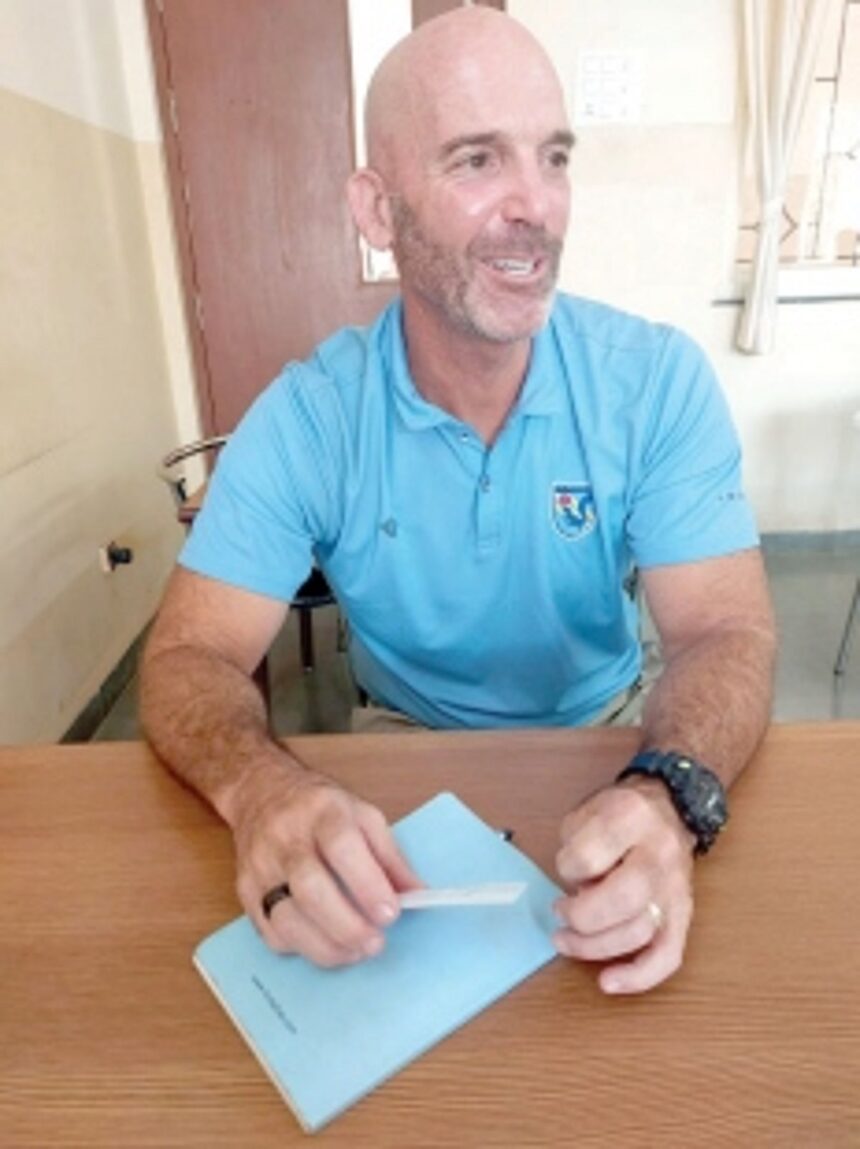
It was a meeting by chance with Jeremy Fishbein, at Don Bosco Engineering College at Fatorda that opened the vista on modern, progressive insights on youth development which he is undertaking as the Technical Director of FC Madras. His ultimate task is to make the club as the most visionary and progressive football club in India, to develop players and coaches who will positively impact India through football and outside of football.
Jeremy’s mission is to develop players who will represent India internationally and players who will play at the highest levels of professional football domestically and internationally.
Despite being preoccupied, training his boys, who are on an 11-day exposure tour in Goa, curated and organised by SquareOut Sports Sol, at Don Bosco ground, Fatorda, Jeremy displayed professionalism of a high order when he stated that unless one stresses on the four pillars of youth development, progress will be difficult to come by.
The four Pillars of Development required to develop world class players, he said are: “Scout, recruit and bring in the highest level players in India. Football ability is only part of the equation. Thoroughly evaluate and attract well-rounded and driven young men, support them socially, academically and in football, provide coaching comparable to the top academies in the world. For this you need the best coaches to develop the best players. 2 – Provide a world-class infrastructure and make sure your education system is in sync with your football. 3 – Provide the highest level competition possible. 4 – Need to play the best to be the best. Play 40 + competitive matches/year inside and outside of India.”
The soft spoken official, eager to share his valuable knowledge, quickly added:”Goa is an ideal state for the same as it has decent infrastructure and it has several clubs. Consequently, Goa can become a dominant model. You need to have a competitive youth system, you must understand how to invest in coaching, launch an incredible coaching programme with good methodology. Above all, you need to have an incredible education system to train coaches in modern methodology.”
Jeremy stressed on the need to have proper planning on an annual basis. “Above all you need a good competition calendar. You need to organise two national competitions yearly. You have to adapt to a new system. You need corporate support. Goa has the capacity to become a dominant state in football as Goa, Kerala and Kolkata represent the best pockets of Indian football,” observed the US coach, stressing that the US model is the best suited for India given the geographical vastness and diversity of the two countries. “Football is not the top sport in both countries and there is vast scope in that direction,” remarked the coach.
Jeremy is in Goa with a group comprising three teams: Under-13, Under-15 and the best Under-13 and Under-15. Each team has played four friendly matches against different Goan club teams, some in the top bracket, and the convincing victories that they obtained was proof enough that his methodology was far superior as compared to the Goan teams. The biggest surprise was that his Under-13 team could even beat the Under-15 local teams with good margins. Often he fielded much younger players to play against the older age-bracket group boys so as to have a balanced competition. And even then the Madras boys were normally head and shoulders above the Goan boys.
Jeremy’s philosophy as well as that of the Club is very simple: “Promotion of a skillful, attacking, exciting brand of football which requires mental, physical, technical and tactical excellence. The players must be tenacious, unrelenting competitors who exhibit humility and empathy. We must develop players to their highest potential both on and off the field. Excellence, authenticity, passion, humility, integrity, curiousness, confidence, empathy, boldness, effort, ambition, respect, competitiveness, sportsmanship, dignity, teamwork and unity must be highly developed among several other attributes.”
On the educational side, Jeremy stated: “Be innovative and progressive in terms of the education plan. Incorporate leadership development, public speaking, yoga, meditation, chess, nutrition and exercise physiology into our curriculum. We need to think “outside the box” and develop well educated leaders who have an advantage in life. The odds of making a living off football are very small. We need to give our players the best opportunity to have a happy, impactful and successful life.
“We will be the catalyst for a progressive football movement in India. More clubs/ owners/foundations/academies will be motivated to invest in football and will attempt to match what we are doing. Hopefully the AIFF will get on board and will invest in youth development at a much higher level. We need to keep in mind our goal is to be “our best”, not “the best”. We can only control what we have control over. Our hope should be that in the next 3-7 years, there are 5-10 more academies built which will match our investment. Competition will bring out the best in everyone. Indian football will grow and the level of youth football will improve rapidly. Ideally 20 top academies from all over India will form a league of their own and this will provide the competitive matches needed to compete internationally, ” concluded Jeremy. (To be continued).