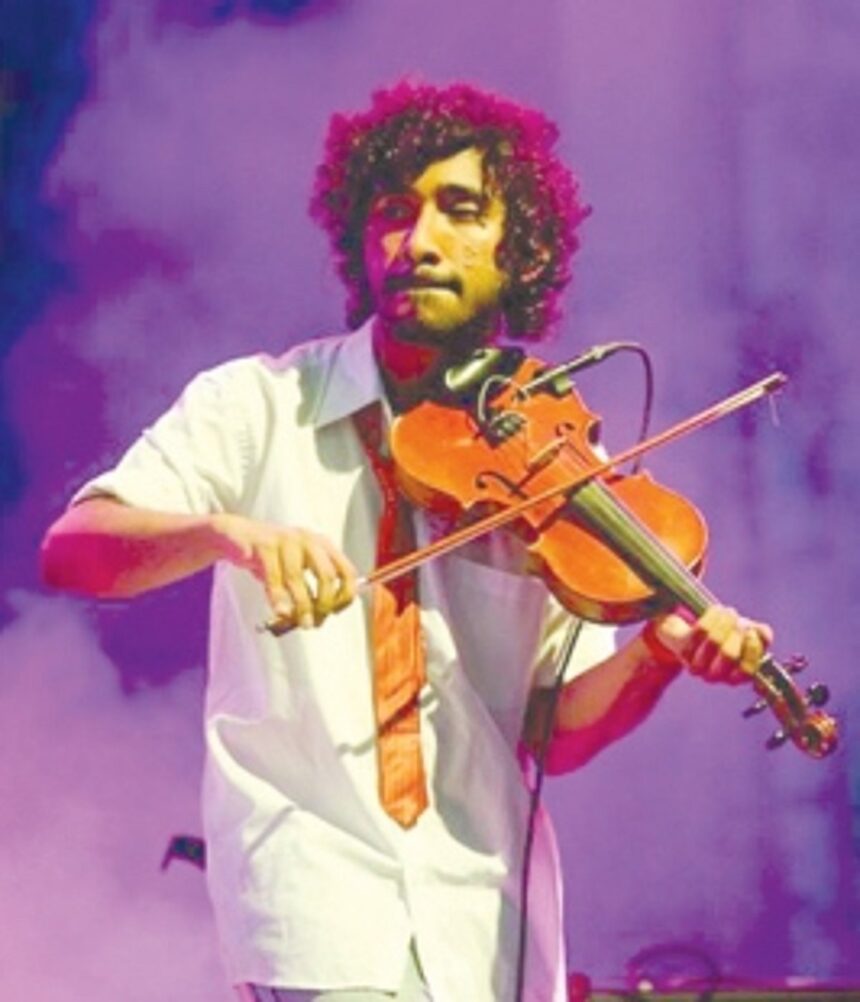
Jose Neil Gomes plays the violin,
guitar, cello, saxophone, flute, clarinet, piano and other 20-odd instruments
with equal ease and élan. All of 27, he is much in demand in the commercial
music scene in Mumbai. The youngest member of Sufi artist Kailash Kher’s band
Kailasa, Gomes is also part of vocalist Sunidhi Chauhan’s troupe travelling
from Australia and Auckland to Trinidad and Tobago for shows.
It’s difficult then to believe that
Gomes, born and brought up in Benaulim, didn’t particularly enjoy learning the
violin as a young boy and never saw music shaping his future. He left home at
13 to be a priest, joining the seminary in Saligao and then Rachol. When it was
time to decide on a college, he enrolled at St Xavier’s College in Mumbai,
choosing to study journalism. It was here that he was exposed to different
genres of music and musicians. He picked up the violin again, this time
willingly, learnt a few horn instruments too, played for the college band and
was hooked. Before he knew it he was receiving offers to play jingles,
background scores and accompany musicians including Sidd Couto, Jazzy Joe, A R
Rahman, Hitesh Sonik, Vasudha Sharma, Sherrin Varghese and Imaad Shah. He
realised that priesthood wasn’t his calling. Music was.

A firm believer in the art of music, he
feels that he isn’t cut out for the commercial scene. “If the producer tells
you what to do then that’s not songwriting. When doing jingles you’re already
given a situation and this for me is the crudest form of art because you’re
just collecting the energy that is around you and converting it into something
tangible. Some good work may come out of it but it’s not art at all. It’s all
about copy pasting,” he says.
In the past, he says, there would be a
single man handling the scene between the musicians and the ad film director.
Today, even for a thirty seconds jingle there will be not less than five people
from the media company and another five from the client’s company who don’t
have the slightest clue about music and
have heard little else beyond Bollywood music, telling the musicians what and
what not to do. “It’s like taking human boredom and making it sound flowery,”
Gomes vents.
The commercial scene has allowed him to
earn very well and travel the world and it’s very easy to get comfortable with
that kind of life, he says. “There’s a lot of work coming for me and it’s up to
me to say this is not the work I want to do.” He owes this drive within him to
his formation in the seminary. “It kept me on my toes all the time and this has
helped in my song writing. It’s quite a deal to arrange 63 songs at one go and
it has come because of that constant pushing and striving to be better,” he
says talking of his latest songwriting project, ‘Grass is Green’. He has plans
to launch a series of nine albums with nine songs each, titled, ‘A Stitch in
Nine’. Of the 81 songs, he has 63 ready with arrangements, a few of which he
has already recorded. His first album is on the eclectic side with a mix of
instrumental, lyrical and choral music. He began working on his project four
years ago and decided to take it slow until he found the right people to work
with. Guitar maestro Sanjay Divecha will be producing his first album and he
hopes to have a worldwide release too.
The independent music scene in the
country depresses him. There’s no money and no crowd for good independent
music. “When there’s crappy music playing there are crowds and crowds. I’ve had
friends playing at the Royal Albert Hall in UK and the Nokia Theatre in LA and
in Moscow too where wealthy Indians can afford to spend and are big fans of
this type of music. In Mumbai where you’d think people would come out and
support you, the independent scene is dead. It’s the talented musicians who
work hard who don’t get work. It’s very commercial.”
Indian songwriting tends to be stale and
he says it is his prerogative to bring in fresh new sounds. “Mediocrity has
permeated through all genres of music. Even our electronic music is stale
though it can be really very beautiful because you have so many more options.
In Berlin and Amsterdam, the quality of electronic music is so progressive and
futuristic, years ahead in time.”
He wants to follow the traditional
method of recording his songs – writing them first and then recording them in a
studio instead of fidgeting on a computer where so many changes are possible
and there are no time constraints.
Gomes still yearns for Goa and is trying
to record traditional Goan music before it is lost. He has played at Goa Chitra’s
Retro-spective nites and hopes to visit his state more often should the
independent music scene improve.