The impersonal buzz in the hospitals today
reminds us that it is business as usual. But around three decades ago when
hospitals and specialists were a rarity, the local general practitioner (GP)
was sought after for every ailment. And unlike a typical doctor-patient
relationship, the bonds forged therein were one of mutual respect, trust and
friendship.
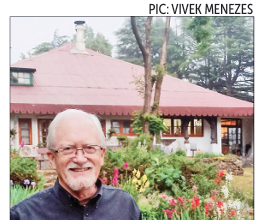
Taking a walk down memory lane, Dr Ramesh A
Dhume, Medico Cirurgiao, (who was associated with the GMC) recalls how people
visited him at his small clinic at home in St Inez, Panjim for all ailments.
“Patients were generally neighbours or from surrounding areas who came to us
for every ailment. We also visited them at home if the need arose. We gave them
whatever medicines they required for immediate relief and then gave a
prescription. In the absence of phones, if there was an emergency at night,
people would come and call us personally. We always obliged. However, if it was
a complicated case, then we would refer them to GMC which was in the city
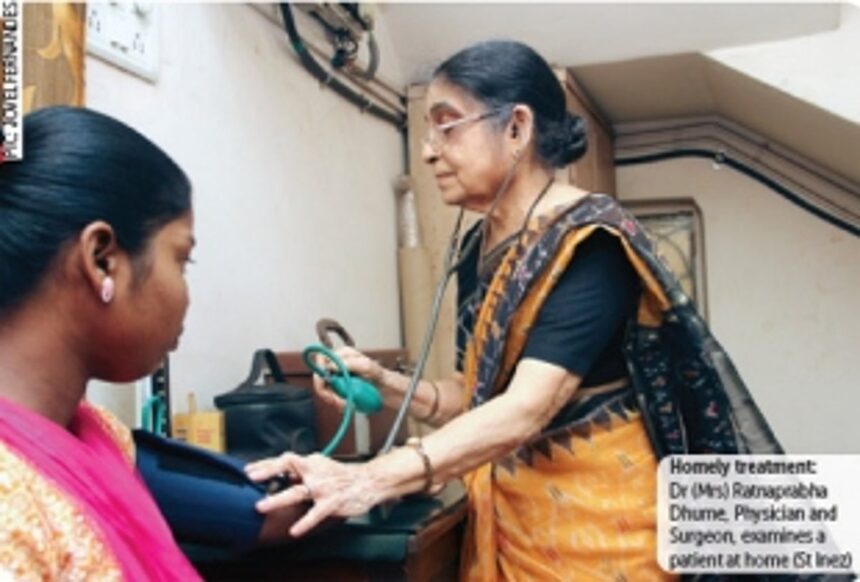
itself at that time,” reminisces Dr Dhume, who began practice in 1960. “My wife
Dr (Mrs) Ratnaprabha (Physician and Surgeon) who was a Lady Medical Officer
with the Indian Red Cross Society, also attended to patients, particularly
pregnant ladies,” he informs.

With a rapport forged by trust and respect,
the doctor-patient relationship went beyond a mere professional association. “I
recall Dr Ganesh Bhatkuley, who is still practising, with great fondness. We
were more friends than just patient and doctor. We went to him for all
ailments; he was like all sorts specialists bundled into one. He was very
dedicated and obliging. In the mornings, before going to his clinic, he would
make a house call en-route for patients in bed,” is what Daniel Sequeira (65)
fondly remembers.
Citing her doctor as someone who befriended
all his patients and allayed all her fears, especially about injections, Thoya
Nazareth (28), who visited the same GP in Majorda for 12 years, confesses to
even consulting him for a toothache. “We will never forget the bond we formed
with him. He did not maintain any medical histories, but he knew each of our
histories personally,” she recalls.
The doctor in question, Dr Chandrashekar
Upund, returns the compliment. “We knew all our patients and we treated each
other like friends. The trust and mutual respect was always there. So even if
they called us home at two or three in the mornings, we were always there for
them. In those days, we treated everything. Of course, today there are
specialised branches and more facilities available,” he states.
Terming the doctor-patient rapport as the
most crucial and important one, Dr Dhume points out that more than medical
advisors, they were family confidants who often solved many a family problem.
“Nowadays, medicine is more of a business venture,” he states, without
discounting the fact that specialists and super-speciality hospitals are the
need of the day. “Unlike the past, not many doctors make house calls these days.
But now there are so many hospitals equipped with better facilities that can
give better treatment. Similarly, when you have a specialist, there is more
accurate diagnosis and hence more accurate treatment,” he reasons.
Perhaps so, but the days of the good-old
doctor making house calls and chatting over a cup of tea are soon becoming
tales of the past.