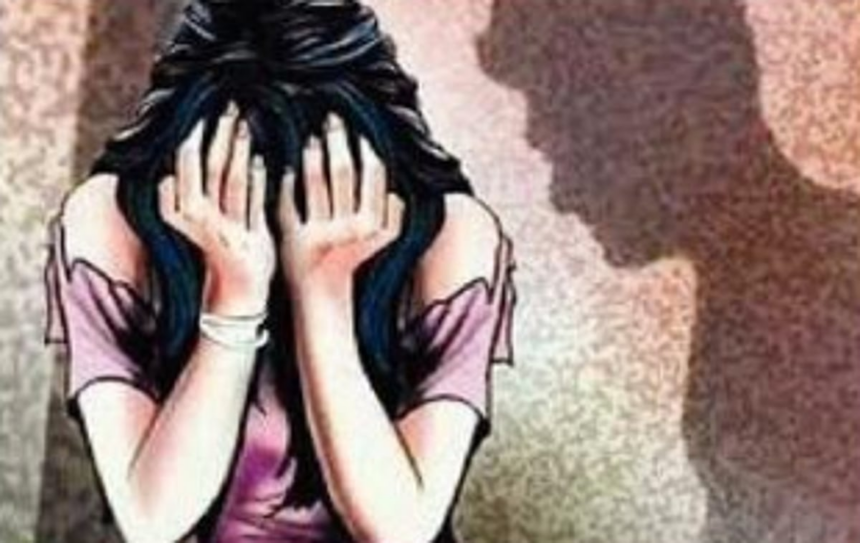
Child protection is a constant ‘work in progress’ towards expanding the horizons of what a society considers to be safe and protected childhoods. Not only the Child Rights Activists but the entire nation rejoiced when the Parliament of India had passed the Protection of Children from Sexual Offences (amendment) in 2019. This was done in the wake of multiplying crimes against children. The major highlight of this particular amendment was the inclusion of Death Penalty as maximum punishment offered.
In a cruel irony, the Bombay High Court chose the National Girl Child Day to deliver an absurd interpretation of the Protection of Children from Sexual Offences Act (POCSO). The judgment invited scathing criticism with legal experts and laymen alike questioning the rationale behind such a conclusion. The judgment indulged in a futile hair-splitting exercise that restricts the scope of the POCSO Act. Many fail to understand how a woman judge could pass such an obnoxious judgment.

The National Commission for Women (NCW) has claimed that the interpretation adopted by the Hon’ble High Court that physical contact means ‘skin to skin’ touch is perverse and bad in law. The Youth Bar Association of India (YBAI) has also moved the Apex Court. The petitioners state that the observations made by the single judge are “unwarranted” and concern the modesty of the girl child. On February 3, Zen Sadavarte a national bravery awardee and an Std VIII student filed a letter petition in the Apex Court demanding to remove Justice Pushpa Gandiwala as a judge of any High Court. The name of the victim has been mentioned in para 12 of her judgment, which is detrimental and against the spirit of section 228A of IPC which bars publication of names of victims of certain offences. A look at the trial courts’ judgment also reveals another gross oversight. The birth certificate of the child accepted by the trial court shows she was born on May 25, 2005, and at the time of the offence (Dec 14, 2016), she was 11 years old. So in fact, it’s not a sexual assault u/s (7) of the POCSO Act, but aggravated sexual assault u/s (9) of the POCSO Act. This oversight, coupled with the case being delayed for nearly 4 years and the brazen interpretation of the High Court seriously impairs the effective implementation of the POCSO Act.
Retired Justice Abhay Tripathi of the Hon Bombay High Court has questioned “what if a person was wearing hand gloves or a condom? Then can it be said that there was no skin to skin contact? The reasoning is whimsical. The National Commission for the Protection of Child Rights (NCPCR) has stated that this order which is perverse will have a cascading effect of various provisions involving the safety and security of children in particular and women in general. Attorney General KK Venugopal submitted that the judgment which held that ‘skin to skin’ contact is necessary for sexual assault under POCSO act is ‘unprecedented’ and is likely to set a dangerous precedent. Child sexual abuse cuts across classes, caste, religious and educational barriers and occurs irrespective of what the background of the abuser and the child is. Most times, children are unable to disclose or talk about abuse. In rare instances, when they do talk, it is not their imagination or fantasy but very real. Children need to be believed and supported if they talk about any sexual touching or if they express any reservations about interacting with particular adults.
The POCSO Act casts a greater burden on the accused than on the prosecution. Secondly, the Act might be a stringent legislation, but it is also a protective and beneficial legislation. Therefore, it must be interpreted in a manner that protects the interest of children. According to S (29) of the POCSO Act, when a person is prosecuted under S (97), it is presumed that the person has committed the offence. On the other hand, S (30) presumes that the accused possessed a culpable mental state during the commission of the offence. In this case, the accused in the pretext of giving the prosecutrix a guava took her to his house. He then proceeded to press her breast and attempted to disrobe her. These are not disputed facts. The Court has turned a blind eye to the realities of rampant child sexual abuse by arguing that a mere piece of cloth can protect a child from sexual assault, while ignoring the fact that the very same piece of cloth legally protects an abusive criminal!
When two constructions were reasonably possible, preference should go to one which helps to carry out the beneficent purpose of the Act; and that apart, the said interpretation should not unduly expand the scope of a provision. Thus, the Court has to be careful and cautious while adopting an alternate reasonable interpretation.
The High Court’s bizarre interpretation has even more absurd implications for the other provisions of the POCSO Act. The Bombay HC’s ‘logic’ would mean that if a perpetrator uses a condom while penetrating the child, it would not constitute an offence since there was no ‘direct contact’. Eureka! What a rapacious legal construct. Rape is a legal term and does not permit a liberal diagnosis to be made by the medical officer. She/he has to ascertain whether there is evidence of recent sexual activity. Whether the rape has occurred or not is a legal conclusion, not a medical one. The High Court Judge Justice Pushpa V Ganediwala who authored the verdict had to face the consequences with the Supreme Court Collegium withdrawing its consent to make Justice Ganediwala a permanent judge of Bombay High court. She is currently an additional judge.
(The writer is a social scientist and Sr. Practicing criminal lawyer).