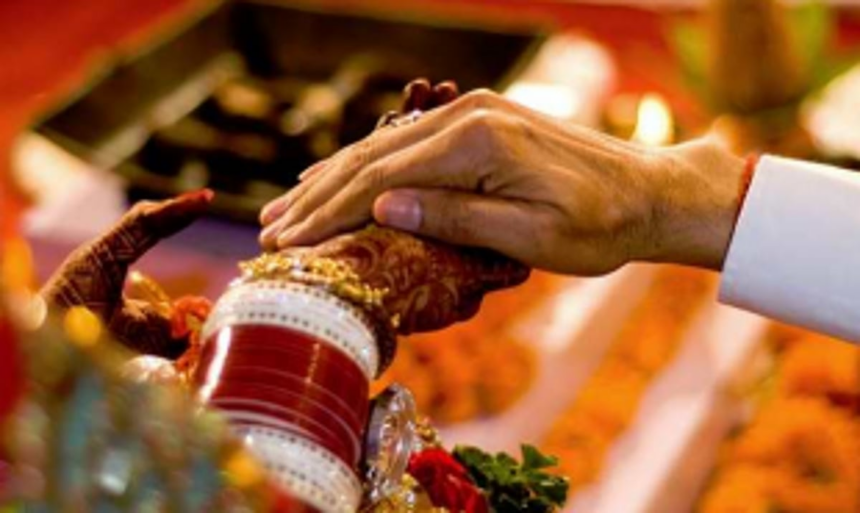
Kanyaadan is the name of one of the rites in Hindu marriage. This term is derived from the Sanskrit word and it means donating of daughter. But some people recently are seen objecting to this age old practice. They contend that the bride is insulted because of this rite. Furthermore, they maintain that girls are not commodities to be just given away. Some of the protesters of this ritual, who seem to be moderates, feel that the aforementioned rite be termed as ‘Kanyamaan’ (respect for girl) instead of Kanyadaan.
In my opinion the above objection is not based on reason. All donations are not of commodities alone. Of course there are certain donations that are of mere materials. Donations of food, clothing and land, etc, are examples of this kind. But there are many other charities which are not mere commodities. Donations of blood, eyes, embryos, knowledge and lives fall in the second category. These donations are prompted by love and affection. Therefore, they are exalted ones. In a democratic form of government casting of vote is also regarded as sacred donation. Kanyadaan is on par with the above second set of donations.

Again Kanyadaan bestows honour to the parents of the bride, because this rite is performed by them. And the hands that give are always high above those that receive. Therefore this custom elevates feminine gender. Another reason for calling this rite as kanyadaan is that the girl after marriage is kept in the protective care of her husband. If it was the other way round, that means if by tradition the groom after his marriage was required to stay at his bride’s home permanently, then the above rite might have been called as ‘Putradaan’ (giving away of son). Therefore, there is no any humiliation concealed in this ceremony. One may call this ritual as kanyamaan or even kanyashaan (Pride of girl) if one so chooses. But this would not make ‘Kanyadaan’ an inferior term.
There is another phrase to which some people nowadays take exception. It is calling girls as ‘Paraya dhan’ meaning ‘others property’.
But this objection too does not stand to reason. In fact those who seem to be ‘others’ become familiar after marriage. Dhan means wealth. But here it does not have any commercial meaning. It does not mean money or property. Dhan here means Laxmi, the Goddess of wealth and prosperity. Hindus adore Laxmi. After marriage the bride is regarded as Laxmi of her new house! It is also customary to call daughters as ‘Chidiyam’ meaning birds. Like birds, one day they do fly away to new places. There is love and affection behind calling them so. Not hatred.
Some feminists in our country argue that ‘kanyadaan’ and ‘paraya dhan’ are instances of gender discrimination in Hindu religion.
But the above argument is baseless. Hindu religion respects women on par with men; followers of this faith worship Gods and Goddesses equally .Even while mentioning of pairs of deities, they give preference to feminine gender. Here the principle of ‘ladies first’ is upheld. Thus Hindus say ‘Sitaram’, ‘Laxmi narayan’ or ‘Devki Krishna’. They do not say ‘Ramsita’, ‘Narayanlaxmi’ or ‘Krishnadevki’!