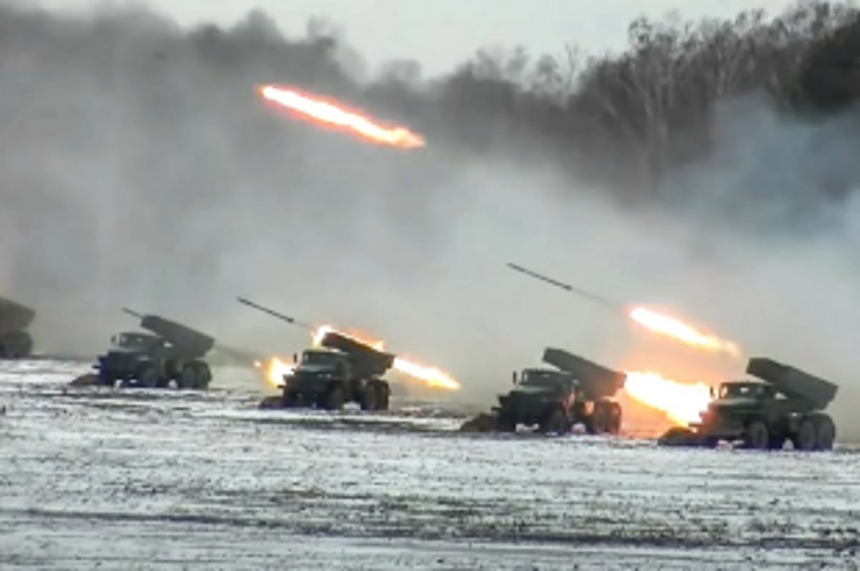
The fear is that the capital Kiev could fall to Russia anytime as Russian troops surrounded the city. After weeks of diplomatic efforts and threats of sanctions failed, Russia did exactly what the United States had predicted it would do – invade Ukraine. Russia claims it does not want to occupy its neighbour. Moscow says it only wants to demilitarise Ukraine. Even on day 2 of the war, Russia said it was ready for talks if Ukraine’s military surrendered and insisted that the invading forces were looking to free the country from ‘oppression’. That in no way dilutes the impact of what is happening in Ukraine. This is an act of aggression by one country against another and is just not acceptable by the international community. Russia not only crossed an international border, it crossed the proverbial line.
Economic sanctions imposed by the West appear to have not fazed Russia in any way, as they claimed though these would cause problems they wouldn’t be insurmountable, with the country set to widen its trade and economic ties with Asian nations. The Ukrainian president pleaded with the international community to do more, saying sanctions announced so far were not enough. If the sanctions are not enough, should the international community play a larger role in the war? This also brings into question the role of the United Nations that is to prevent disputes between two countries from escalating into a war, and that of NATO and the European Union. Ukraine is not a member of the last two, but any conflict on the European continent will bring NATO and EU in the picture. Turkey has already accused NATO and the EU of failing to take a ‘determined stance’ on the Russian invasion and only ‘providing Ukraine with plenty of advice’.

India has to play a bigger role in ending this conflict. It has the opportunity to act as a mediator, where other major powers have failed. India missed taking its place as a world leader in this crisis by not attempting to broker peace immediately the standoff began. It can remedy this by signalling its willingness to mediate. The United States and Russia are traditional rivals, and the main reason for the war is Russia’s desire to stop NATO from expanding further in Eastern Europe. India has been a past ally of Russia with strong ties still, and has in recent years cemented a relationship with the United States and EU countries. The Ukraine envoy in India, on the day Russia attacked said his country was dissatisfied with India’s position of ‘closely following the developments’, and expecting a more favourable reply called in New Delhi for assistance.
Though India has adopted an almost neutral stand this far, it is caught in a piquant diplomatic situation, with both, the US and Russia seeking its support. Reports state that the US has in talks with India pressed for the need for a ‘collective response’ against what has been termed as a violation of the ‘rules-based international order’, while Russia expects India to support it at the UN Security Council meet when the global body takes up the resolution condemning the Russian invasion of Ukraine. India is currently a non-permanent member of the UNSC and so eligible to vote. Simultaneously, India has to bring back safely its citizens who are in Ukraine. There are about 16,000 of them stranded in the country, many of them students. Flights and other logistic arrangements will have to be planned to bring them back home. It cannot ignore the plight of its citizens caught in the warzone. Quite a few decisions for India to take.