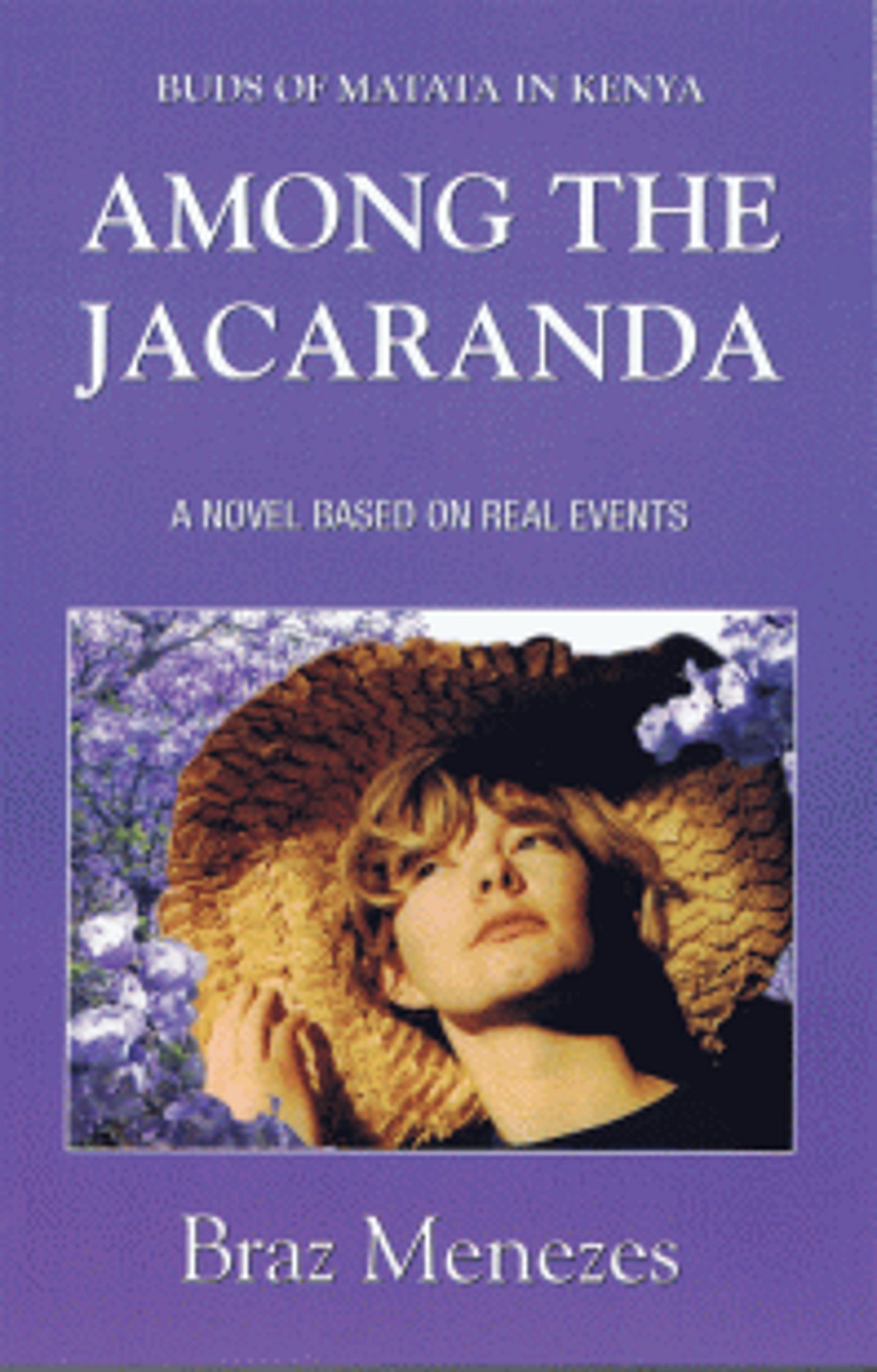
‘Among the Jacaranda’ is the third in the ‘Matata series that already comprises ‘Just
Matata’ (reissued as an expanded edition as ‘Beyond the Cape’ 1920-1950) and
‘More Matata’ (1951-1963). The books are written by Kenya born author Braz
Menezes, a former award-winning architect.
The first three books quickly established
a large fan base for Menezes, who quickly became recognised for imbuing the
hero of the books, Lando, with wit, humour, a sense of adventure, while paying
homage to Kenya and especially Nairobi. No doubt, ‘Among The Jacaranda’ is already
assured of a following; probably more in E-books than the printed variety, both
easily available on Amazon and most E-book platforms.

I am finding reviewing this exceptional
trip down nostalgia road a tough gig. Not only because I get a left-handed
compliment but because, like Menezes, I was born and raised in Kenya and I
think the author is a couple of years older than me. Hence it is easy for me to
walk down familiar roads to familiar suburbs, Goan social clubs, especially the
Goan Gymkhana (where I was a rare visitor) and many, many familiar faces.
Someone questioned the other day why East African Goans
over-feast on their past lives in the former British colonies. History. Just a
shared history and the unbreakable links that a community gives birth to. Even
more, authors like Menezes, Mervyn Maciel (the doyen author of ‘Bwana Karani’)
also act as low-level historians charting the lives and times of Goans and
prove to be invaluable in the absence of any recorded history or documented
almanacs. Even more importantly, fact or fiction based on true events, serve to
enlighten the non-Goans in our respective adopted countries about everything
Kenyan in historical terms.
More importantly, Lando mirrors, to a large degree, the lives of
young Goan men and women who began university life in the 1960s, got their
first job, excelled at sport, or towards the end of the 1950s or early 1960s
faced the heartbreak of being forced to leave the country with their parents on
the onset of independence. On the other hand, there were many young people who
achieved the move to university life overseas and committed themselves to a
future back in independent Kenya. Menezes’ hero, Lando (who, I am sure is based
largely on his own life) did just that.
So if you have slightest connection (and even if you have no
connection) with Kenya, then hope along for a nostalgic safari.
For a young man who had not travelled much before, there is all
the wonder of a European holiday to explore. You will have to buy the book to
enjoy the details.
Lando, seeking fame and fortune as a future architect, heads for
university in Liverpool in 1964. Even though the UK is running a high fever,
fighting to “keep Asians out”, Lando is unphased. He is aware of it and is
concerned about the treatment and abuse being meted out to Indians who already
settled in the UK. However, Lando is just an observer.
It is not long before our intrepid hero meets a white girl and
takes the first steps towards falling in love over a period of many months.
Menezes takes us on a romantic journey that is rather seamless, without drama
of any kind and the two later head for Kenya to make bliss official at the
wedding ceremony in Nairobi. As I said, it is all very seamless.
On his return to Nairobi, Lando spends as much time as he can at
the Goan Gymkhana. To his delight, most of his friends are still there and club
continues to function in an independent Kenya with little change. These days,
in Sydney, Australia, I chew the nostalgia fat with one of the friends he mentions
in the book: Felix. With a bunch of other ex-Nairobi friends who meet for
bowling each Friday, come rain or shine or whatever, we celebrate our
collective past.
There is much, much more to this valuable contribution to the
historical record of the Goan community in Kenya, especially Nairobi.
I
loved it. Because it is everything so familiar. Another winner for Menezes.