The three village panchayats of Porvorim constituency, Penha de Franca, Socorro and Salvador do Mundo, have taken the issue of garbage seriously and are collecting door-to-door waste on a daily basis. However, they still failed to tackle the garbage menace due to lack of financial support from the government.
The panchayats’ initiative ensured that the heaps of garbage on the Porvorim plateau, which had turned into an eyesore to the residents and visitors, were finally cleared to dumping sites.
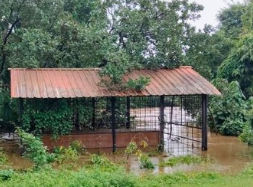
For the implementation of garbage segregation, Penha de Franca panchayat acquired a 1000-sq metre plot on a 99-year lease at Rs 1 per month under Survey No 120/1 at Krantinagar from the Goa Housing Board in 2012. The panchayat then constructed a shed and employed workers to segregate wet and dry waste, including plastics and packaging materials. It segregates and bales out around 4.5 tons of plastic every week, which it then hands over to the agency appointed by the Goa State Control Pollution Board. The wet garbage is converted into manure.
Socorro panchayat acquired land of 5000 sq metres from Serula comunidade on the Socorro plateau. Out of this, 3000 sq metres was earmarked for setting up a mini-treatment plant, 1000 sq metres for a cattle pound, and 1000 sq metres for a dog shelter. However, the Town and Country Planning (TCP) Department has not accorded its approval to the panchayat on the ground that the area was not earmarked for such a purpose in the existing Regional Plan. TCP directed the panchayat to acquire more land close to the said survey number. For this reason, Socorro has not been able to put up its mini-treatment plant. The matter is still hanging.
Porvorim MLA Rohan Khaunte mentioned that Penha de Franca spent around Rs 39.39 lakh on door-to-door collection of garbage from all 11 wards in 2014 – 2015, while it would collect garbage fees of Rs 5.60 lakh from only the households in the same year. Socorro panchayat spends around Rs 36 lakh every year for the same work, but the collection of garbage fees from the households is meager. The Salvador do Mundo panchayat spends around Rs 10.80 lakh per year for collection of garbage from four wards on the Porvorim plateau.
He further said that those panchayats do not receive any grant or financial assistant from the government, making door-to-door collection of garbage an uneconomical task for these panchayats. As per the Rural Garbage Act, the panchayat can charge a maximum garbage fee of Rs 60 per month from each household. Simply raising the garbage fee would not solve the panchayats’ financial problems.
Khaunte added that the State government spent nearly Rs 150 crore to set up a garbage treatment plant at Calangute. That plant will not solve the garbage issue of all the panchayats in North Goa. The government should offer at least Rs 1 crore to the panchayats interested in solving the garbage issue on their own. For setting up a treatment plant, the panchayats needed good infrastructure like vehicles, vermicompost pits, baling machines etc. for which a substantial finance is required.
Moreover, the Department of Science and Technology still could not find a solution for the disposal of ceramics, medical waste, batteries and tube lights. If the government is serious in tackling the garbage issue in the State, it should offer financial support to the panchayat.