Anisha Francis

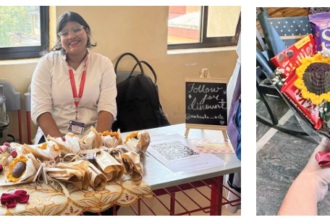
MAPUSA: If she’s lucky, Maria D’Costa gets a full three hours of sleep a night. One of the last remaining Goan bakers in Bastora near Mapusa, Maria’s nocturnal lifestyle stems from a gritty commitment to ensure her customers get their hands on fresh, warm bread, the first thing in the morning. Churning out at least thousand pieces of bread each day, Maria’s traditional wood-fired oven stays hot from 3 am onwards. “It’s a full-time job. We mix and knead the first batch of dough at night, and since it has to proof for three hours, that’s when I get to squeeze in a nap,” quips Maria, who runs her ancestral bakery with her husband Anthony and teenage son.
Maria’s family has been in baking for over five decades now, and their bread stall at the Mapusa market is a thing of beauty- crisp and fragrant poyi and sweet poyi, katro pao, kankonn and the ubiquitous unndo, each with its own trademark texture, despite being fashioned out of the same flour.
Maria, with her wide smile, says she’s the only female baker selling bread at the Mapusa market. “My bread is in demand across the borders in Maharashtra and Karnataka, and I also get regular orders to courier them to different European countries. As I use less yeast and a wood fire oven, my poyi have a longer shelf life,” she claims, adding that Goan bakers now face stiff competition from their migrant counterparts, many of whom add higher amounts of yeast to yield large poyi, which she says is not good for health.
Maria’s bakery, though somewhat primitive, runs as efficiently as any
modern factory. “It’s like clockwork. I have
three labourers who help me with this cumbersome occupation that is actually my life.
While the portioning, shaping and baking process begins at 3 am, the bread needs to reach the market and ideally be on the plates of my customers by 7 am. We begin mixing the dough for our second batch of bread at 10 am, and baking begins around 1 pm,” she says nonchalantly, adding that the rest of her time is occupied with cooking, cleaning, and maintenance. “No, I don’t get any downtime, nor do I get to properly attend weddings, celebrate festivals or take holidays. Bread is a household staple and there are no holidays,” shrugs Maria.
When the three labourers go on their annual vacation or pilgrimage is when the family of three gets even busier, forgoing rest to complete all the extra work.
Apart from retaining labourers, Maria’s only other peeve is the difficulty she faces to procure firewood for her oven. “We use eight tons of firewood each month, which costs around Rs 12,000 a month. Due to the shortage here, we need to transport wood from neighbouring States in trucks, and our trucks are often fleeced at the borders despite having the required permits,” she laments.
Still, she does not let that bog her down, as they make a good living, selling small poyi at Rs 5, and larger ones at Rs 13.
When asked if she receives any subsidies to help her combat rising food and firewood costs, she quips, “No, I do not, and have never expected anything from the government either.”