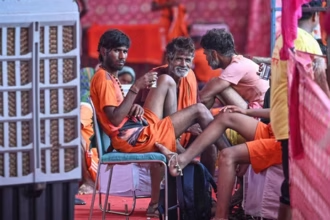
According to the Khariwado Fishing Community Association, the village has around 243 trawlers, out of which 120 are large-sized (purse seines) and require 30 crew members aboard. As most of the labourers haven’t turned up yet, only 35 per cent of purse seines will head out for fishing on the first day. Similarly, 90 per cent of the smaller boats (trawlers), which require six-eight people aboard, will sail out on Saturday. The labour shortage is an annual affair for the community.
“Almost all trawler owners here prefer to employ migrant labourers from Karnataka, Orissa, Andhra Pradesh and Tamil Nadu, among other states. This year, several labourers have not turned up yet even though they promised to come back from their native places. The trawler owners are waiting for them to come, and only then will we start our operations,” said Jerry Fernandes, a fisherman from Khariwado.
Meanwhile, the presence of two Karnataka-registered fishing boats in Vasco bay has angered the local fishing community. The fishermen, locals and even Coast Guard did not have any idea how and when the boats had arrived.
Initially, there were rumours that the Coast Guard had intercepted the boats and had anchored them at the bay. However, the Coast Guard disclosed that they did not have information about any recent action against fishing trawlers, including the two anchored near Khariwado jetty. The atmosphere at the jetty soon grew tense.
The fishermen questioned how the boats could sail into Goan waters during the fishing ban and why the marine police, Fisheries Department and other agencies had no clue about the same.
“The boat owners from Goa have to follow several rules, but for these boats from outside Goa, there are no rules and laws. The concerned department turns a blind eye, which is an unfair practice,” said GFBOA General Secretary, Simon Pereira.