Goan tourism planners are persistent about introducing innovations into Goan tourism with the goal of enlarging the numbers of tourist visiting Goa. The problem with several of these so-called innovations is that many have hardly been thought through or simply assessed for their socio-economic-environmental impacts and viability. Nor has the government ever considered whether Goa has already far exceeded its carrying capacities. Is it not time to put the lid on the numbers who visit our coasts and, instead, look at enhancing the quality of what is on offer?
In the hurry to introduce their innovations, the government has been callous. Only a week or so ago, the Chief Minister announced that he would seek special permission for relaxation of Coastal Regulation Zones (CRZ) in Goa. His claim was that if such relaxations were afforded to Goa, then the government could readily exploit the coastline to offer ‘close-encounters’ for tourists to the seas. Structures would be put up to house people on the coast line and these would be left to the bigger commercial establishments (5-star hotels and resorts) to build and profit from.
Obviously, this government attempt by the Government to gain CRZ exceptions will not carry if a legal challenge were to be mounted against authorities. According to the CRZ notification, “the area up to 200 meters from the High Tide Line is to be earmarked as a ‘No Development Zone’. No construction shall be permitted within this zone except for repairs of existing authorized structures not exceeding existing FSI, existing plinth area and existing density, and for permissible activities under the notification including facilities essential for such activities. An authority designated by the State Government/Union Territory Administration may permit construction of facilities for water supply, drainage and sewerage for requirements of local inhabitants. However, the following uses may be permissible in this zone agriculture, horticulture, gardens, pastures, parks, play fields, forestry and salt manufacture from sea water.”
The CRZ notification also stipulates that “Construction/reconstruction of dwelling units between 200 and 500 meters of the High TideLine permitted so long it is within the ambit of traditional rights and customary uses such as existing fishing villages and ‘gaothans’. Building permission for such construction/reconstruction will be subject to the conditions that the total number of dwelling units shall not be more than twice the number of existing units; total covered area on all floors shall not exceed 33 percent of the plot size; the overall height of construction shall not exceed 9 meters and construction shall not be more than 2 floors ground floor plus one floor. Construction is allowed for permissible activities under the notification including facilities essential for such activities. An authority designated by State Government/Union Territory Administration may permit construction of public rain shelters, community toilets, water supply, drainage, sewerage, roads and bridges. The said authority may also permit construction of schools and dispensaries, for local inhabitants of the area, for those panchayats the major part of which falls within CRZ if no other area is available for construction of such facilities.” In other words, CRZ is not about enhancing business opportunities for corporates and big business. Nor is it about raking in larger numbers of visitors centered on plans to add products that may be in direct opposition to what CRZ provides for. CRZ is there to protect the indigenous populations from an assault on their spaces for sheer profiteering. .
What Chief Minister Parsekar is asking for is out of line with the above framework. He is clearly looking for mega-projects on the sea coast with little or regard for what may be the consequences – short term and long term. We can only be certain that the high increase of tourist numbers that his plans could result in will have huge negative impacts because nature cannot cope with the unacceptable and unsustainable limits of use now being put on demand by tourism officials.
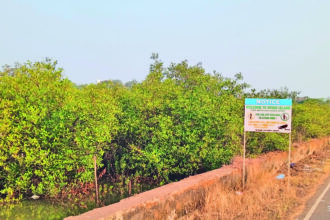
Uncontrolled conventional tourism poses potential threats by creating enormous pressure on an area and lead to impacts such as soil erosion, increased pollution, discharges into the sea, natural habitat loss, increased pressure on endangered species and heightened vulnerability to forest fires. It often puts a strain on water resources, and it can force local populations to compete for the use of critical resources. Rising sea levels are a direct consequence of the liquid and solid wastes on the coast by tourists and tourist establishments.
Excessive tourism can also lead to depletion of natural resources. Because of the hot climate and the humidity in Goa, there is a tendency for tourists to consume more water than normally done. Some estimates suggest usage that runs into 440 liters a day for personal use alone. This does not take into account other usages that are applied to water including landscaping, swimming pools, etc. The overuse of water resources for hotels, swimming pools, golf courses and personal use of water by tourists creates water shortages and degradation of water supplies. As well, it generates a greater volume of waste water. This amount is far in excess of what Goan citizens have access to on an average. A survey of any Goan coastal village which must carry tourists in large numbers will testify to this claim.
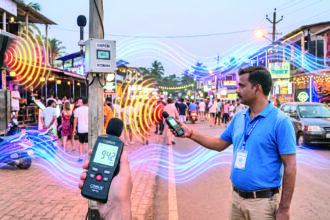
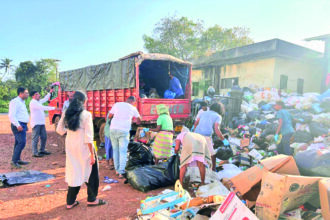
Tourism can cause the same forms of pollution as any other industry: air emissions, noise, solid waste and littering, releases of sewage, oil and chemicals, even architectural distortion. Tourism fails to integrate its structures with indigenous architectural of the destination. Large, dominating resorts of disparate design can look out of place in any natural environment.
Transport emissions and emissions are linked to global warming and photochemical pollution. For example, in Goa, tour buses often leave their motors running for hours while the tourists go out for an excursion because they want to return to a comfortably air-conditioned bus.
Goa is celebrating the arrival of cruise ships. Have tourism planners ever considered that the cruise ships coming into our shores will produce thousands of tons of waste each year. Solid waste and littering can degrade the physical appearance of the water and shoreline and cause the death of marine animals.
The development of tourism facilities such as accommodation, water supplies, restaurants and recreation facilities can involve sand mining, beach and sand dune erosion, soil erosion and extensive paving. In addition, road and airport construction can lead to land degradation and loss of wildlife habitats and deterioration of scenery. Mopa is a classic example of land in an area renowned for its rich bio-diversity being taken over for an airport that is altogether unnecessary.
To understand the implications of such mega projects, let us take the example of the seaplane service – a new product that Goa tourism seeks to start with this year. Seaplanes operate between areas that are inaccessible through roads, rail and air. Goa is much too small to claim inaccessibility to many areas. In Goa, there have been protests and strong opposition from the fishing community. The sea plane is a mere ‘flight of fantasy’ for the rich and wealthy to find their pleasures in while the displacement of indigenous populations and natural habitat is displaced.
The government has often been heard to complain that Goan tourism suffer under the interventions of National Green Tribunal (NGT) and Nongovernmental organizations (NGOs). Had there been no NGT or NGO, the government would have just gone on a rampage of conquering tourism spaces with disdain for the fact that these are not spaces that they own. The NGT and NGO’s are compelling the government to re-examine their assumptions and goals in order to ensure that tourism is sustainable.
(Ranjan Solomon is a consultant at the Centre for Responsible Tourism)