Even as overall accidents decline, fatal crashes continue to claim hundreds of lives each year, exposing persistent gaps in enforcement, infrastructure and road-user behaviour. ANIL KUMAR MISHRA REPORTS
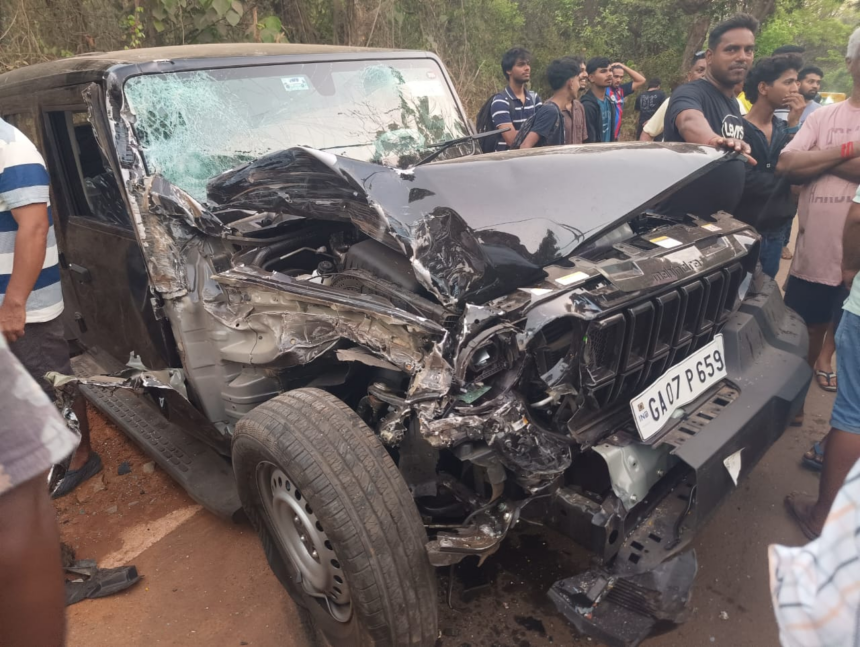
What began as a joyful ride recently ended in tragedy when Sanket Dabholkar lost his life after allegedly being struck by an illegal private SUV driven by an intoxicated tourist. In an instant, a young life was cut short, leaving behind grief, unanswered questions, and a stark reminder of the dangers that continue to plague Goa’s roads.

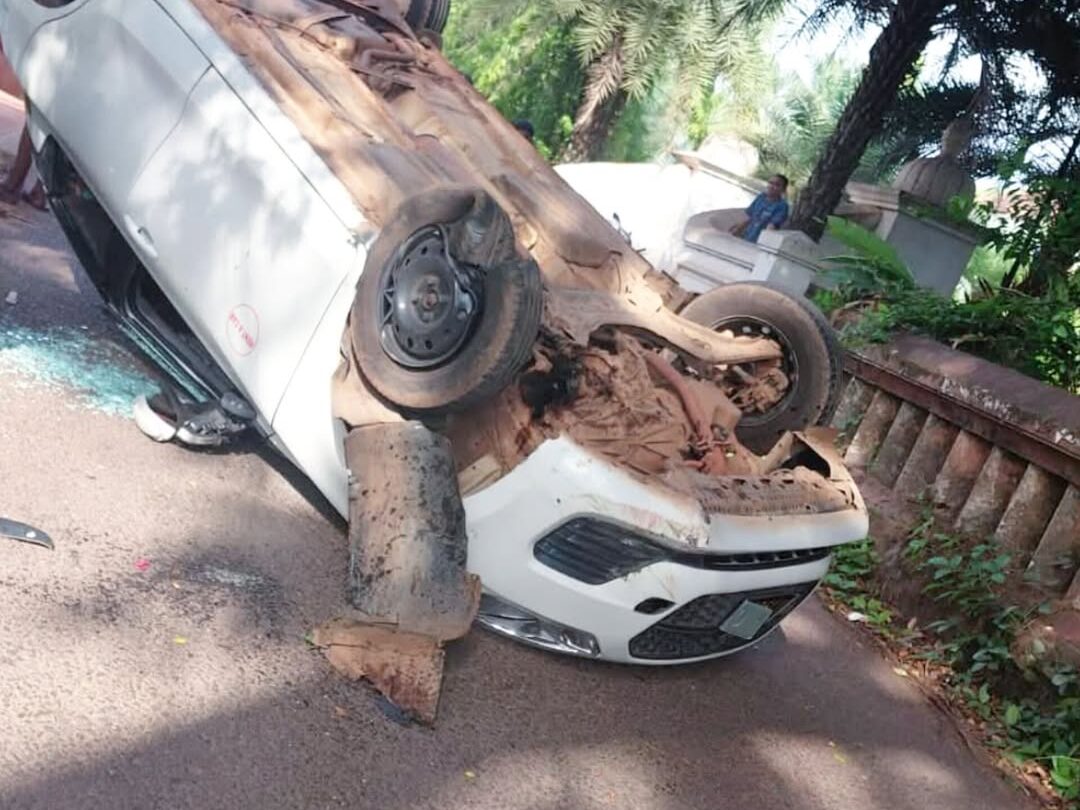
His death was not an isolated incident. In February, a 65-year-old tourist from Bhopal died in a crash at the busy Happy Bar junction in Assagao. In April, a 23-year-old woman lost her life in a fatal accident at Dona Paula. In May, the CCTV footage captured a young motorist allegedly speeding through Panjim and crashing into multiple vehicles, once again draw-ing attention to the State’s persistent road safety challenges.
Despite years of awareness campaigns, enforcement drives and policy interventions, Goa continues to grapple with a troubling reality. Official data presented in both the Goa Legislative Assembly and Parliament reveals a complex picture: While the number of reported road accidents has shown signs of stabilising and even declining, fatalities remain stubbornly high.
The question then is, are Goa’s roads becoming safer, or are accidents becoming deadlier?
A state battling persistent road risks
According to the latest accident statistics, Goa witnessed an overall decline in road accidents and fatalities during 2025. A total of 2,370 road accidents were reported during the year, compared to 2,682 in 2024, marking a decline of 11.63 percent.
The number of fatalities also dropped from 286 in 2024 to 269 in 2025, a reduction of 5.94 per cent. Fatal accidents decreased from 271 to 257 during the same period.
However, the improvement was not uniform across all categories. Grievous accidents increased by 15.66 per cent, rising from 198 cases in 2024 to 229 cases in 2025. Grievous injuries also registered a marginal increase of 1.81 per cent.
Two-wheeler users continued to account for the majority of road fatalities. During 2025, 157 riders and 34 pillion riders lost their lives in road accidents. Although both figures showed a decline compared to the previous year, they still represent-ed a significant share of the state’s road deaths.
A particularly alarming trend was the sharp rise in pedestrian fatalities. Pedestrian deaths increased by 35.71 per cent, climbing from 42 in 2024 to 57 in 2025.
Early data from 2026 indicates that the challenge is far from over. Between January and March 2026, authorities recorded 638 accidents compared to 596 during the corresponding period in 2025, an increase of 7.05 per cent. The death toll also rose from 59 to 63, while deaths during March alone increased from 20 to 22.
Fatal crashes persist despite declining accident numbers
Information tabled in the Goa Legislative Assembly revealed that 2,176 road accidents were reported across the State between January 2022 and January 31, 2026. Annual figures remained relatively stable, with 548 accidents reported in 2022, 539 in 2023, 518 in 2024, and 528 in 2025. As of January 31, 2026, authorities had already recorded 43 accidents.
However, a broader dataset presented in Parliament points to a more concerning trend. Goa record-ed 3,011 accidents in 2022, a figure that declined to 2,682 in 2024. Yet fatalities did not fall at the same pace.
Road accident deaths increased from 223 in 2020 to 286 in 2024-a rise of nearly 28 per cent over five years. The highest death toll was recorded in 2023, when 290 people lost their lives on Goa’s roads. These figures suggest that while accident frequency may be declining, the severity of crashes remains a major concern.
The fatality gap
Road safety experts often consider fatalities a more cidents. A reduction in minor collisions offers little reassurance if serious crashes continue to claim lives. Goa’s data reflects precisely this challenge.
Between 2022 and 2024, road accidents declined by more than 300 cases. Yet fatalities remained close to record levels. This suggests that many crashes involve high speeds, reckless driving, vulnerable road users, or inadequate compliance with basic safety measures.

The May incident in Panjim, where a 27-year-old youth from Dona Paula was arrested for allegedly driving under the influence and crashing a high-end car into multiple vehicles, mirrors a pattern frequently highlighted by enforcement agencies. Over-speeding, drunk driving, negligence, and reckless behaviour continue to feature prominently in accident investigations across the State.
Goa’s unique traffic profile further complicates the situation. The State attracts millions of tourists every year, many of whom are unfamiliar with local roads. The combination of rental vehicles, tourist traffic, two-wheelers, commercial vehicles, and narrow village roads creates conditions where even a minor error can result in devastating consequences.
Preventable deaths persist
One of the most alarming findings in the parliamentary data is the number of fatalities linked to non-compliance with basic safety measures. Helmet-related deaths remain consistently high. In 2024 alone, 115 people lost their lives while not wearing helmets. The figure peaked at 137 deaths in 2023.
For a state where two-wheelers remain one of the most widely used modes of transport, these statistics underline persistent challenges in both enforcement and behavioural change. Seat-belt compliance also remains a concern. Fatalities linked to the non-use of seat belts ranged between seven and 20 annually during the five-year period under review.
Road safety experts emphasise that these deaths are largely preventable. Helmets and seat belts remain among the simplest and most effective life-saving measures, often making the difference between survival and tragedy during a crash.
North Goa emerges as the most critical zone
The geographical distribution of accident hotspots reveals another important trend. Authorities identified 43 accident-risk locations across Goa in 2024, including 13 Accident Prone Zones (APZs) and 30 Black Spots. North Goa accounts for 22 of these locations, comprising six Accident Prone Zones and 16 Black Spots. South Goa has 21 identified hotspots, including seven Accident Prone Zones and 14 Black Spots.
Road safety experts define Accident Prone Zones as stretches of road where accidents occur frequently due to factors such as heavy traffic, poor road geometry, inadequate signage, or unsafe driving practices. Black Spots are specific locations where multiple serious accidents or fatalities have occurred over a defined period.
The concentration of accident hotspots in North Goa is particularly significant given the district’s higher levels of urbanisation and tourist traffic. Areas such as Assagao, where the fatal February crash occurred, illustrate how busy junctions, increasing traffic volumes, and mixed road usage can combine to create high-risk conditions.
Government’s multi-pronged strategy
The Goa government says it is addressing the issue through coordinated efforts involving the Goa Police, Public Works Department (PWD), Transport Department, and other stakeholders.
Under the Goa Causes and Analysis of Motor Vehicle Accident and Wayside Amenities on Highways Scheme, 2021, every reported motor vehicle accident is documented through a prescribed Form A and forwarded to the PWD for corrective action.
Authorities claim they have intensified enforcement through special traffic drives and surprise checks and also by deployment of personnel at accident-prone locations. Authorities have been promising strict action against violators under the Motor Vehicles Act as well as joint road safety inspections with PWD officials.
Suspension of licences of habitual offenders, road safety awareness programmes in schools and colleges as well as promotion of the Road Safety Patrol Scheme and Traffic Warden Scheme are being planned, say official sources.
The identification of Black Spots and Accident-Prone Zones is expected to guide infrastructure improvements such as enhanced signage, better street lighting, speed-calming measures, safer pedestrian facilities, and regular traffic monitoring.
While enforcement remains a critical component of road safety, experts caution that policing alone cannot solve the problem. The persistence of high fatality numbers despite repeated enforcement drives suggests that deeper structural issues remain unresolved. Road engineering deficiencies, inadequate pedestrian infrastructure, speeding, poor lane disci-pline, and risk-taking behaviour continue to contribute to serious crashes.
Behavioural change among motorists is equal-ly important. Recurring instances of drunk driving, overspeeding, and low compliance with helmet and seat-belt regulations point to a culture of risk that cannot be addressed solely through penalties.
The road ahead
The identification of 43 accident hotspots across Goa provides authorities with a clear roadmap for intervention. The challenge now lies in translating data into effective action. For Goa, the objective is no longer merely reducing the number of accidents. The larger challenge is reducing the number of lives lost on its roads.
As the recent fatalities in Assagao, Panjim, and other parts of the state demonstrate, every statistic represents a life cut short, a family devastated, and a reminder that road safety remains one of Goa’s most pressing public concerns.
The numbers suggest that while progress has been made in reducing accident volumes, the battle against fatal crashes is far from over. Until safer infrastructure, stronger enforcement, greater accountability, and more responsible driving behaviour come together, Goa’s road safety crisis will continue to exact a heavy human cost.