The Western Ghats, listed among the top eight most significant biodiversity hotspots worldwide, extend from North to South across six Indian States, including Goa, and are recognised for their high levels of freshwater fish diversity. However, the distribution, status, and habitat associations of many species, particularly within forested and protected areas, remain inadequately documented. In this backdrop, the Indian Council of Agricultural Research (ICAR)-Central Coastal Agricultural Institute (CCARI), Goa has documented freshwater fish diversity across protected areas of Goa during pre-monsoon and post-monsoon 2025–26, covering streams and rivers within Mhadei, Bondla, Bhagwan Mahavir, Cotigao, and Netravali Wildlife Sanctuaries. SHASHWAT GUPTA RAY finds presence of moderate to high species richness in these protected areas
As Goa is part of the ecologically significant Western Ghats biodiversity hotspot, ICAR-CCARI has undertaken a study to address the existing knowledge gap in freshwater fish documentation within forest-associated streams and rivers, which are increasingly subjected to pressures from human activity, such as waste accumulation, hydrological alteration, and tourism-related disturbances.

The Institute prepared an Interim Technical Report (February 2025 – January 2026) titled ‘Fish Biodiversity Survey, Inventory, and Documentation from Streams and Rivers in Notified Government Forest and Protected Areas of Goa for Conservation and Management,’ which it submitted to the Forest Department. This report documents systematic efforts undertaken to establish a comprehensive baseline inventory of freshwater fish diversity within protected forest ecosystems of Goa.
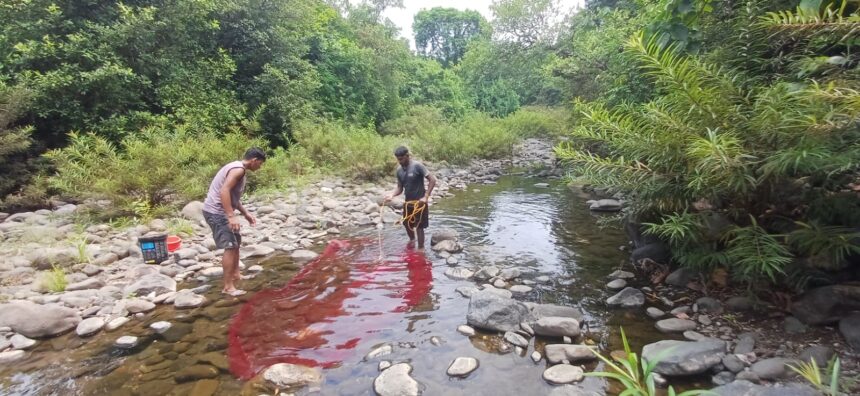
The study covers major protected areas including Mhadei, Bhagwan Mahavir, Bondla, Cotigao, and Netravali Wildlife Sanctuaries, as well as Dr Salim Ali Bird Sanctuary. The survey adopted a systematic, stream-wise and gradient-based sampling design covering upstream, midstream, and downstream zones across multiple river systems during both pre-monsoon and post-monsoon seasons of 2025–26.
Data collection included species composition, abundance, water quality parameters, habitat characteristics, and geospatial coordinates. Voucher specimens and photographic documentation were maintained.
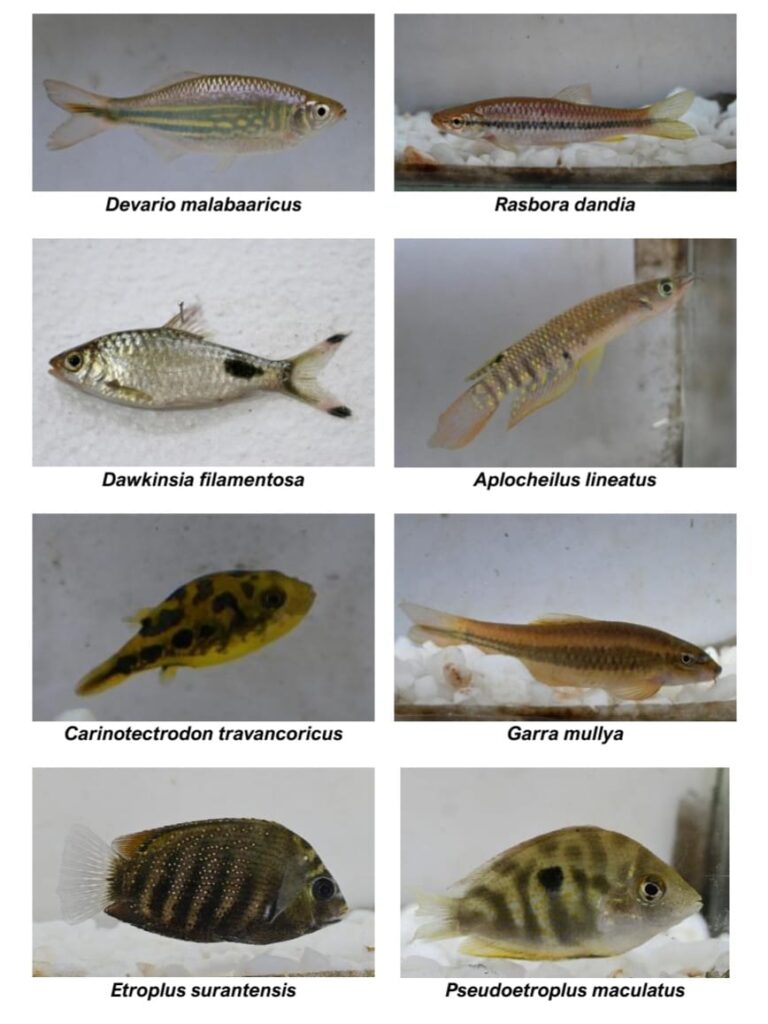
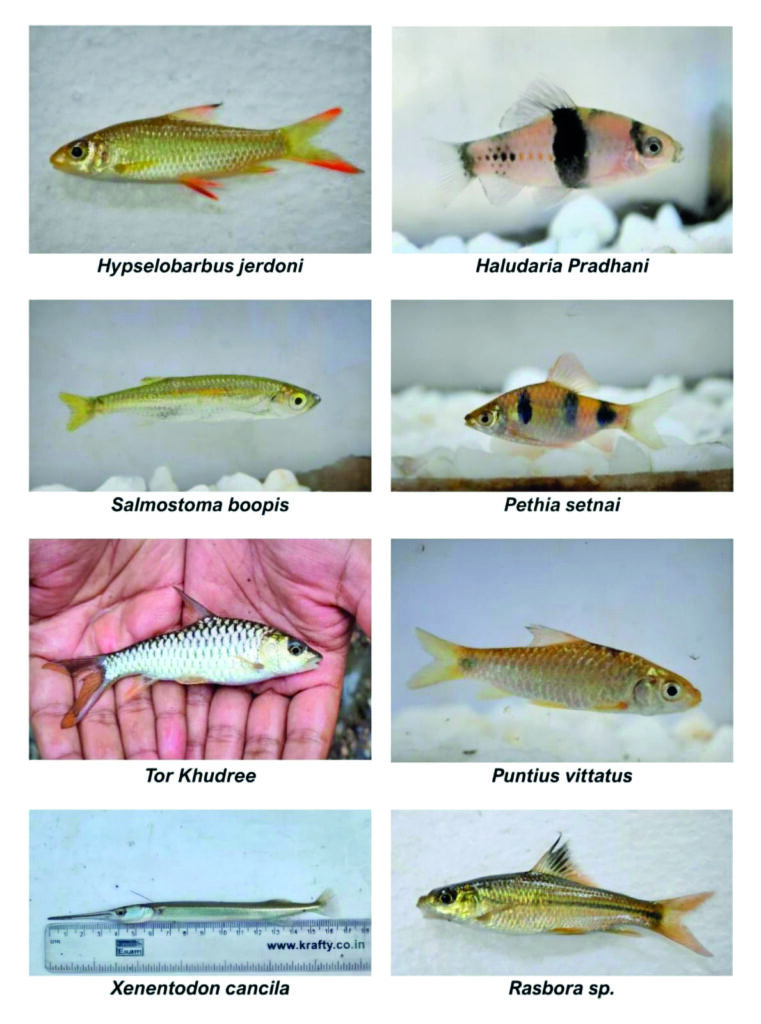
Findings indicate moderate to high freshwater fish diversity across sanctuaries, with assemblages predominantly composed of small to medium-bodied indigenous cyprinids such as Pethiasetnai, Haludariapradhani, Rasboradandia, Dawkinsiafilamentosa, and Salmostomaboopis. The presence of conservation-significant and habitat-sensitive species including Tor khudree, Hypselobarbusjerdoni, Carinotetraodontravancoricus, and Ompokmalabaricus highlights the ecological integrity of several forest stream segments.
“We have found around 30 fish species from the study sites, some have ornamental potential with good colouration characteristics. Out of these 30, there were two uncommon fish species that have not been identified yet. DNA barcoding is being done on these species to identify them,” said Trivesh Suresh Mayekar, Scientist (Fish Genetics & Breeding), ICAR-CCARI.
There are 14 to 15 streams in the notified protected areas. These streams were demarcated into three different zones – highland, midland and lowland.
“We are surveying all three zones to find out what kind of species is present during pre and post-monsoon seasons. Seasonal variations were evident, with post-monsoon periods generally showing higher numerical abundance due to enhanced hydrological connectivity, while isolated or seasonally disconnected stretches exhibited reduced fish presence,” Dr Mayekar said.
The occurrence of conservation-significant and habitat-sensitive species such as Tor khudree, Hypselobarbusjerdoni, Carinotetraodontravancoricus, and Ompokmalabaricus further highlights the ecological integrity of several upstream and midstream stretches.
“These species serve as biological indicators of good water quality, habitat connectivity and minimal hydrological alteration. Seasonal comparisons revealed that pre-monsoon communities were relatively structured and stable under moderate flow conditions, while post-monsoon surveys reflected enhanced hydrological connectivity and increased numerical abundance in several downstream stretches,” he said.
Diverse habitat emerged as the principal driver of diversity across all surveyed sanctuaries. Streams with mixed substrates (pebbles, cobbles, boulders, sand and silt), variable depth gradients, and 60–80% riparian vegetation cover consistently supported higher richness and functional diversity.
The documentation of associated aquatic fauna such as freshwater crabs, shrimps and mussels further indicates the availability of stable benthic habitats and relatively favourable ecological conditions in several forest stretches.
Bhagwan Mahavir Wildlife Sanctuary exhibited the most consistent diversity across seasons, reflecting structurally complex habitats with mixed substrates and substantial riparian cover. Cotigao Wildlife Sanctuary showed greater seasonal variability, with post-monsoon richness markedly higher in deeper Talpona stream stretches compared to relatively shallow Kuskem stream sites.
Netravali Wildlife Sanctuary demonstrated moderate richness overall, though post-monsoon assemblages in Guleli stream showed stronger numerical dominance by select taxa, slightly reducing evenness.
Mhadei Wildlife Sanctuary maintained comparatively stable indigenous assemblages across seasons, suggesting relatively intact upstream habitat conditions. Habitat heterogeneity emerged as the primary driver of diversity, with mixed substrates (pebbles, cobbles, boulders, sand, and silt), moderate depth variability, and 60–80% vegetation cover consistently supporting higher richness and functional diversity.
Collectively, the seasonal dataset underscores the ecological significance of Goa’s forest-associated river systems and emphasises the importance of sustained monitoring and conservation management to maintain freshwater biodiversity.
The Principal Chief Conservator of Forests, Goa, Kamal Datta said that the rich biodiversity of the fish species in Goa’s protected areas indicates the high water quality of the streams.
“The report on freshwater fish diversity in the protected areas of Goa prepared by ICAR-CCARI supports the long-held view that the riparian ecosystem within the protected areas of Goa supports significant fish biodiversity including habitat-sensitive and conservation-significant fish species, which in turn shows that the ecosystem is resilient and has high ecological integrity,” Datta said.
The report shows that if the health of the wa-ter bodies are good and unharmed, marine life can flourish very well. This highlights the fact that key to bio-diversity is protecting the environment, especial-ly the water resources, as Goans are heavily depen-dent on marine life for their survival.