With the aim of preventing any outbreak of vector borne diseases in the city and surrounding areas across Salcete, the Health Department, along with the District Collectorate, are monitoring and inspecting vulnerable sites.
A committee on the prevention of vector borne diseases, led by Salcete Deputy Collector and Sub Divisional Magistrate (SDM) Ajit Panchwadkar, has identified areas in Margao that need to be checked. These include Kadamba Bus Stand where instructions have been given for maintenance of cleanliness and the SGPDA wholesale fish market where the member secretary has been asked to implement a series of measures including ensuring that the drains are cleaned and hygiene maintained.
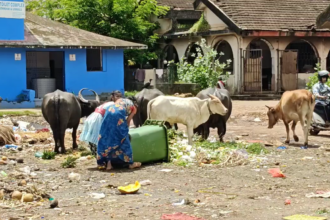
From its past records of sites from where vector borne diseases were detected, construction sites including the under construction district hospital and other sites across the city are being inspected. Scrapyards have been ordered to remain shut during the monsoon and ensure that water is not allowed to stagnate in items like old tyres, tubs, etc and inspection report on the same has been sought.
“The primary target should be households, industries, construction sites. Tenanted houses will be our prime target for the indexing of vulnerable areas,” said the deputy collector. He added that the Health Officers have been directed to give regular report on action taken so as to assess the situation and take necessary calls for awareness and prevention of the diseases.
The Committee, at its last meeting, chalked out a year-long plan for the awareness and control of infections of vector borne diseases. For instance, earlier in May, five dengue cases were detected at the Margao Industrial Estate in Nessai. Given the outbreak of dengue cases in 2015, a survey of the Sao Jose De Areal village and adjoining areas was conducted which revealed that 70 per cent of the households are vulnerable to vector borne diseases. The Deputy Collector has expressed disbelief over the zero prosecutions by Labour Department in case of violations in industrial areas. Panchwadkar stated that most of the cases had come from Sao Jose De areal and Moti Dongor and the two areas had been demarcated as sensitive areas and would be on the priority list.
There have also been outreach plans to reach out to schools, panchayats and municipalities.
At the municipality level, the health centres have emphasised on strategies to control and prevent the spread of malaria for which advocacy workshops on National Vector Borne Disease Control Programme were organised. “We are coming towards elimination of Malaria. The theme this time is “End malaria for good”, said Medical officer Anju Kharangate.
“District Hospital Construction Labourers have also been given training to prevent the deadly disease. We request the MMC to provide us necessary infrastructure to speed up the elimination procedure of Malaria,” said Kharangate.
“We have only 10 supervisors and there is so much work of to be done in order to keep the town clean. Hence we need help from MMC in the form of trucks and labourers to remove the coconut shells and tyres to solve all problems,” she added.”Keeping cleanliness is a common sense as we are generating the garbage. It is time to see what we are doing to solve our problems. It is necessary to see that we just don’t keep blaming the State Government and the local self Government bodies. We have to make sure that we don’t need to have such workshops in the future,” added Panchwadkar.