Builders found wanting in malaria prevention prog
HERALD REPORTER
PANJIM, APRIL 26
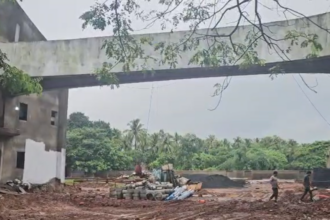
Builders across Goa have been found wanting in the vector-borne disease control programme of the Directorate of Health Services taking into account the fact that 85 per cent cases of malaria are reported from project areas (construction sites) where migrant (or construction) labourers work and reside.
In an observation made by Dr Ashwani Kumar on the occasion of World Malaria Day on Monday, the DHS bought 10,000 insecticide-treated bed nets to be distributed at construction sites out of which about 3,500 have been purchased by builders and contractors.
Kumar said taking into consideration 85 per cent malaria cases being reported from project areas the distribution of bed nets has been just about 35 per cent which appears dismal. While some of these builders have come forward and purchased these nets for their workers, majority of them have shown a lukewarm response, he asserted.
Secondly, he maintained, the builders lobby was wealthy and powerful because at their instance honest health officers who tried to enforce the Public Health Act have been transferred. There is a need to build a strong linkage with builders and their associations to impress upon them about their corporate social responsibility, he emphasised.
Dr Ashwani said wherever tourism was active (like Candolim) malaria cases were witnessed. Keeping this in mind the Travel and Tourism Association of Goa should also take it upon itself to distribute bed nets wherever required, he stated.
Dr Sachin Govekar from the Candolim Health Centre too observed out of the 1,000 nets that he has at the CHC about 335 of them have been sold. The situation is such in the Candolim-Calangute belt that malaria has gradually shown an upward trend in slum areas and the cases have gone down at construction sites.
The Goa Civic and Consumer Action Network Coordinator Roland Martin called for efficient utilisation of the Public Health Act, especially by health officers to issue notices to gram sabhas if there was a danger to peoples’ health due to some unhygienic condition.
The basic purpose, Martin observed, behind the notice to the gram sabha was to make the panchayat aware of the health scenario in the village and seek its participation to control the same.
There is a need to change the approach while tackling a health problem. For example, he mentioned, the sanitary or health cards for workers lack place for more information. There is no strategy in place to track a construction worker who is moving from one place to the other, he observed and added, “The entire documentation process and systemic approach to the problem has to be revisited from time to time.”
Today’s programme was also attended by Deputy Director of National Vector Borne Disease Control Programme (NVBDCP) Dr Dipak Kabadi, Director of Health Services Rajananda Desai, Deputy Collector Tiswadi Sabaji Shetye, Dr Amit Dias from Goa Medical College, chairperson of core committee Goa State AIDS Control Society Dr Pramod Salgaonkar and Health Officer NVBDCP Dr Jose D’Sa.
The Malaria Day was observed with an aim to have an orientation programme as preparedness for the oncoming monsoon season for some of the members of the block-level committees who attended the programme today.
Dr Dipak Kabadi said out of the 11 block-level committees that were formed seven are active. “Malaria cases have gone down significantly. But that doesn’t mean we will relax. It is time to put double efforts to eradicate the disease completely,” he observed.