Team Herald
PANJIM: Prime Minister Narendra Modi on Sunday informed that the relics of a 16th Century Georgian Queen Ketevan the Martyr, uncovered from the St Augustine Church in Goa in 2005 have been handed over to Georgia.

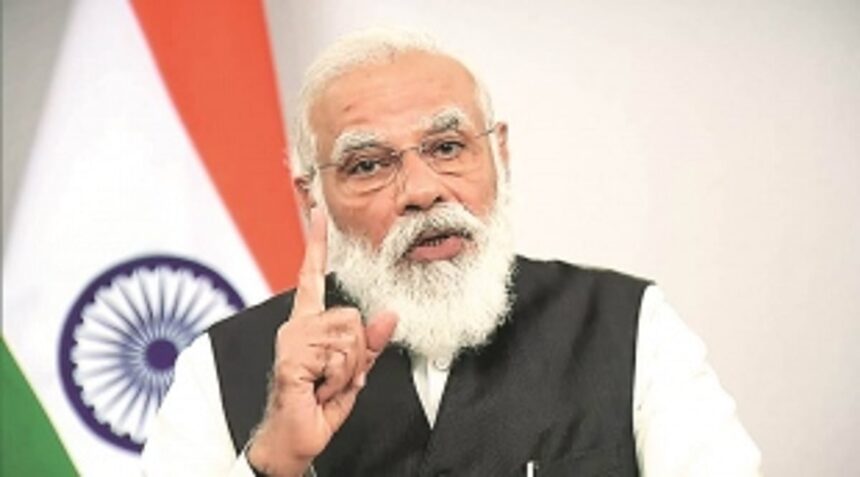
While addressing the nation through the Mann Ki Baat monthly radio programme, Modi said the development will strengthen the diplomatic ties not only between India and Georgia but also between Goa and Georgia.
“India handed over the holy relics or icon of Saint Queen Ketevan to the Government of Georgia and the people there. It was a very emotional moment for both the countries. The President of Georgia, Prime Minister and religious leaders were present for the ceremony,” Modi said.
“The words that were said in praise of India in this ceremony are indeed very memorable,” the Prime Minister said, lauding the strong diplomatic ties between the two countries.
“Along with both the countries, it will strengthen ties between Goa and Georgia,” he added.
India sent the holy relics to Georgia in 2017 for a period of six months to celebrate the 25 years of diplomatic relations between the two countries. On July 9 this year, the relics were permanently handed over to Georgia by External Affairs Minister S Jaishankar.
Ketevan, the Queen of Kakheti, a kingdom in eastern Georgia, was murdered at Shiraz in Iran in 1624, nearly 400 years ago. Queen Ketevan earned the title of ‘martyr’ because it is believed she gave up her life defending the Christian faith and refused to convert to Islam, even after prolonged tortures by the Safavid suzerains. After her death, Ketevan was canonised as a saint by the Georgian Orthodox Church.
In a series of searches between 2004 and 2005, a group of Indian archaeologists, accompanied by a Portuguese architect, uncovered a number of relics and bone fragments that were confirmed to be of Georgian descent on a DNA test. Additional tests confirmed that the U1b bone came from a woman. So, in 2013, it was established that the bone found in two pieces in 2005 was consistent with being from a Georgian woman.