Team Herald
PONDA: The Nagrik Kruti Samiti, Kerim (NKSK), has urged Chief Minister Pramod Sawant to consult locals before proceeding with any industrial projects on the scrapped Nylon 6,6 project land at Bhutkhamb plateau. The group reminded the government of the violent protests in the 1990s that successfully halted the controversial project.

The NKSK, through funds raised by its members, had even approached the Supreme Court to reclaim the land for Kerim village. They argue that the plateau is a crucial water source for agriculture, bagayats and kulagars in five surrounding villages, as well as for wetlands in the Priol constituency.
Activist Swati Kerkar expressed surprise at the Chief Minister’s recent statement about bringing “green industries” to the area, despite the fact that villagers are still fighting for the land in the Supreme Court.
“Villagers fought against the Nylon 6,6 project in 1995-96 and later opposed the SEZ project for Cipla in 2007. Now, we are again forced to protest against the government’s plan to bring so-called green industries,” said Kerkar. “The community remains determined to protect the plateau and only activities that preserve its ecological balance should be considered.”
The land in question spans approximately 12 lakh square metres.
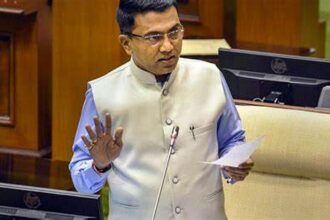
It may be recalled that on Wednesday, Chief Minister Sawant announced plans to take over the SEZ land at Kerim and introduce green industries. However, Swati Kerkar warned that industrial development could lead to irreversible damage, as seen in other areas where locals have taken to the streets to stop environmental destruction.
“People fear that in the name of green industries, large corporations will destroy the plateau. This land is a vital water source for the villages at its foothills,” said Kerkar.
She also highlighted that for generations, villagers have performed religious rituals at 12 locations along the border of Bhutkhamb plateau to protect the land. The Karmalem Lake, which has been declared a wetland, also receives its water from Bhutkhamb Plateau.
“The chief minister must take locals into confidence before making any decisions,” she added.
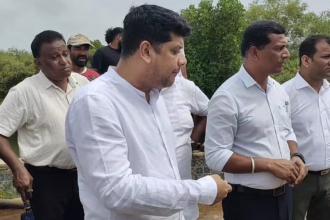
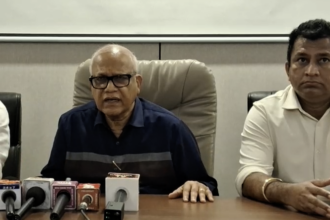
Swati Kerkar was joined by Ramkrishna Zalmi, Pratiksha Gaude (former Kerim Sarpanch) and other members of NKSK.
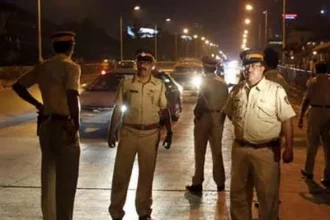
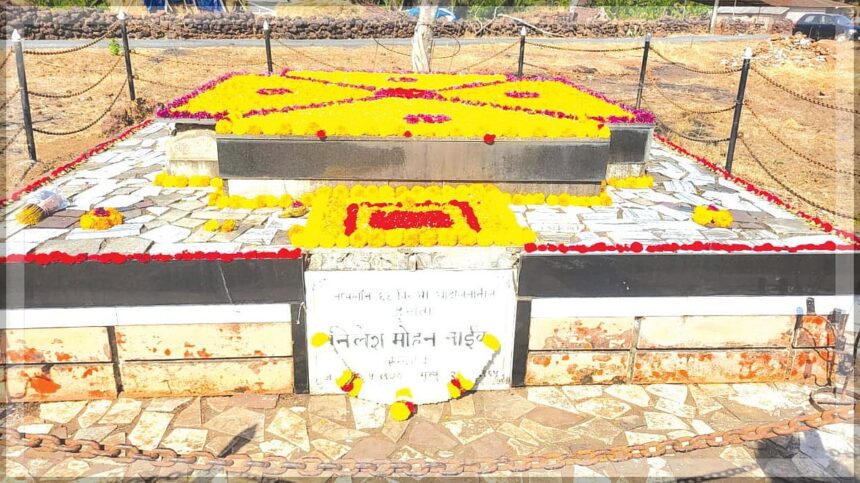
They recalled that during the 1995-96 protests against the Nylon 6,6 project, one villager, Nilesh Naik, was killed in police firing. Following intense resistance, the project was scrapped. In 2007, locals strongly opposed handing over the same land for the Cipla SEZ project and even approached the courts to reclaim it.
“The five villages depend on this land for water and bagayats. The government must consult us before making any announcements about industries,” warned the locals.
Ramkrishna Zalmi pointed out that the plateau was once used for growing ragi, coconut plantations, and other crops. “It is a rich water source and a hub for spiritual and religious activities,” he said. “We do not want the destruction of our land in the name of industries. Only agriculture and environmentally friendly activities should be considered, with local consultation.”
The villagers remain firm in their fight in the Supreme Court to reclaim the land, stressing that their ancestors had preserved Bhutkhamb Plateau for the survival of agriculture and bagayat activities.