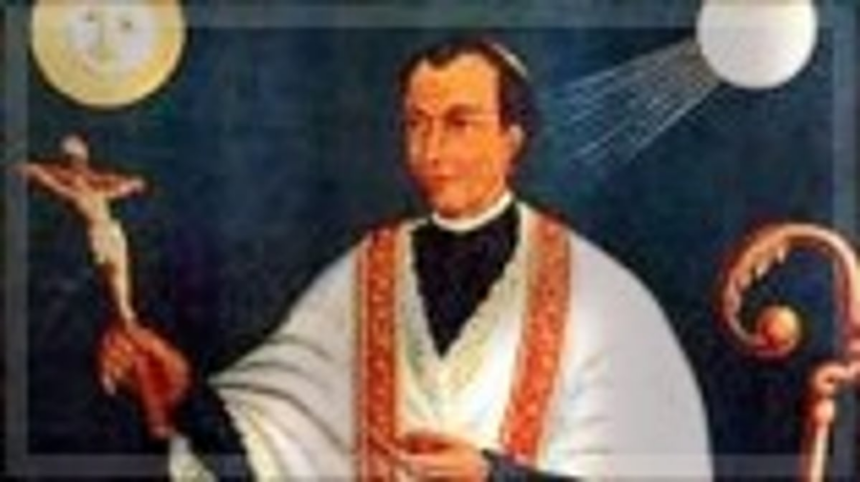
To the south of the splendid Igreja de Deus Espírito Santo in Margão stands the charming Barreto house, distinguished by its brown exterior. This residence came into the possession of Manuel de Miranda from Pulvaddo in Benaulim during the mid-17th century. Currently, the house is divided between two branches of the Miranda family. The portion that has been separated features a raised plinth due to the sloping road and is accessible via a side staircase. Manuel de Miranda was the brother of Maria de Miranda, who wed Cristovão Vás of Sancoale. Cristovão and Maria are the parents of S José Vás. His father was originally a member of the Naik family, which converted to Catholicism during the early Portuguese era. From a young age, Vaz demonstrated a profound devotion to God, dedicating his time to prayer and spiritual pursuits. According to tradition, when the saint visited his uncle’s residence in Margão, in the 17th century, he would traverse the open area known as Praça de São Pedro to pray before the Blessed Sacrament in the Holy Spirit Church.

St Joseph Váz has exerted a profound and lasting impact, not only on his homeland of Goa but also on what was once the most Catholic region of Karnataka, specifically Mangalore and its adjacent coastal area known as Kanara. During this period, the Dutch began to challenge the Portuguese dominance in the spice trade, which the latter had maintained in India, Sri Lanka, and the Moluccas to the east. The Dutch formed alliances with local Hindu rulers around Mangalore and Buddhist monarchs in Sri Lanka to expel the Portuguese, seize their ports, and impose restrictions on the practice of the Catholic faith. In Mangalore and the Kanara region, they systematically destroyed Catholic educational institutions, including numerous schools and colleges established by the Jesuits along the coast. Furthermore, they prohibited all European missionaries from entering and operating within these territories.
Upon learning of the suffering endured by the persecuted Catholics in Sri Lanka, who had been left without support for forty years since the Dutch takeover in 1656, the young Father Joseph Váz felt a strong calling to assist them. During his time in Sri Lanka, he was unable to openly profess Catholicism. For a decade, he labored without any form of protection, often donning various disguises. He would sometimes present himself as a beggar, baker, laundryman, bangle seller, or fisherman. One of the garments he wore is preserved with the Bishop of Sri Lanka, while another piece was brought to Goa and is now housed in the Sanctuary at Sancoale. A third piece, which he wore during his four years of service in Mangalore, is encased alongside a document from the Bishop of Sri Lanka, verifying its authenticity as a genuine article of clothing he utilized.