Days after a viral video from Varca showed a female tourist forced to walk nearly a kilometre in the rain with her luggage, Goa’s travel and tourism industry has renewed calls for the gov ernment to urgently re solve the State’s long-run ning taxi issue. The Travel and Tourism Association of Goa (TTAG) said the rising number of complaints from tour ists and residents alike has made this a crisis the government can no longer ignore. TTAG vice president (North Goa) Aakash Mad gavkar said, “The growing frustration among visitors reflected poorly on a State that continues to market itself as a modern, technol ogy-friendly destination. Freedom of choice togeth er with transparent and affordable pricing along side ease to book with the help of technology in to day’s digital age is what is urgently required in the transport sector in Goa, and more precisely in the taxi sector. With the amount of negative feedback coming in through weekly stories of harassment, overcharg ing and inconvenience, this is something that the Goa Government needs to ur gently resolve without ex cuses.” “Be it flights, buses, trains, hotels, guesthouses, villas, restaurants, activi ties and experiences, all of them have multiple options with transparent pricing wherein any customer, local or tourist, can choose what he wants according to his budget and can book it with ease on his mobile.
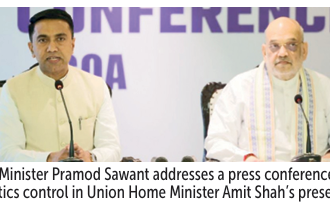
However, the transport sector is the last frontier in Goa. Kadamba through its electric buses is also going online, and soon customers can book the same online. Only tax is are remaining. Right now there are two options — af fordable and transparent Goa Miles, with the chance of being inconvenienced by local taxis, or just taking over priced taxis from outside a hotel to prevent a bad situa tion, Madgavkar said. “Why can’t the government take a strong stand against them, considering it is constantly talking about devel opment with its double-engine sarkar? The government has to take this matter to a logical conclusion by allow ing all apps in Goa and ensuring that safety is provided to all drivers as well as customers. This matter should be resolved to take Goa forward in line with the honourable Prime Minister Narendra Modi’s vision of a Viksit Bharat 2047. The resolution of this issue will definitely help Goa to achieve that status by 2035–37, as per the words of the Home Minister Amit Shah during his visit to Goa on Octo ber 4,” Madgavkar added. A tourism stakeholder from South Goa said the latest video again exposes the underlying issue — not simply whether taxis booked online should be allowed, but why tourists prefer them over local ones. “Taxi operators keep asking how online taxis are al lowed to pick up guests from hotels, but the real question is why tourists prefer them in the first place. Many are willing to walk a kilometre or more in the rain just to get a cheaper online taxi. That shows this is not about con venience, it’s about affordability and choice. If a hotel res taurant is expensive, guests are free to eat elsewhere or even stay somewhere else the next time. But in the case of taxis, tourists are being deprived of that choice. This kind of behaviour is what they record in videos, and it doesn’t happen anywhere else,” the stakeholder added. Another video that recently resurfaced — confirmed to be from a few months ago — shows a tourist outside a starred hotel in Calangute being stopped by local taxi op erators from entering the taxi he had hired. In the video, the tourist can be heard asking the drivers why they were blocking the cab he had booked, and later asking, “Is this the way tourists have to be treated?” Before hotel staff in tervened to ensure he could leave. Chief Minister Pramod Sawant has in the past warned local taxi operators against getting into disputes with tourists or physically blocking vehicles. However, in this and several other cases, including those from Anjuna and Canacona, tourists who booked taxis online have them selves been seen arguing with operators outside hotels, asking why they were being prevented from boarding their vehicle of choice. A tourist was also seen claiming that taxi rates in Goa are far higher than those in other parts of the country. Tourism stakeholders said the series of incidents — and the divided reactions they often draw online — shows how much Goa’s taxi system has become a public flash point. Some have criticised the tourists for sharing their experiences, while others argue that the videos expose what ordinary travellers have faced for years. “The gov ernment spends crores on campaigns to project Goa as modern and tech-savvy, yet the taxi sector remains stuck in time,” a stakeholder remarked. Locals have also reiterated the need for a transparent, affordable and reliable taxi system. Many residents say taxis remain prohibitively expensive even for short trips, including to the airport, leaving them dependent on per sonal vehicles. “Taxis mostly cater to hotels. For locals, they are not an option at all,” a Salcete resident said, add ing: “Goa needs a fair system that works for both visitors and Goans, not one that leaves both stranded or priced out.” With the festive and charter season underway, tourism bodies say the government can no longer delay reforms in the taxi sector — warning that the continuing controver sies are steadily hurting Goa’s reputation.