Mestre Maurélio António da Piedade Cotta, was born at his maternal home in Margão, which was situated just opposite the Old Hospício, on December 20, 1936 and passed away peacefully on October 24, 2022. He had worked at the Hospício Hospital, and rendered his service as choir master at both the Igreja de Deus Espírito Santo, Margão, and Igreja de Nossa Senhora das Mercês, Colva.
He is survived by his devoted wife, Maria de Fatima Cabral e Cotta whom he married on January 03,1971 and their children, Julieta, with Arvind Clemente, and Sebastião, with Clotilda. His grandchildren, Jean-Louis, Anabelle, Olivier, and Andre, hold him in great affection. He was also the brother of the late Maria, who was married to the late Ramesh Menon; Fr. Mariano Cotta; the late Manuel (Manecas), married to Goretti; Miguel (Miquito), married to Lizette; the late Fr. Antonio Cotta; and Maria de Graça, married to John Sequeira. His extended family included in-laws Albertina, widow of the late Antonio Menezes; the late Cordato, married to Quiteria; Melita, married to Pantaleão Noronha; and Norma, married to Aleixo Salema.

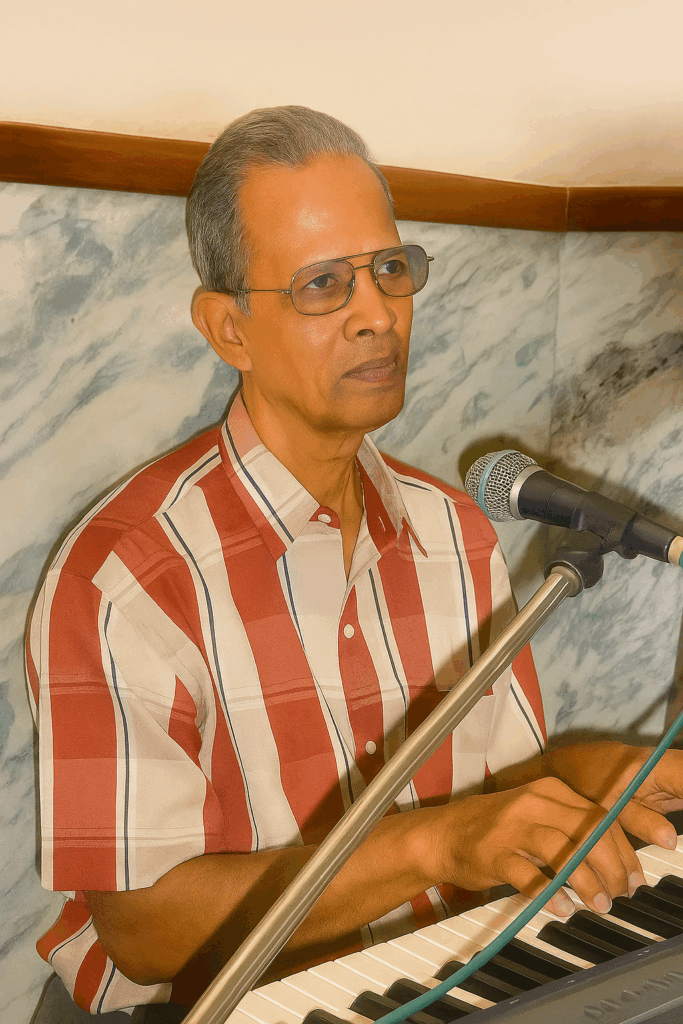
Mestre Maurélio António da Piedade Cotta
As a bachelor, he joined the choir at the Capela do Sagrado Coração de Maria attached to the Hospício hospital premises in Margão in 1964. In 1969, Fr. Francisco José da Anunciação Barboza invited him to lead the choir at the Igreja de Deus Espírito Santo, Margão, where he led weekday masses and the 8:00 am Sunday Mass for 35 years, resigning in 2005. He noted this decision was due to “mental harassment at the church”. His wife Fátima mentioned, “Here he was offered a monthly salary of only Rs 1400.” She also recalled that within five days of resigning, he was invited to lead the choir at Igreja de Nossa Senhora das Mercês, Colva. “On Sundays he actually walked to Colva from his residence in Borda as early as 4 am. There he was paid a salary of Rs 4000 per month and was ultimately offered a token of love of Rs 10000 by Fr Diogo Manuel Ofício Fernandes when he resigned from there in 2010, due to old age and overall body weakness.” He later returned briefly to the Igreja de Deus Espírito Santo during the tenure of Fr. Francisco Avinash Rebello, and continued for a short while after Fr. Amandio Valadares took charge.
He is till day remembered fondly for filling the church with traditional Latin chants and hymns in Portuguese and Konkani. Though age eventually restricted his ability to play the keyboard, his passion for sacred music never diminished. Sadly, despite his dedication, a family attending mass at Holy Spirit Church often complained to the priest about him, leading to pressure for his retirement.
In fact, the family had advised me not to sing with the Mestre, saying that he could no longer play the keyboard as he once did and that his singing was no longer pleasant to hear. But I paid no heed to such remarks and continued to accompany him faithfully, right up to the last day he played the keyboard in church.
As a member of the Sacred Music Committee of Goa, he left behind a meaningful legacy through his contributions. He compiled and published two volumes of Konkani sacred music titled “Deva mogak gaiat” and received awards recognizing his lasting contribution to music. He has also contributed significantly to the Konkani hymnal ‘Gaionancho Jhelo’. He was the son of the late Sebastião Caetano Silvestre da Piedade Cotta (from Loutolim) and Julieta do Sagrado Coração de Maria Pereira e Cotta (from Margão).
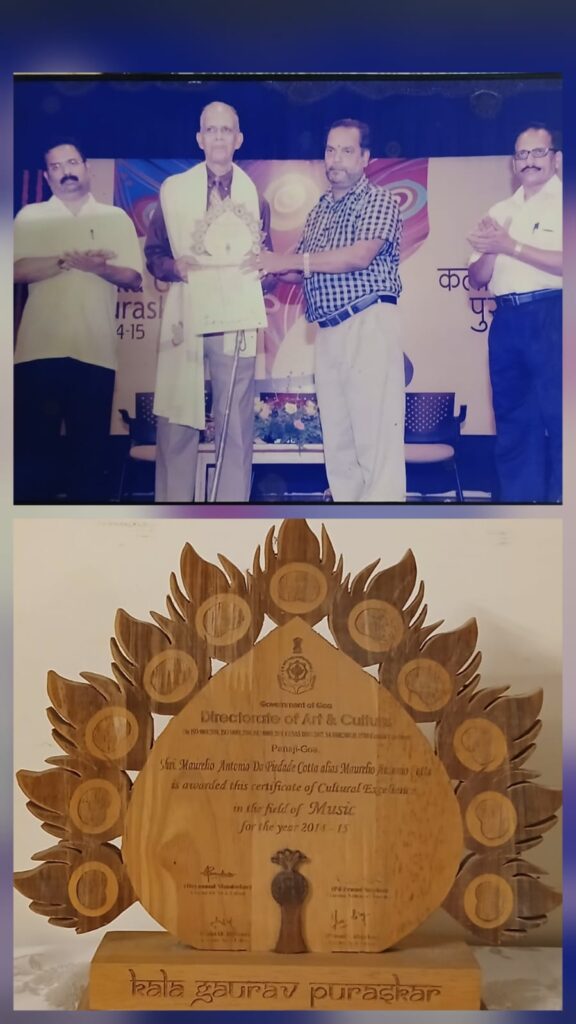
Mestre Maurélio António da Piedade Cotta, being awarded a certificate of cultural excellence in the field of music for the year 2014-2015, by the Directorate of Art & Culture, Government of Goa.
He pursued early studies in English at Escola Almeida, Margão, followed by Loyola High School, then joined Rachol Seminary. While studying Philosophy, he learned to play the organ at Rachol. Reflecting on those days, he would often say that he could have become the lead organist had he stayed on at the seminary. Speaking of the experience, he remarked: “There is something so divine about the sort of music that comes out from the pipe organ. There are smaller organs called reed organs seen in many churches. Though it produced some good sound it cannot compare with the pipe organ. The music it produced was so divine, it would bring people closer to God.”
Besides serving at the churches in Margão and Colva, he played the keyboard for feast days and novenas at the Capela de Nossa Senhora da Piedade, Margão Monte, at the feast of Saint Anne at Silva House (copla ghor) in Borda, and at the Capela de São Joaquim in Borda. The sons of the late Justice Dr. Eurico Santana da Silva fondly recall: “Maurelio was always the organist at the Vespers and feast of our family chapel feast (of St. Anne) for many years since our childhood. He also played whenever there was a solemn mass at our house.” They further remembered hearing his devotional singing during novenas at the Monte: “The music that flowed from his heart could move anyone to tears.” They also recalled him humbly walking home with heavy market bags, accepting their father’s offer for a lift only reluctantly.
He was admired as a humble, dedicated man, loyal to his vocation. As described by the Silva brothers: “It was an era of gracious and noble hearts that inhabited Margão, and his passing left an indelible void for those who knew him. He was certainly one of the most well-known and respected sons of Margão.”
Lamenting the changes in church music, Mestre Maurélio observed: “Different parts of the Latin masses, including parts such as the Kyrie, Santos and the Alleluia have now been replaced with vernacular languages. Church music has become simpler and more basic with more dependence on electronically operated organs.”
Mestre also imparted his knowledge of Solfeggio at the Fr. Camilo Xavier School of Music, previously The Music Circle in Margão, affiliated with Trinity College of Music and the Royal School of Music, London.
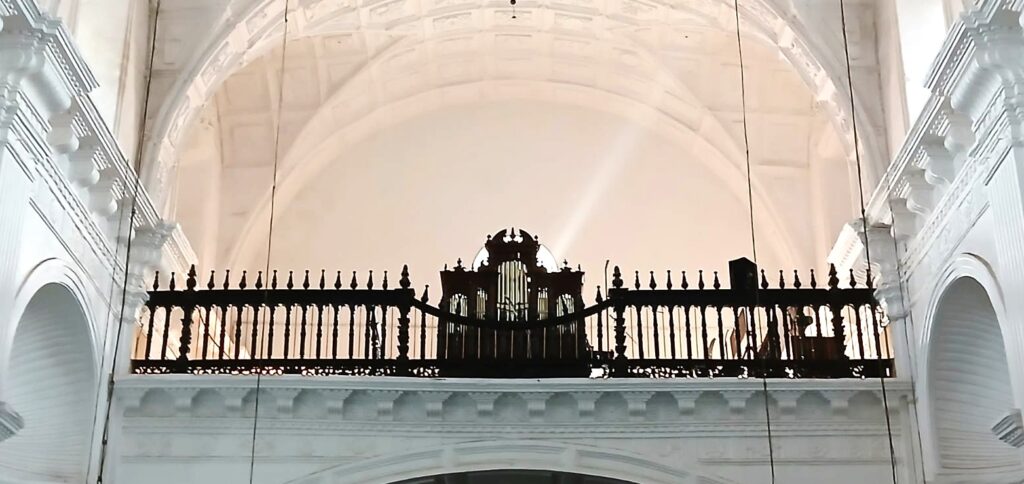
The pipe organ by Gebruder Link of Germany, Margão
About the pipe organ in Margão, he expressed with deep feeling, way before it was restored: “The pipe organ produced a very solid sound that had a rich influence on its surroundings. If it were played in the Espírito Santo church, the sound would resonate till the Old Market in Margão. I used to play it every week, but now I cannot even try, given its present condition”.
Fernando Fernandes, Goa’s only pipe organ restorer and tuner, recalled first meeting his family during piano tuning visits. Only later, in 2017, did he meet Mestre through Fr. Francisco Avinash Rebello, when overseeing the restoration of the Espírito Santo Church pipe organ by Gebruder Link of Germany. Fernandes recalled Maestro’s joy, when mestre asked him if the organ would get working again. Fernando gave him assurance that it would, which brought a big smile on Mestre Maurelio’s face.” Although aged and unable to climb stairs easily, he eagerly visited the choir loft to witness progress. “On one of his visits there, he asked Fernando if the organ would be ready for the Christmas of 2018, and Fernando said yesss!! During the advent season of 2018, Mestre on his anxious visit to see the organ’s progress, went up to see the organ almost done and asked Fernando if he could play it. Fernando, says he agreed to mestre playing the organ. Mestre Maurelio played the ‘Joy to the World’, and when he played it, he cried with immense joy as though something dead for about 30 years was now made to come to life.”
Even in his final years, he played the pipe organ each Saturday for the 6 pm mass at Espírito Santo Church, finding immense happiness: “Even at the age of 80, playing the pipe organ every week on Saturday for the 6 pm Mass at Margao’s Church after about 30 years, simply gives me immense joy.” He proudly affirmed, “the organ was and will always be the pride of the Margão Church.” His dedication was shown in 2019 when, despite frailty, “he actually played parts of the Mozart’s great mass in C minor (1782)” for the last mass of Fr. Avinash Rebello, even crawling up the staircase to reach the organ loft, as walking up the steep staircase leading to the loft was a distant possibility for him at his age.
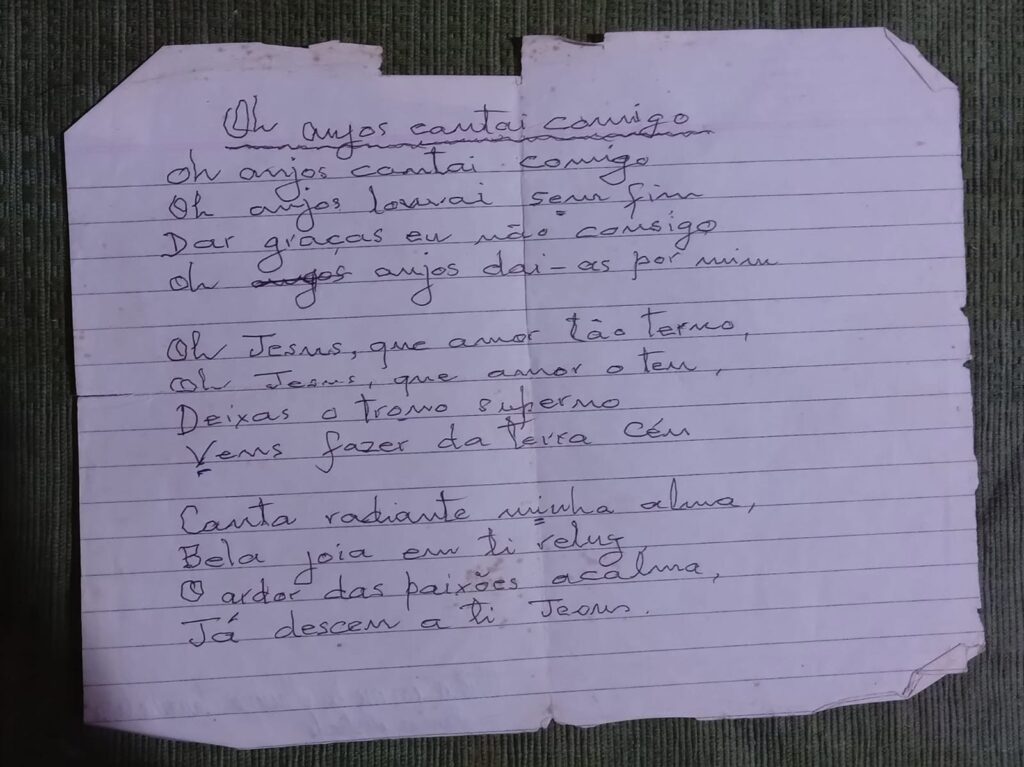
A traditional Portuguese hymn penned down by Mestre, just before mass on a Saturday evening at the Holy Spirit Church, Margão
Fr. Avinash described him as a close friend: “He was a diligent seminarian and religiously attended music lessons provided by Fr Camilo Xavier at the Seminary, when we sneaked out to play football. Mestre was very dedicated to music and played the reed organ at the seminary and was also part of the Santa Cecilia choir.”
Fr. Eufémiano de Jesus Miranda from Cortalim fondly recalled that his close friend, Mr. Maurélio Cotta, had been his classmate in the sixth year of the Saligão-Pilerne Seminary course, which is today the equivalent of Standard XI in Higher Secondary. Before entering the seminary, Maurélio had studied at Loyola High School in Margão. Later, both he and Fr. Miranda pursued the three-year Philosophy program at the Seminário Patriarcal de Rachol.
At the seminary, music was treated as an essential discipline, summed up in the common saying: “Aquele que não sabe cantar, não é apto para ser padre i.e. He who cannot sing is unfit to be a priest. Students underwent solfeggio and voice training for two years in Philosophy and another two years during Theology. Each class required students to perform assigned lessons before Mestre Camilo Xavier. Fr. Miranda recalled that both he and Maurélio had already studied basic solfeggio at the Saligão Seminary, but Maurélio stood out because of his strong preparation. He played the piano and violin, possessed a pleasant tenor voice, and was supportive of his colleagues, ensuring everyone performed their part well.
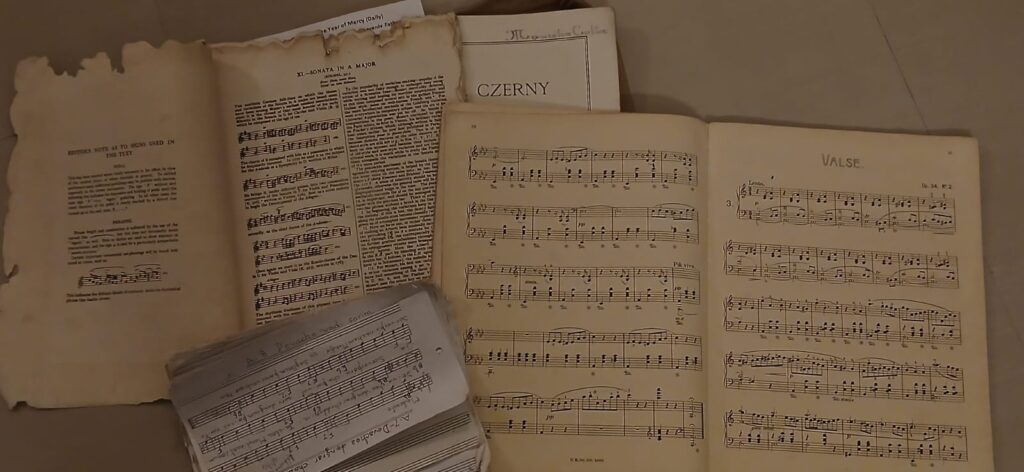
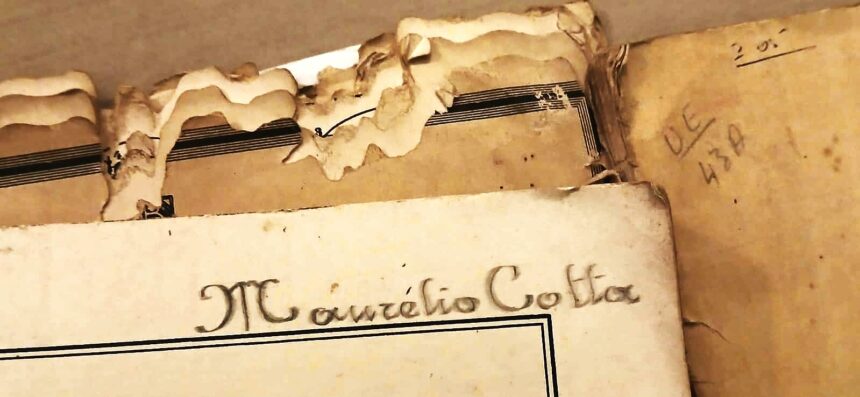
Music books and notes used by Mestre Maurélio António da Piedade Cotta
Fr. Miranda especially remembered the Seminary Day (Festa Escola) celebrations in 1963 at Rachol, when Mestre Camilo Xavier selected Hungarian Dance No. 5 by Johannes Brahms, arranged for piano four hands. Maurélio and future musicologist Fr. Lourdino Barreto were chosen to perform the piece. Fr. Lourdino handled the main melody, while Maurélio performed the harmony and orchestral elements on the piano. The result was described as a brilliant performance.
That same year, when Archbishop Leopoldo Girelli, Internuncio of the Holy See, visited Goa and spent time at the Rachol Seminary, the Santa Cecilia choir prepared a special program in his honor. For this occasion, Camilo Xavier selected Rossini’s La Carità for chorus and tenor solo. Maurélio was entrusted with the solo because of the excellence of his tenor voice.
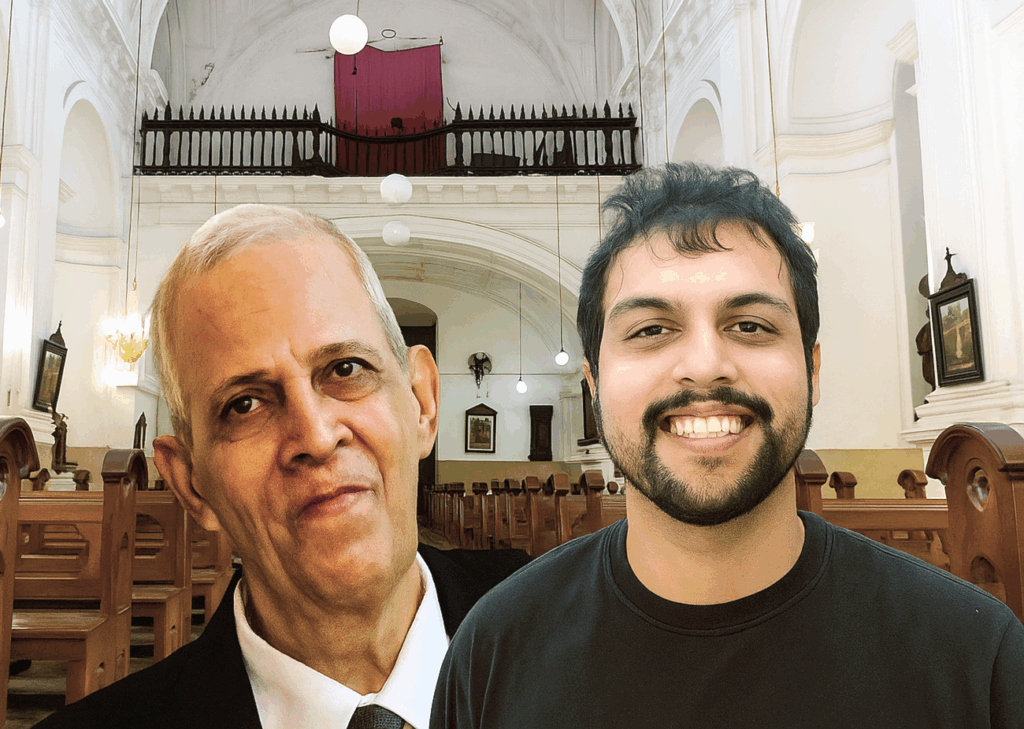
Mestre Maurélio António da Piedade Cotta and Frazer Andrade
Mestre Maurelio António da Piedade Cotta was a beacon of devotion, humility, and musical brilliance whose mastery of the pipe organ and keyboard brought the sacred liturgy at Holy Spirit Church to life in ways that words alone would never be able to convey. His deep love for Latin chants, Portuguese hymns, and Konkani sacred music created a spiritual atmosphere that inspired everyone around him, including myself. Through his patient guidance and unwavering dedication, he motivated me to embrace traditional sacred pieces, teaching me that music is not merely performance but an offering to God. Every Saturday evening before the Sunday vigil mass he would enthusiastically discuss with me the hymns he had chosen to be sung that evening. It was just both of us who sang in the choir then. Even as age slowed his hands, his enthusiasm and passion never waned, and his presence in the choir loft was both reassuring and inspiring. Mestre’s life was a testament to selfless service, devotion, and the transformative power of sacred music, leaving an enduring legacy that continues to guide and uplift all (including me) who were privileged to follow in his footsteps.