It appears that India is once again poised at a crucial reflection point. For, both internal politics and external relations are displaying a measure of success. Notwithstanding acerbity among certain political parties within India, there seems to be a framework being followed whereby the tipping point is more or less not breached. Despite challenges to national security and stability looming in the background, the central government of the day seems to be doing a commendable job of administering the country with resolve and tenacity. The sundry State governments contribute to it aptly within the country’s strong federal, unitary structure. However, the journey till date for the past 75 years has been marred by tortuousness and torturous aspects.
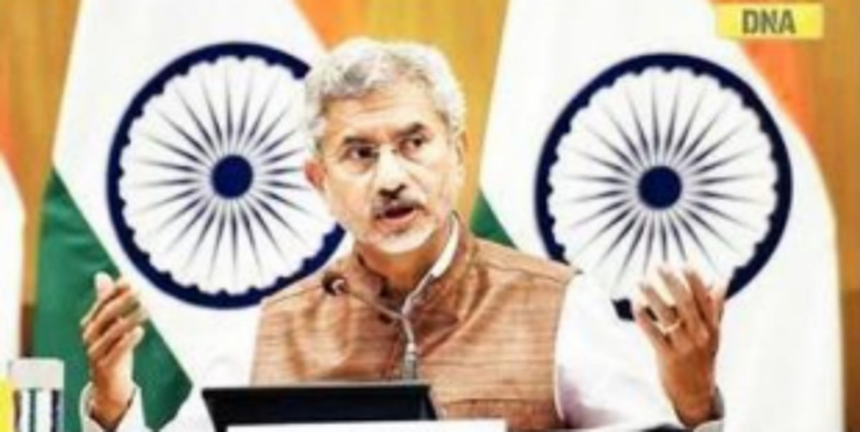
It is a matter of great pride that when our respected External Affairs Minister Dr S Jaishankar traverses the globe, visiting several countries which are located in various continents, he is received with respect and heard attentively. The extent of joint statements and symbiotic arrangements worked out indicate the growing weight and influence of Indian priorities across the country’s borders. From Argentina to the United States, from the inner chambers of UN to the salons of the White House, and in New Zealand, the eagerness and enthusiasm accorded to the Indian External Affairs Minister attested to the rising importance of India.

India has very successfully woven economic benefits into the orb of its diplomacy. Political factors, ethics, strategy, morality, and goodwill continue to occupy monumental heights; but, economic attributes often contribute to stronger bilateral or multilateral relations. That aspect was increasingly incorporated into Indian diplomatic practices, beginning 1991. Through various stages and phases, thereafter, it has been continuously worked upon, added, adjusted, surmised, and made effective.
After the country achieved independence, its economy was in an emaciated state. Added to that, the twin tasks of nation-building and coping with the aftereffects of partition almost dwarfed the Himalayas in its sheer scale of intensity and challenges. Yet, the country coped through it with very able individuals working assiduously in government and in other sectors of Indian society. Nevertheless, in terms of utilising economic factors for potential furtherance of the nation’s interests, India was positioned disadvantageously. A skilled combination of verbal efflorescence, non-aligned postures in international affairs, and a genuinely friendly approach to international ties, helped a great deal for some time. Undoubtedly, the principal architect of this collective approach was Pandit Jawaharlal Nehru and his several advisors. But, perhaps they did not realise that with the passage of time, the global scenario would change and new aspects would require new thought processes. Moreover, uttering homilies to the outside world had at times surpassed the pressing imperative of taking careful count of real politik.
The shock came in the form of the clash of arms between India and China in 1962; India suffered serious reverses in it. Despite Nehru’s certain shortcomings, it is to his credit that he did admit that Indian authorities, led by him at that time, had fallen victim to a make-believe world. Subsequently, changes in policy began. National security was given a major boost. Defence preparedness was endeavoured to be made more effective.
The concerned changes proved expedient. The country fended off the challenge from Pakistan in 1965 with conspicuous efficacy. Thereafter, in 1971, it literally made possible for East Pakistan to liberate itself from the heinous persecution by Pakistan’s state machinery to a new country, named Bangladesh. With that landmark event Indians achieved a new level of self-confidence and respect. The aspect of undue hesitation got severely constricted from the Indian psyche. Confidence and will power were two new hallmarks from then onwards.
The following several decades were characterised with triumphs and tragedies, achievements and ordeals. The Indian nation navigated from one challenge to another, while making sure that the fundamental attributes of the country’s foundations were never compromised; definitely not beyond a certain point.
The world underwent a transformation in 1991. From being a bi-polar international system, it started making efforts toward a multi-polar set-up. In it, Indian priorities had to be re-visited. While stable political approach, sovereign rights, and democratic foundations continued to be the bedrock of Indian society and by extension, to its diplomacy, it was to be squared off with economic regeneration and benefits.
Precepts of International trade and open economy macroeconomics were put to action, in a gradual, steady, and careful manner. From former throttling regulatory measures, a new type of effective, sensible re-regulation was accepted for accruing greater economic dynamism and amelioration for the people. That has uplifted the level of average Indian livelihood; furthermore, it contributed to greater Indian heft in the international arena.
Challenges are many and they are bound to take shape in the days ahead. But, if the priorities are correct and the vision is appropriate, there is no reason why India’s growing relevance and influence would not continue to spiral northward. As is expected at any stage of reflectivity, the challenges should be starved; the opportunities must be provided the requisite feeder. If so, Indian capabilities and stature are bound to witness a greater relative increase.
(The author writes on
international Affairs, the
Economy and Indian politics)