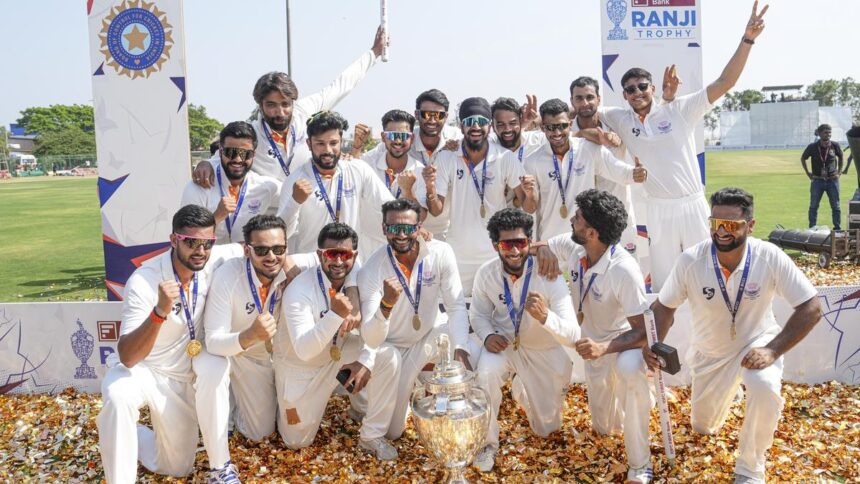
For decades, J and K were the quiet participants of India’s domestic circuit — talented but often overlooked, hopeful yet inconsistent when it mattered most. Their maiden Ranji Trophy triumph has now rewritten that narrative, marking the culmination of nearly seven decades of persistence, planning and belief. What once looked like a distant dream has transformed into a landmark moment for cricket in the region.
Role of Mithun Manhas IN J AND K’S Transformation
A significant part of this rise can be traced to the structural groundwork laid during the rebuilding phase, where experienced domestic voices helped shape the cricketing direction. Among them, Mithun Manhas played a key behind-the-scenes role in strengthening pathways, sharpening preparation standards and pushing for a more professional team environment.

The emphasis during this phase was not cosmetic. Wider district scouting, clearer talent pipelines and improved surface preparation became central to the team’s evolution. The push to prepare players for varied Indian conditions — including the introduction of red-soil and black-soil practice wickets — proved especially influential in improving adaptability in away matches.
J and K’s rise itself was not sudden. It was the product of a carefully built system that prioritised stability over quick fixes. After administrative restructuring under the watch of the Board of Control for Cricket in India, the focus within the Jammu and Kashmir Cricket Association shifted firmly towards long-term development. Instead of frequent overhauls, the approach centred on continuity in selection, specialist coaching support and creating a professional environment around a talented local core.
The progress was visible year after year. Initial seasons brought disappointment as the side failed to qualify for knockouts. That phase was followed by a quarter-final breakthrough, then a narrow near-miss in the subsequent campaign. Each step hardened the group mentally, and by the time they entered the latest season, J and K were no longer content with participation — they were chasing the title.
Leadership on the field played a decisive role. Veteran skipper Paras Dogra brought calm authority to the dressing room, while the bowling attack found a genuine match-winner in Auqib Nabi. Nabi’s consistency across conditions gave J and K the cutting edge that knockout cricket demands.
Logistical challenges remained significant. Weather windows in Kashmir, harsh summers in Jammu and festival-period disruptions forced administrators to redesign the domestic calendar. Exposure tours to other states became routine to ensure players did not lose competitive rhythm.
The result is a team that now carries both confidence and structure. With a strong bench, clearer pathways and growing belief at the grassroots level, J and K’s Ranji success appears less like a fairytale and more like the foundation of a sustained red-ball future.