Dolcy D’Cruz
RAYMOND RODRIGUES’ JOURNEY IN TIATR STAGECRAFT

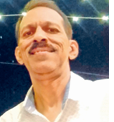
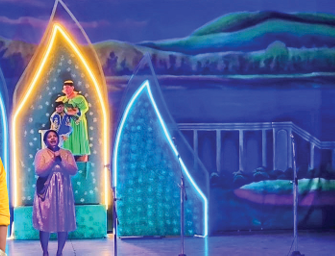
For Raymond Rodrigues from Benaulim, theatre was never just about performance, it was about building the world behind it. Since 2017, he has been deeply involved in stage setting, becoming the first in his family to step into theatre through this craft. What began as an opportunity after his Class 10 soon grew into a full-fledged career shaped by passion, adaptability, and hands-on learning. “I am the first one in the family into theatre to do stage setting,” Raymond initially focused on stage work before gradually stepping into acting as well. Today, he balances both roles, working behind the scenes while also performing as a comedian. Stage setting, especially for tiatr, comes with its own set of challenges. He explains that outdoor theatres demand extra coordination and effort, “It becomes more challenging to organise those set ups but right now I am used to it.” Years of experience have helped him adapt to tight timelines and varying production demands, often preparing sets within just an hour before a show. Over time, the landscape of theatre production has evolved. “Lots of things have changed. More directors have come in and there is demand for more settings now.” With a growing number of directors, each bringing distinct creative visions, Raymond has had to become more f lexible and innovative. While directors usually communicate their requirements in advance, he often contributes his own ideas. “Sometimes the director’s idea doesn’t work on the stage, so I suggest new ideas which are more practical,” he explains. Raymond is involved in creating effects such as smoke and dramatic scenes, including complex setups for moments like resurrection sequences. He enjoys the creative freedom that comes during performances. Raymond’s journey is also shaped by the many directors and troupes he has worked with, including Late Jackie Gomes, Milagres de Chandor, Roseferns, Jr Reagan, Com Ambe, Com Richard, Com Myron, Lawry Travasso, Com Bryan, Com Riston, Sammy Travers, Seby de Divar, Menino de Bandar, Vellencio de Colva, Alison de Curtorim, Pierson D’Costa, Com Agostino, Anthony de Ambajim, among many others.
THEATRE IS THE CORE FOR SAI KALANGUTKAR
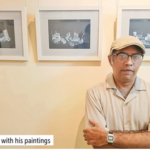
Sai Kalangutkar from Ozarim, Pernem, is an actor but alongside performance, he is deeply involved in the technical side of theatre, “In technical things, I do everything actually, but my specialty is music.” He specializes in designing stock and background music for nataks, tiatrs, and one-act plays. His artistic journey also includes acting in films and video songs, reflecting a versatile engagement with performance across mediums. Speaking about his recent work, Sai shares, “I recently worked with Dnyanesh Moghe for the play ‘At The Edge Of The Volcano’ at Sunaparanta at Panjim. I did not compose the music for this production but I operated the music, attended rehearsals, and contributed to the overall process.” A graduate of the Theatre Arts diploma program at Kala Academy, Sai completed his studies in 2018. Soon after graduating, he worked as a production manager with Serendipity for a year and later joined a reputed school as a theatre teacher. Collaboration has been a constant in his journey, especially during his early years. “We used to direct each other’s plays with classmates, and we received awards in A-group competitions,” he recalls. He says, “Recently, for the Marathi Drama Competition A Group organized by Kala Academy, I received second place for Best Actor for a play. I also won Best Director for an English play at the School level competition, along with second place for Best Director and Best Music. In tiatr competitions, I received Best Background Music in the B-group competition.” Despite formal education, Sai strongly believes in experiential learning. His own journey supports this belief, having worked in theatre for over two decades. “I started as a child artist and even designed music for village plays before joining Kala Academy. Theatre has become my means of survival, as I also teach theatre in a school,” he explains. Speaking about challenges, Sai explains, “The most difficult part is working with untrained or inexperienced directors who are not open to ideas. For me, creative freedom is essential. No matter the form, tiatr, one-act, or full-length play, what matters is the freedom to create what best suits the drama.” Currently, Sai is co-founding a theatre initiative with a colleague. “We are starting ‘Project Catharsis,’ where we plan to stage ticketed shows with original short plays,” he shares. With plans to launch in May, he adds, “Our aim is to make theatre more commercial, not just entertainment, but a sustainable art form.”
USHANK PARAB’S BACKGROUND MUSIC ELEVATES EMOTION
Ushank Parab from Margao acts in theatre and also handle technical aspects like music and stage setting. ” Ushank’s academic background lies in science. “This year, I completed my MSc in Physics from Goa University,” emphasizing that theatre remains his passion rather than his profession. His journey in theatre began early. “I’ve been acting since school,” he recalls, having participated in numerous children’s tiatr competitions and later expanding into tiatrs and Marathi nataks. Over time, his interest grew beyond acting. “Initially, I was focused on performance, but then I started understanding theatre as an art—how expression reaches the audience,” he says. This understanding led him to explore background music as a powerful storytelling tool. Today, Ushank primarily works with pre-recorded background scores as he has been actively designing music for the past three to four years. “I have participated in A and B group tiatr competitions and won Best Background Music in all the years I took part,” he shares. The latest tiatr, Ushank worked on was ‘Yo Nhi Porot’, presented on March 16, directed by Marcos Gonsalves. “Background music elevates expression, dialogue delivery, and the overall impact of a performance. Finding the right music is very difficult. You have to search across multiple platforms, YouTube and other sites, to find something that fits perfectly. If there’s a high intensity moment, the music must rise exactly there. Sometimes I record parts myself, and I also merge two or three tracks, adding sound effects,” he says.
LIGHTING IS WHERE ART MEETS ENGINEERING FOR TEJAS KHEDEKAR
Tejas Tulshidas Khedekar from Ibrampur, Pernem, is a light designer, light operator, and light engineer working in theatre and event lighting. A graduate of the Kala Academy Goa College of Theatre Arts, he completed his degree in 2022 with a specialization in Light Design and Technical Theatre. He further honed his skills through a Grand MAE course. Currently, Tejas serves as a channel partner for Canara Lighting Industries Pvt Ltd in Goa, where his responsibilities extend across multiple domains. “I handle theatre lighting design, theatre architecture planning, equipment selection, installation, and maintenance of technical systems,” he explains. In addition, he runs his own venture, offering lighting design and technical support for theatre productions and stage events. His work has earned him recognition in competitive theatre circuits. He informs, “I have received multiple awards for light designing at Kala Academy in A Group, B Group tiatr competitions. I was also honoured with the Best Light Designer Award by the Maharashtra Rajya Natya Parishad.” Reflecting on his journey, Tejas shares that his decision to pursue technical theatre came early. “I have been in this f ield for the last six years, and during my time in college, I decided to focus on technical theatre instead of performing,” he says. His expertise now spans beyond stage lighting to include “camera lighting, architectural and façade lighting, and overall light engineering.” For Tejas, lighting plays a vital role in storytelling. “When I watch a drama, the first thing I observe is the overall design. We follow the director’s vision, but as designers, we contribute to make it visually stronger and more impactful. Initially, there was a shortage of equipment and technical resources in Goa. So I started borrowing lights but now I own over 250–300 lights,” he explains. He points out that outdoor productions present a different level of complexity. “From power supply to installation and commissioning, everything has to be calculated. Lighting is not just design; it is engineering. Managing wiring, load capacity, and system balance is critical, if something fails mid-show, the entire performance is affected,” he explains. Tejas also focuses on mentoring emerging talent. “I have six to seven people working with me, mostly fresh graduates. My aim is to give them practical exposure, something I lacked when I started.”