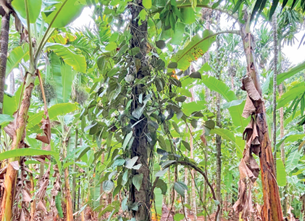
With an aim to promote organ ic farming across Goa and reduce ex cessive dependence on chemical fertil isers, the Indian Council of Agricultural Research-Central Coastal Agricultural Research Institute (ICAR-CCARI) is pro moting a waste-to-wealth approach, are ca nut husk composting and green ma nuring to revitalise the State’s ancestral homestead gardening system known as the ‘Kulagar’ — a highly sustainable agro forestry system that supports a rich diversity of crops. The concept forms the focal point of IC AR’s nationwide intensive campaign, Khet Bachao Abhiyan, which will run across the country throughout June as a clarion call to protect soil health and safeguard India’s agrarian heritage. A Kulagar is a traditional multi-tiered homestead plantation system native to Goa and the Konkan region.
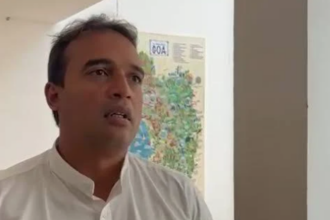
Centred on household plots, it integrates areca nut and coconut palms, spices, fruits and medicinal herbs into a highly self-sufficient, chemical-free ecosystem supported by natural water management practices. “The essence of the Kulagar lies in its circular philoso phy — bio resource conservation, crop diversification and, crucially, the recycling of resources. In an era dominated by concerns over dependency on synthetic chemicals, the Kulagar stands as a beacon of Integrated Nutrient Manage ment (INM). By utilising on-site biomass, such as green ma nure and farm-derived organic matter, these homesteads minimise the need for external inputs,” ICAR-CCARI Direc tor Dr Parveen Kumar said. In areca nut-growing regions, managing the massive vol ume of crop waste poses a significant challenge. One acre of areca nut cultivation generates up to 1.2-1.5 tonnes of husk annually, which does not decompose easily. “To address this challenge, ICAR-CCARI is promoting the adoption of a specialised compost culture that acceler ates the decomposition process.

This technology converts tough areca nut husk into nutrient-rich compost within six months,” said Dr Shripad Bhat, Senior Scientist (Agricultur al Economics) at ICAR-CCARI. The intervention eliminates the need for residue burning and produces high-quality compost that is naturally rich in potash, providing an excellent organic input for balanced crop nutrition. “Following successful demonstrations at benchmark farmers’ fields, the technology will be scaled up across Goa through a wider dissemination programme that leverages peer learning and local success stories to encourage adop tion,” Dr Bhat said. “By embracing this dual approach, we honour the legacy of our ancestors who built these Kulagars while contribut ing to a larger national mission of environmental steward ship,” he added. As the Khet Bachao Abhiyan mobilises millions across India, ICAR-CCARI expects Goa to lead the way by demon strating how the wisdom of traditional homesteads, com bined with the latest advancements in balanced fertilisa tion and Integrated Nutrient Management, can secure both livelihoods and the environment. “The future of farming in our State lies not in increasing dependence on synthetic inputs, but in reclaiming self-re liance through the sophisticated, diverse and inherently sustainable Kulagar system,” said Dr Gopal Mahajan, Senior Scientist (Soil Science), ICAR-CCARI. “The Khet Bachao Abhiyan serves as a timely reminder that the path towards a Viksit (developed) and Swayam purna (self-reliant) Goa is paved with both innovation and tradition. As we observe this campaign, we must recognise that the Kulagar is more than just a garden; it is a laborato ry of ecological resilience,” Dr Mahajan added.
Assistant Chief Technical Officer Rahul Kulkarni said the initiative demonstrates that integrating the right source, right dose and right timing of nutrients can enhance yields while protecting the delicate ecological balance of the Western Ghats. “The transition towards a more sustainable agricultur al paradigm does not require us to abandon the practices of the past, but rather to refine them with the precision of modern science,” Kulkarni said