SHASHWAT GUPTA RAY
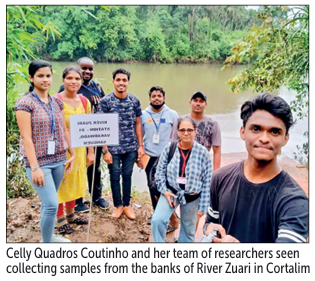
After contaminants were found in fish species inhabiting Goa’s rivers, a new scientific study has un covered another troubling link in the state’s pollution chain — riverbank plants along the Sal and Zuari riv ers are absorbing pollutants that could ultimately make their way into the human food chain. The study, titled ‘Impact of Anthropogenic Pollution on the Plant Species Diversity and Composition Along the Riparian Ecotones of Goa’s Sal and Zuari Rivers’, found that plants growing along polluted stretches of the two rivers are accumulating heavy metals and chemicals. It signals an environmental crisis driven by unchecked human activity. Researchers warn that the contamination does not stop with the plants. “While the focus of the study remains on botany, it is evident that these pollutants enter the food chain through marine species and cattle that consume the bank vege tation, eventually impacting human health,” said Celly Quadros Coutinho, Associate Professor of Botany at the Government College of Arts, Science and Commerce, Que pem, who authored the study along with Moses Musis of Uganda’s National Teachers’ College, Kaliro. Published in the journal Plant-Environment Interac tions, the study was conducted under the guidance of Dr Krishnan Sellappan, Dean of the School of Biological Sci ence and Biotechnology at Goa University. Coutinho said the research was inspired by concerns over deteriorating water quality in her own backyard. “I live in Navelim, on the banks of River Sal’s tributary. As a biodiversity member of Navelim and former chair person of the Navelim Biodiversity Management Commit tee, I am aware of the presence of pollutants in the water. So, I decided to take up this study to find out their impact on the plants along the river banks,” she told O Heraldo. The researchers divided the Sal and Zuari rivers into five study stations and carried out extensive transect and quadrat analyses to examine the impact of pollution on riparian vegetation. According to Coutinho, the findings established a direct connection between human activi ties along the riverbanks and changes in plant health and structure. “By dividing the rivers into five stations and conducting detailed transect and quadrat analysis, we observed that plants in polluted areas show distinct internal and histo logical differences compared to those in cleaner, upstream locations. These plants are absorbing heavy metals and chemicals, effectively serving as biological indicators of water quality,” she said. The study identified the Zuari riverbank at Cortalim and the Sal riverbank at Betul as the most polluted locations among the sites surveyed. Researchers also documented a steady deterioration in water quality downstream, with contamination levels in creasing as the rivers approached the sea. “The study observed a gradual deterioration in wa ter quality as the river approached the sea, with several physicochemical parameters indicating increasing pollution levels. Higher concentrations of nutrients, suspended solids, organic matter, and other contaminants were recorded in the downstream stretches, suggesting the cumulative im pact of urban runoff, sewage discharge, and other anthropo genic activities,” Coutinho said. The worsening pollution was reflected in the condition of mangrove species such as Acanthus ilicifolius, Avicennia officinalis and Rhizophora mucronata, which displayed sig nificant structural and anatomical changes linked to envi ronmental stress. Research scholar Venecha Carvalho, who conducted the anatomical and histochemical analyses for the Department of Science and Technology & Waste Management-funded project, warned that the ecological consequences could be far-reaching. “Although mangroves serve as natural filters by trapping sediments and pollutants, prolonged exposure to elevated pollution levels can impair their growth, reduce biodiversi ty, cause leaf discoloration and stress, and adversely affect associated aquatic organisms such as fish, crabs, and mol luscs,” Carvalho said. The findings add to growing concerns about the cumula tive impact of sewage discharge, urban runoff and other hu man activities on Goa’s river ecosystems, raising fresh ques tions about the long-term consequences for biodiversity and public health.