Dolcy D’Cruz
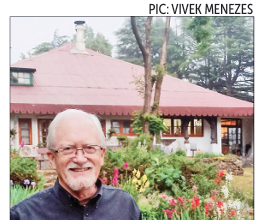
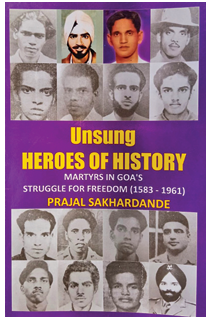
Thousands of people transit through the Assonora bus stand close to the bust of Hutatma Bala Raya Mapari, the first Martyr of Goa’s freedom struggle. But how many know the tragic stories of Camilo Pereira from Bandora and Suresh Kerkar from Keri, Ponda, who both became martyrs in their mid-twenties. On a mission from 1992, in the search for Goa’s forgotten martyrs, Prajal Sakhardande, an Indian historian, heritage activist, and Head of the Department of History at Dhempe College of Arts and Science in Miramar, Panjim recently released his new book in the Purple series, ‘Unsung Heroes of History: Martyrs in Goa’s Struggle for Freedom (1583–1961)’, that documents the lives and deaths of 75 martyrs connected to Goa’s fight against Portuguese rule. Of these, 33 were Goans, while the remaining martyrs came from different parts of India to participate in the struggle. “There are police records that mention these martyrs, but there are no court trial records because most of them died during the struggle. The initial names came from two Marathi books by Manohar Hirba Sardesai and Vishwanath Lawande. There was not a single English book that brought together these stories,” says Prajal.

To reconstruct their lives, Prajal spent decades collecting material, visiting memorials and tracking down descendants. “I visited memorials at Azad Maidan, Patradevi and villages across Goa where these martyrs are commemorated. The memorials record when they died and how they became martyrs. I also met many family members personally, while others I spoke to over the phone,” he says. Having met the families of Suresh Kerkar in Keri, Bapu Gawas in Hani, Chandel, in Pernem, Yeshwant Agarwadekar in Siolim and the Mapari family in Assonora, Prajal learnt that many of these young men were driven by patriotism despite the risks involved. “There were so many other youngsters who didn’t mind the Portuguese rule. They were in fear. In Assonora, only the Mapari family’s sons, Bala Raya and Rohidas participated becoming the first martyrs.
These names were forgotten for so long. There is not a single book about them in English, even in our schools and we didn’t study about them. I did not even know these martyrs till I did my MA. But still, my research is not complete because I could not meet all the families.” The book is arranged chronologically, beginning with the earliest martyrs and continuing through Goa’s modern freedom movement. For Prajal, the project was driven by a desire to preserve stories that have largely disappeared from public memory. “The younger generation should know leaders like TB Cunha and Prajal Sakhardande Ram Manohar Lohia, but very few know the martyrs who actually gave their lives. Even within families, grandchildren often know that their grandfather was martyred but do not know the details of what happened,” he informs. The book’s final Goan martyr is Manohar Pednekar of Taleigao, who died on December 13, 1961, while allegedly preparing a bomb attack against the Portuguese. The final Indian martyrs documented in the book are Shivdev Singh Sidhu, Vinod Sehgal and Dafadar Man Singh, who were killed while fighting Portuguese forces near Fort Aguada in the early hours of December 19, 1961.
Among all the stories he researched, Prajal considers the bravery of Karnail Singh Benipal to be the most remarkable. He explains, “From childhood, Karnail Singh was inspired by Bhagat Singh and often acted as him in plays. He was deeply patriotic and wanted to serve the nation. When the Goa Vimochan Sahayak Samiti in Pune called upon Indians to join a satyagraha march into Goa on August 15, 1955, Karnail Singh travelled from Punjab to participate. During the march, Portuguese police opened fire on the demonstrators. Fellow activist Sahodara Devi from Madhya Pradesh was struck by a bullet and fell with the national flag, Karnail Singh stepped forward from the rear of the procession and shouted, ‘Why are you firing at a woman? If you have the courage, shoot me,’ and removed his shirt before facing the bullets. He was only 21 years old. He had been married in May that same year and his wife was just 17 years old. She is 86 now.
I spoke to the family and invited them to speak to my students. Back in their village, they have a memorial for him and every year, on August 15, they commemorate his bravery.” While patriotism motivated the martyrs, their families often struggled with the consequences. “Most families were not supportive at the time because they feared losing their sons. In fact, they feel the regret that they didn’t get anything in return,” Prajal says. He recalls speaking to the daughter of Kedar Anvekar, who was working as a technician in the Bambolim radio station, who died while preparing a bomb in his house intended to destroy the same station. He had sent his wife and daughter to Panjim and died on the spot in Merces. “She told me, ‘My father died, but nobody remembers him. There is no road, no statue, nothing in his name.’ There was a lot of pain in her voice,” he says. Kedar was just 27 years old. Bala Raya Mapari’s daughter, was just one and a half years of age when he was martyred. “For them, patriotism came first, not their families but the cause of freedom from Portuguese rule,” he adds. Although memorials exist in places such as Patradevi, Azad Maidan, Chandel, Pomburpa and Dhargal, many martyrs remain largely unknown.
According to Prajal, only Bala Raya Mapari and Karnail Singh have busts dedicated to them, while most others are remembered only through plaques and memorial stones. The publication continues what Prajal calls his ‘Purple Goa’ series. Prajal’s first book, ‘Goa Gold Goa Silver Her History Her Heritage from Earliest Times to 2019’ was in purple colour followed by his third book, ‘History of Women’s Contribution to Goa’s Freedom Struggle’ in the same colour. “I had an idea of a purple history of Goa series. This book is also purple in colour. Henceforth, I decided I will do a Purple Goa series. I have planned many books on heritage and I want to write a book on the history of Catholic and Hindu and Muslim family surnames in Goa,” concludes Prajal.