It is found all over the State. It is in the food, the alcohol, the DNA of the state. We are of course talking about the coconut. Today, as we celebrate World Coconut Day, it would be appropriate to remember what the coconut means to us. World Coconut Day is celebrated every year to create awareness among people about the countless benefits of coconuts across the globe. The day is dedicated to promoting sustainable coconut farming and its significant benefits.
The coconut products like coconut oil and coconut milk have been used since ancient times for health

and beauty. Recognising World Coconut Day highlights the importance of coconut farming for sustaining livelihoods, and bolstering the economy of tropical nations.
World Coconut Day also commemorates the formation of Asian Pacific Coconut Community (APCC) of which India is a part — an organisation that was established to improve the socio-economic welfare of farmers and other industry stakeholders in a vibrant coconut sector.
In Goa, according to the Director of Agriculture, Neville Alphonso around 26,000 hectares are under coconut cultivation. He had a lot to say about the coconut. He said Goa gave a lot of importance to the coconut. He said,” It was used by our forefathers from cooking, medicinal purposes, it is used for thatching the roof, it is used to prepare coconut feni. This shows us that the coconut is used for so many different aspects of daily life”.
Speaking about his department, Neville said the theme this year was sustaining the coconut sector for the present and future generations. The department he said would be celebrating it on September 5. A seminar would be held on that day with a theme that was similar to the theme of Coconut Day. He said some coconut entrepreneurs would talk about virgin coconut oil which has medicinal benefits or for that matter the tender coconut which had medicinal benefits.
He said it was a natural drink which had medicinal benefits. It was, he said, a traditional crop.
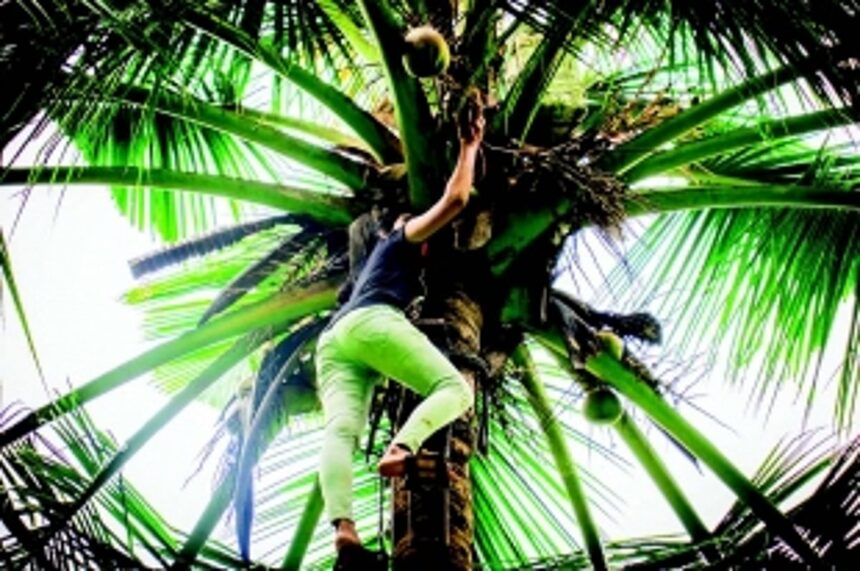
The state government, he said, had schemes to promote the cultivation of the coconut. With around 26,000 hectares under coconut cultivation, the government is spending around Rs 60,000 per hectare. Coconut, he said, can also accommodate other crops. It can accommodate the pineapple, nutmeg, bananas and pepper and supari plants. The government gives another Rs 60,000 for intercropping of plants. Another serious problem is the harvesting of coconuts. There is a course to train people to do this job. The department uses mechanised climbers and they conduct a seven-day training course. All participants are given a free mechanised climber. Many people he said had gone on to make it into an enterprise. The State government has organised an insurance policy where the claimant can get upto Rs 5 lakh in case of death or total disability or Rs 2.5 lakh in case of any injury. This is a scheme by the State government and Govt of India where the Central govt provides 75 percent of the policy. The farmer pays nothing and is insured for a year. This scheme is called the Kera Suraksha Insurance scheme and they expect a good response.
One for whom the scheme has helped is Shweta Gaonkar. The only female coconut toddy tapper in the state, she has been doing this for three years. She said prior to that she was climbing other trees but never coconut trees. Once she started doing it, she found it interesting. She said, “All the coconut trees I climbed were different and I learned a lot. I learned about pollination, toddy tapping. Now I am teaching these skills”. She did her first training session on November 8, 2020, at Don Bosco, Odxel, Taleigao, with 60 farmers. It was organised by the Don Bosco Konkan Dev Society. She has over a period of time conducted training sessions all over the state in places as diverse as Valpoi, Margao KVK to name just two. Shweta says she likes doing this and intends to do this for the rest of her life.
One can only hope the aspirations of these people come true. The coconut remains important in the state because an absence would create a very large hole in the Goan story.