Former Japanese Justice Minister Hideki Makihara has accused Indian authorities of being responsible for delays in the Mumbai-Ahmedabad Bullet Train project, alleging that officials repeatedly failed to honour commitments during negotiations. The remarks have sparked fresh debate over the progress of India’s first high-speed rail corridor, even as the Centre insists construction is moving ahead as planned.
Makihara made the allegations in a post on X while responding to an opinion article by Japanese railway engineer Isao Tsujimura, who argued that the project had drifted away from the original Japanese Shinkansen model. Claiming to have been involved in discussions related to the project, Makihara alleged that Indian officials frequently changed their commitments and negotiated solely in their own interest. He also criticised the minister leading the negotiations, saying such an approach made meaningful cooperation difficult. According to him, the delay in the project was “entirely on the Indian side.”

Tsujimura, a Delhi-based metro vehicle consultant, wrote that officials were aware the original target of launching services in 2023 was unrealistic. He also claimed the project had gradually moved away from Japan’s intended vision for exporting Shinkansen technology. However, he clarified that he has had no direct professional involvement with the Mumbai-Ahmedabad High-Speed Rail project.
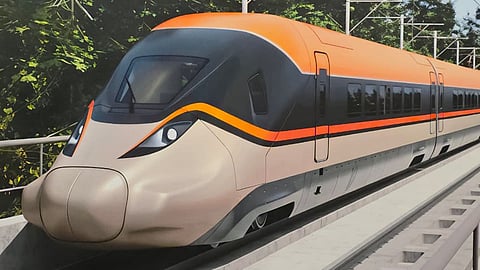
Indian government sources have dismissed the allegations, maintaining that discussions with Japan continue to progress positively. Officials said the project has crossed several key construction milestones and remains on track for phased passenger operations to begin on August 15, 2027, likely on the Surat-Bilimora section. They also said both countries have agreed to initially operate indigenous Indian high-speed trains, while Japan is expected to supply its next-generation E10 series trains in the early 2030s.
The 508-km Mumbai-Ahmedabad High-Speed Rail corridor is India’s first bullet train project and a flagship India-Japan infrastructure partnership. Built using Japanese Shinkansen technology with financial assistance from the Japan International Cooperation Agency (JICA), the corridor will connect Mumbai and Ahmedabad through 12 stations at speeds of up to 320 kmph, reducing travel time from nearly eight hours to around two.
Despite facing delays due to land acquisition challenges and political changes in the initial years, construction has accelerated significantly across viaducts, tunnels and stations. India is also preparing for domestic manufacturing of future high-speed trainsets through the Integral Coach Factory and BEML, while continuing to receive technological support from Japan.
Although Makihara’s remarks have highlighted differences over the project’s implementation, Indian officials insist the strategic partnership with Japan remains strong and that the country’s maiden bullet train project is advancing steadily toward its planned rollout.