SHASHWAT GUPTA RAY

PANJIM: Nearly two decades of working with children, adolescents and young People Living with HIV (PLHIV) in Goa has culminated in a proud moment for voluntary organisation Human Touch Foundation.
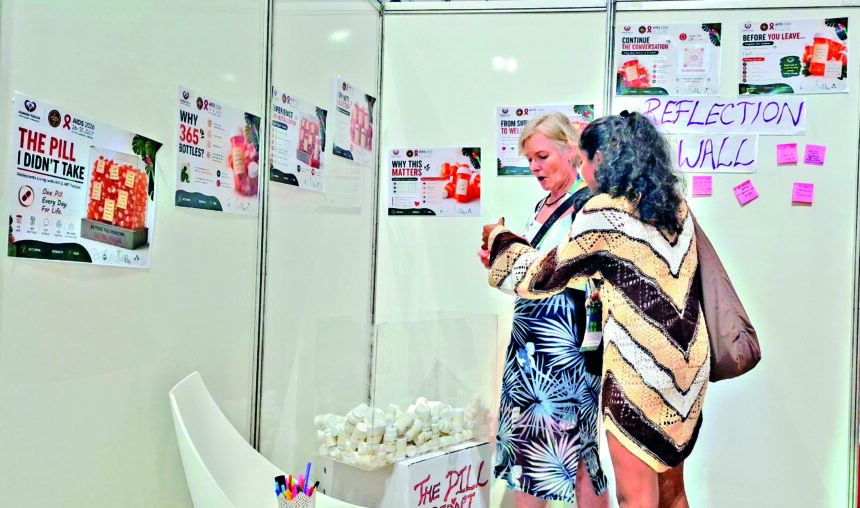
The voluntary organisation has showcased two original interactive installations at the Global Village of the 26th International AIDS Conference (AIDS 2026) in Rio de Janeiro – Red Ribbon Reimagined and The Pill I Didn’t Take – which share the pain of discrimination faced by HIV+ adolescents from the State faced and life-long dependency on medicines.
Recognised as the world’s largest gathering on HIV, AIDS 2026 brings together researchers, healthcare professionals, policymakers, United Nations agencies, civil society organisations and communities living with HIV from across the globe.
“The two art installations move beyond conventional awareness to foster reflection, empathy, and dialogue among global delegates. Red Ribbon Reimagined takes the universally recognised symbol of HIV awareness and transforms it into a living artwork, while The Pill I Didn’t Take, talks about treatment stress, choices, and daily strength of HIV+ adolescents,” Founder, Human Touch Foundation, Peter Borges told O Heraldo from Rio.
Instead of displaying a finished red ribbon, ‘Red Ribbon Reimagined’ installation begins almost empty. Throughout the conference, visitors are invited to write messages of hope, remembrance, solidarity or commitment on red fabric strips and tie them onto the ribbon.
“The ribbon reminds that everyone has a role in creating a more inclusive and compassionate world. In essence, it transforms a familiar symbol into a shared experience, showing that the fight against HIV is everyone’s responsibility,” he said.
The Pill I Didn’t Take invites visitors to look beyond the medicine itself and understand the human experience of living with HIV.
“The installation consists of 365 pill bottles, representing a year’s worth of treatment. Inside each bottle is a personal reflection, emotion or experience drawn from the realities of people living with HIV. Visitors open a bottle, read the message, and place it back for someone else to discover,” Borges added.
Each story highlights a different aspect of life with HIV—hope, resilience, stigma, treatment fatigue, love, family, disclosure, mental health and the determination to keep moving forward. The installation encourages empathy by helping visitors understand the emotional and social realities that accompany lifelong treatment, the former Member & Chairperson, Goa State Commission for Protection of Child Rights, said.
Developed under the guidance of Celina Menezes (Lead – Care and Support) and facilitated by two young PLHIVs, the exhibits received an overwhelming response from the international community for their participatory and moving approach.
Speaking from Rio de Janeiro, Menezes said: “Every ribbon tied and every bottle opened represents a conversation that many people living with HIV have wanted the world to hear. These installations remind us that behind every statistic is a person—with dreams, fears, relationships and hope. We invite every visitor to become part of that story.”
Moving forward, the Foundation plans to adapt these installations for schools, colleges, healthcare institutions, and community programmes across India to continue reducing stigma and strengthening understanding through art and storytelling.