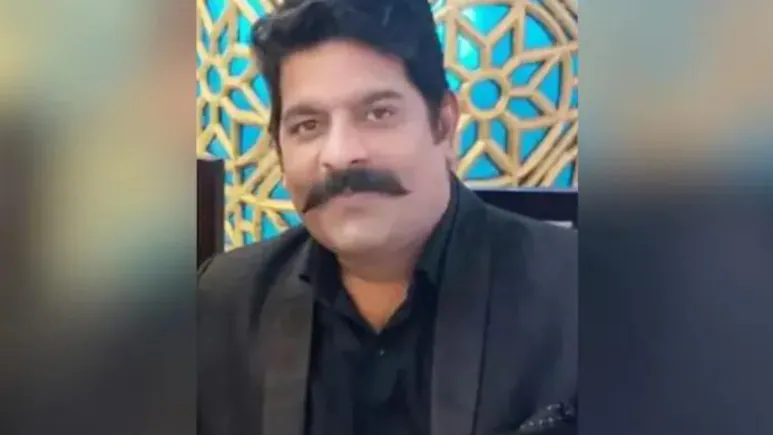
Virender Singh Basoya, an alleged key figure in a major international drug network, has been brought back to India from the United Arab Emirates. The Narcotics Control Bureau (NCB) took custody of him following his extradition.
Basoya was arrested in the UAE in June 2026 after an Interpol Red Notice was issued at the request of Indian authorities. Officials said his extradition was facilitated through coordination between Indian investigative agencies and UAE authorities.

Union Home Minister Amit Shah said the government remains committed to tracking down drug traffickers operating from abroad. He described Basoya’s return as another significant step in India’s zero-tolerance approach towards narcotics trafficking.
Investigation Into Rs 13,000 Crore Drug Syndicate
Basoya allegedly fled India in 2023, reportedly a day after his son’s wedding. After the Delhi drug case surfaced in October 2024, a lookout circular was issued against him.
The investigation began after the Delhi Police Special Cell seized large quantities of suspected narcotics from several locations. Officers recovered hundreds of kilograms of cocaine and hydroponic marijuana from Mahipalpur Extension and arrested several suspects.
Further seizures were made in Delhi and Gujarat. Investigators eventually linked the case to a large quantity of cocaine and mephedrone, along with hydroponic marijuana.
Pharmaceutical Firms Allegedly Used for Drug Supply
Investigators alleged that companies including Pharma Solution Services, RM Biochem and Life Saver Pharma were used to facilitate the movement of narcotics.
According to the probe, drugs were processed through pharmaceutical and chemical businesses in Ankleshwar, Gujarat, before being transported as legitimate medical or chemical consignments. Narcotics were allegedly concealed in cardboard boxes, chemical shipments, clothing and packets of snacks.
The network reportedly supplied drugs to Delhi-NCR, Punjab, Mumbai, Hyderabad and Goa. Investigators also traced alleged international links to the UK, Malaysia, Pakistan, Thailand and the UAE.
Authorities said the drugs were primarily brought into India from South America through Dubai.
Encrypted Communication and Cryptocurrency
Investigators found that the alleged syndicate relied on encrypted communication platforms and coded methods to coordinate drug deliveries. Members reportedly used paid messaging applications instead of conventional phone calls and allegedly used cryptocurrency for financial transactions.
The investigation has resulted in multiple arrests, with the Delhi Police filing a chargesheet in the case.
Basoya’s Family Members Under Scanner
The probe has also brought Basoya’s family members under scrutiny. His brother Ravinder Basoya was arrested after a vehicle linked to him was allegedly used in connection with a drug recovery.
His son, Rishabh Basoya, has also been named in the investigation. Police alleged that his SUV was used to transport a drug consignment and cited CCTV footage as part of their investigation. Interpol subsequently issued a Red Corner Notice against him.
Basoya’s name had also surfaced in a major mephedrone case in 2024, in which investigators alleged that a large consignment was being prepared for shipment to London.
His extradition marks a significant development in the investigation into the alleged international narcotics network. Indian agencies are expected to question him about the syndicate’s overseas connections, financing and logistics.