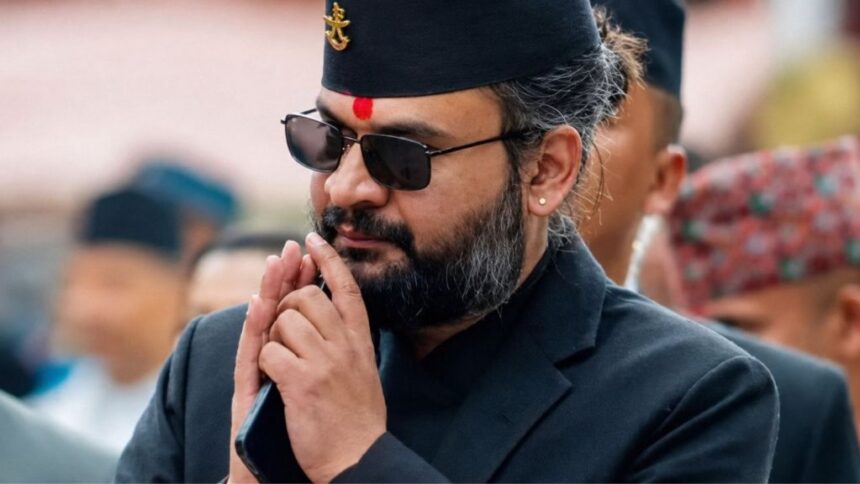
Nepal Prime Minister Balendra “Balen” Shah entered office with enormous public expectations. Just 150 days ago, the former Kathmandu mayor appeared to represent a dramatic break from Nepal’s traditional political establishment. His rise was powered by a strong youth movement and widespread frustration with the country’s established political leaders.
Shah, a former rapper and structural engineer, had already built a reputation as a politically unconventional leader during his tenure as Kathmandu mayor. His popularity among younger voters helped propel him into national politics, where his Rastriya Swatantra Party (RSP) secured a majority in the March election. His victory over veteran leader KP Sharma Oli in Jhapa further strengthened the perception that Nepal was entering a new political era.

For many young Nepalis, Shah represented accountability, energy and an alternative to the revolving-door politics that had dominated the country for years. His image as an outsider helped him attract voters who had grown increasingly dissatisfied with established parties and leaders.
However, five months into his tenure, that initial political momentum appears to have weakened. Questions are increasingly being raised over governance, institutional functioning and Shah’s relationship with political institutions.
One major challenge has been the gap between the expectations surrounding his government and its performance. Coming to power on the promise of change created a particularly high standard for the new administration. Any administrative failure or policy controversy therefore risks having a greater political impact than it might under a conventional government.
Shah has also faced criticism over his approach to Parliament and his own political organisation. His growing distance from party structures and established political mechanisms has raised questions about how effectively his administration can manage the institutions required to govern a complex country.
Diplomatic challenges have added another layer to the difficulties confronting the prime minister. Nepal occupies a sensitive geopolitical position between India and China, making foreign-policy decisions particularly important. Any perceived diplomatic misstep can quickly become politically significant at home.
The contrast between Shah’s rapid rise and his current challenges is striking. His political appeal was built around the promise of breaking with the past, but governing requires more than electoral popularity and a reformist image. It demands institutional coordination, policy execution, political negotiation and sustained public confidence.
For Nepal’s young voters, Shah’s first 150 days may therefore be an important reality check. The enthusiasm that brought him to power remains significant, but the early difficulties of his administration show how challenging it can be to transform an anti-establishment movement into an effective government.
Shah’s political journey is far from over. Yet the first 150 days have demonstrated that winning a youth-driven political wave is one challenge; converting that wave into stable, effective governance is another.