The Supreme Court on Tuesday questioned the Election Commission of India (ECI) over the basis for issuing notices to voters under the “logical discrepancies” category during the ongoing Special Intensive Revision (SIR) of electoral rolls in Delhi.
A bench comprising Chief Justice of India Surya Kant, Justice Joymalya Bagchi and Justice V. Mohana sought a response from the poll panel on a batch of petitions challenging the manner in which the revision exercise is being conducted. The court also directed the ECI to submit a status report on the steps taken to address concerns raised during the hearing.

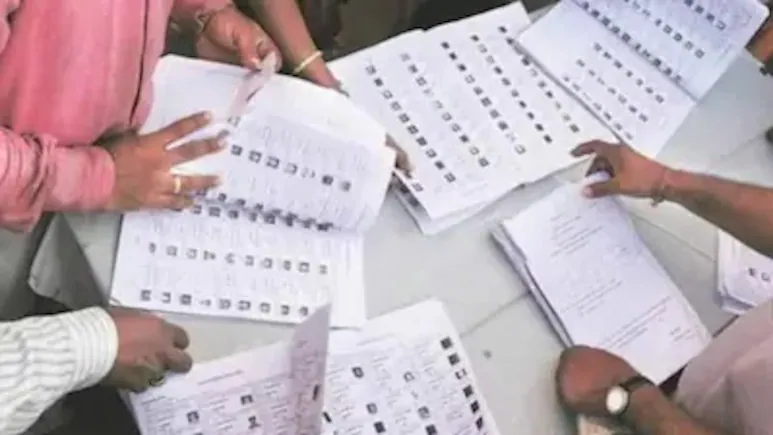
The petitions have questioned the issuance of notices to voters without clearly explaining the specific discrepancy or material on which the notice is based. Petitioners have also sought details of the criteria used to place voters in the “logical discrepancy” category.
According to the petitioners, around 47 lakh names were excluded from Delhi’s draft electoral roll, while notices were issued to around 33 lakh other voters whose names remained on the draft roll.
Advocate Prashant Bhushan, appearing for the petitioners, told the court that the issue was not merely the number of notices but whether voters were being given enough information to understand and respond to the objections.
He cited an example involving an alleged discrepancy between the age of a voter and the voter’s parents. Bhushan argued that voters could find it difficult to address such objections when the documents listed by the ECI may not contain information about their parents.
He also pointed to the difficulties faced by ordinary voters who may have limited documentary records. Bhushan questioned why voters who had already submitted enumeration forms and documents proving their age and residence should be required to establish additional information.
The bench sought clarification from the ECI on how the notices were being generated and communicated. Justice Bagchi asked the Commission to examine whether notices were being issued mechanically and whether voters were being adequately informed about the reason for receiving them.
Chief Justice Surya Kant also asked the ECI to clarify the meaning and operation of the “logical discrepancy” category.
Senior Advocate D S Naidu, representing the ECI, told the court that every notice contained a reason. He also said the 12 documents referred to in the verification process were not exhaustive.
The court further asked whether enough officials had been deployed to help voters respond to the notices. Justice Bagchi sought details of the number of Booth Level Officers (BLOs) available after noting that around 30 lakh notices had been issued.
The ECI told the court that 14,000 BLOs and 1,200 Electoral Registration Officers had been deployed. It said October 29 was the deadline for the process and indicated that an extension could be considered if required.
The poll panel also assured the court that no voter would be deleted without following the prescribed procedure.
The court suggested that BLOs should assist voters in responding to notices and that officials could be made available at ward offices. The ECI said it had already organised assistance camps and created WhatsApp groups for voters.
Justice Bagchi also suggested preparing standard responses for common categories of objections so that voters could receive consistent information.
The Supreme Court directed the ECI to place a status report on record detailing the steps taken in response to the concerns raised during the hearing.