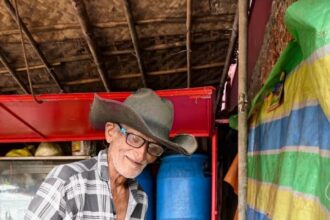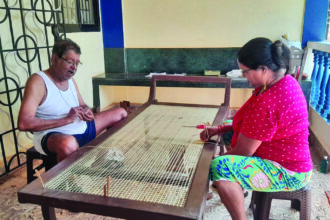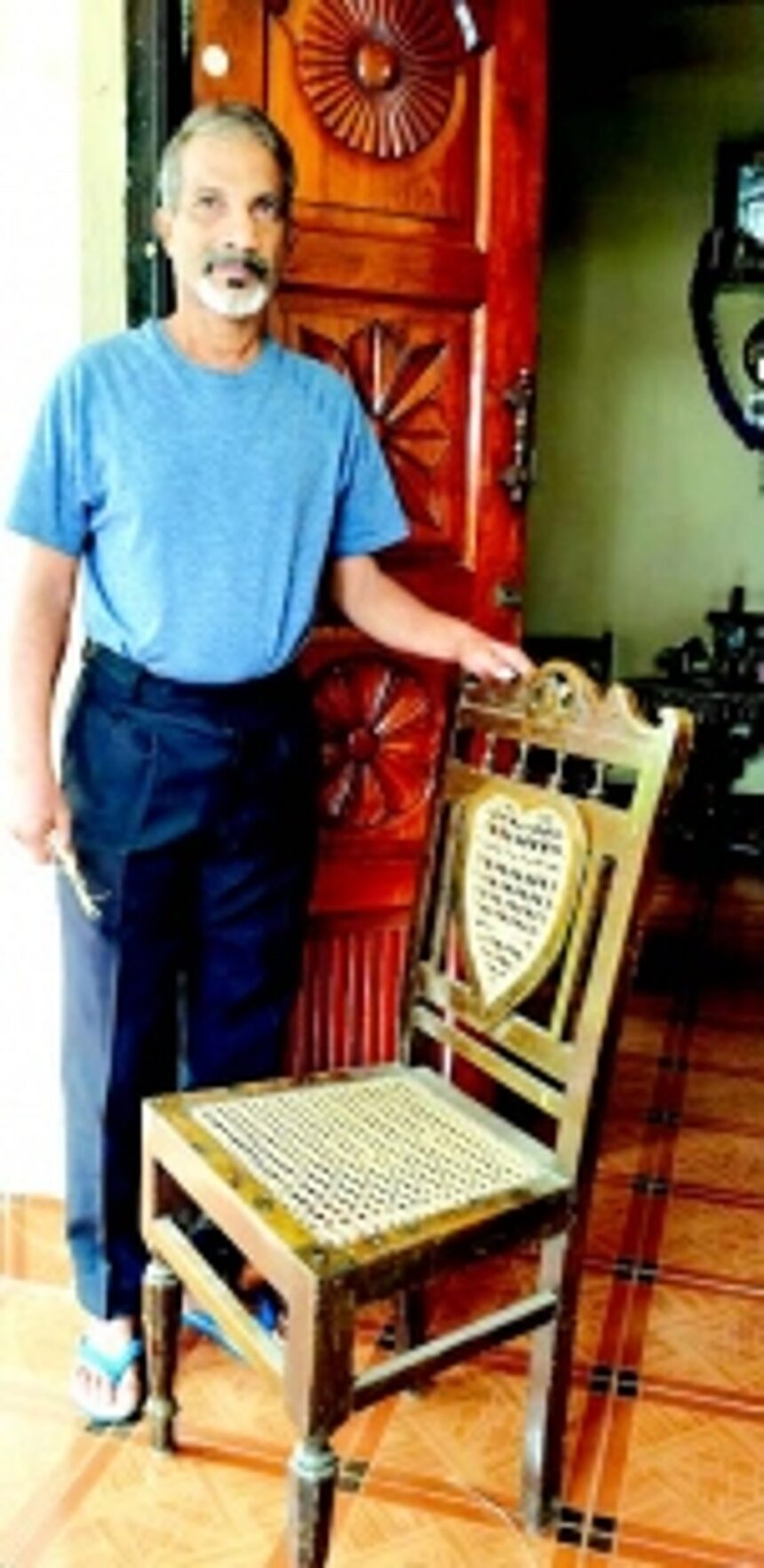
ALDONA: Michael Kennedy D’Cruz, a resident of Maina Vaddo in Aldona, has dedicated the past 30 years to the intricate art of caning bamboo and plastic. His skilled hands have crafted a variety of furniture pieces, including chairs, rocking chairs, beds, and armchairs, sourcing his materials from Panjim and Belgaum. Over the years, he has witnessed a decline in the availability of some types of cane due to decreased demand, making them scarce in the market.
“Bamboo cane, in particular, has become hard to find as the preference for plastic has surged. The process of preparing bamboo is arduous, involving days of soaking and stripping before the actual work begins, often leading to cuts and injuries,” he explains. Despite these challenges, Michael is committed to fulfilling orders on time, although many people now favour plastic chairs for their low maintenance. The job’s demands are high, requiring at least half a day to make one chair, ensuring it is tightly woven to prevent loosening over time. This meticulous craft requires time, patience, and concentration to avoid mistakes.

Michael is concerned about the future of his craft, doubting that younger generations will take it up. “Many young people are drawn to higher-paying jobs and modern conveniences, leaving only those with a genuine passion for traditional crafts to continue the work,” he says. When assessing a chair brought to him for repair, he meticulously examines its condition, filling any gaps before beginning the weaving process. The techniques vary, with different styles prevalent in Belgaum and Goa, he adds.
Interestingly, Michael did not inherit this craft. He learned it from his neighbour, Rita Costa, during his college years. “We had 20 chairs that needed to be fixed, and we entrusted Rita with the task. Since I was at home, she asked for my help and guided me through the steps, showing me the importance of tight weaving,” he recalls. Realising that he enjoys the meditative nature of the craft, Michael would often assist Rita with her weaving work, seeking her help if he gets stuck mid-weave. With her encouragement, Michael quickly became proficient and began taking on more work independently.
One memorable instance involved a neighbour’s request to help weave his rocking chair. Michael decided he would pass the craft on, just like his neighbour did for him. He offered to teach the neighbour and weave the chair together – but things didn’t go as planned. Finding the process slow and tedious, the neighbour eventually asked Michael to complete it, reinforcing Michael’s belief that passion and patience are essential for this craft. “This is one type of art for which you need passion in your heart and will power to do it. If it is forced on you, you cannot learn it,” he says.
Michael fears that without interest from younger generations, this tradition may fade away. “Government support is essential to preserve such crafts. Financial aid could encourage more people to learn and sustain these skills. Self-employment in traditional crafts can be rewarding, as I discovered after the company in Mapusa, where I was an accountant, shut down,” he says.
With over 30 years of experience, Michael invites anyone interested to learn from him. In addition to caning, he is a musician, playing the organ and mouth organ, and at 56, he is eager to learn the violin.