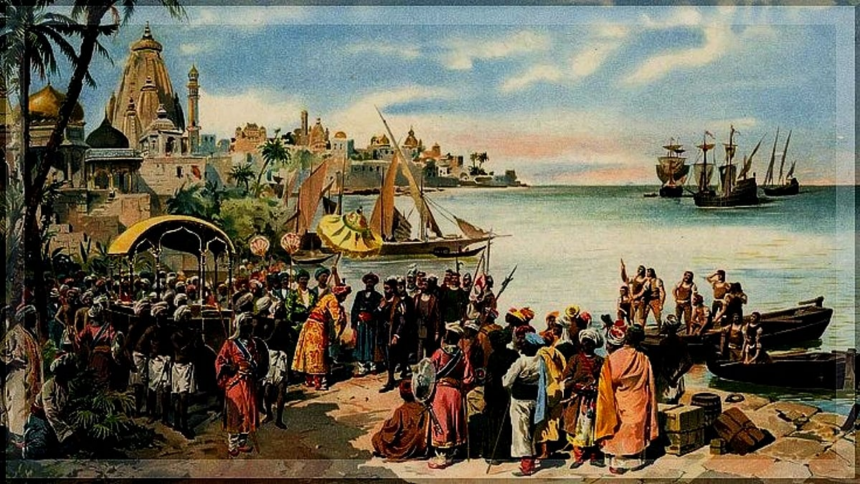
Afonso de Albuquerque was encouraged by Timmayya to initiate an assault on Goa instead of embarking on a lengthy voyage to the Red Sea to dismantle the fleet of the Sultan of Egypt. Portuguese historians referred to him as Timoja. At that time, Goa was under the control of Yusuf Adil Shah, the Sultan of Bijapur, and served as a strategic location for the Turks and Egyptians who were constructing ships.
Previously, Timmayya had acted as a mediator during peace talks involving D Francisco de Almeida, the first Portuguese Viceroy, who was engaged in conflict with the King of Gersoppa in 1505. Timmayya played a significant role in aiding the Portuguese during the capture and subsequent recapture of Goa in 1510. There is no consensus regarding Timmayya’s nationality; V T Gune posits that he was a Maratha, while his name suggests a possible Kannadiga origin.

João de Barros, a noted writer, indicates that Timmayya had a brother named Chidambara residing in Goa, who compelled him to depart from the region, denied him his rightful share of the family estate, took his wife, and even caused the death of his son. The Portuguese chroniclers refer to him as gentio, suggesting that his religious affiliation was likely Hindu or Jain, as inferred from his brother’s name and the fact that he was married to the Princess of Gersoppa.
During the 15th century, India was characterized by a multitude of kingdoms and principalities engaged in conflicts for survival and dominance. Among these, some chieftains were Hindus, while others were Jains, Buddhists, or Muslims. The Hindu and Muslim rulers of that era were rarely allies. Timmayya also had personal motivations for assisting Albuquerque in the conquest of Goa; having been stripped of his inheritance by his brother, he anticipated that Albuquerque would restore his rights following the capture of Goa.