Corporate money can buy silence and space on platforms that inform the average
public. This generally means that only one side of the argument may gain
prominence. A rather unfortunate situation. However thankfully there are
organisations or individuals who are fighting against this and ensuring the
average general public will have a more rounded view of the issues at hand.
Sometimes it helps to bring in expertise that has a proven record on the
ground.
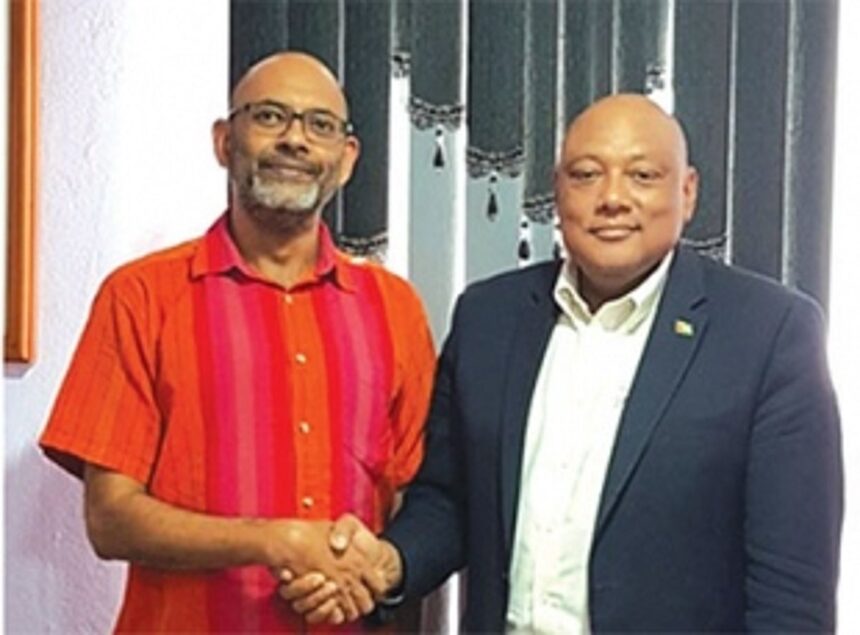
Policy Forum Guyana in collaboration with the World Wildlife
Fund’s programme ‘Shared Resources Joint Solutions’, invited Rahul Basu from
the Goa Foundation in Goa, India to share their experience. The Goa Foundation
has been working on a post mining future for all Goans who should get a share
of the profits of all hitherto iron ore mining since the resource belongs to
them. He elaborated on the same principle in Guyana where oil is big business.

This was part of the Citizens Assembly held earlier in this
month to provide ordinary Guyanese an opportunity to think through key issues
related to oil and gas, such as who the oil belongs to and how the money it
generates should be used.Additionally, should Guyana’s climate commitments be
set aside in favour of oil production?
While the Meeting was unanimous on two issues, namely, that all
citizens have a right to a ‘citizens dividend’ and the need to cap (limit) oil
production in order to protect Guyana’s climate commitment, differences emerged
on most other issues. This is not surprising since ordinary Guyanese have few
opportunities for structured policy discussions that influence their lives.
This exercise generated much coverage in the local media. The
Guyana Chronicle in an exhaustive article highlighted the fact that Rahul Bose
proposed a cash transfer system of Guyana’s oil wealth, which he said would
ensure the country’s inherited wealth remains in the hands of its people. This
the paper reported was part of the Foundation’s Principles of Mineral
Extraction, which can be divided into five parts.
The state is a
trustee for a country’s minerals for future generations
The first two principles state that the state is a trustee for a
country’s minerals which belong to the people, and that future generations must
inherit the minerals or its full value. And the final three state that any loss
from mining is irrecoverable, and therefore there must be no loss; the value of
these minerals must be saved in a Future Generation Fund, the income of which
must be distributed equally to all as a right of ownership.
Citizen’s Dividend is
a right and people have to demand it
Basu was quoted as saying “It is something that the people have
to demand; it is your right, and your duty to demand it. And until you exercise
that right and understand the duty, it’s not going to happen.”He also explained
that there should be no condition placed on the Citizen Dividend, as it is a
right to each person, and it matters not if they are poor or rich.When it comes
to where the government would get its source of funding, Basu said that this
must come from taxes, which can be raised, as citizens will be in a better
position to pay it. Basu admitted that no country in the world has fully
achieved the five-principle method, but some countries have achieved some parts
partially.
The Policy Forum Guayana network of civic organizations that
came into existence in 2015 with the general aim of strengthening electoral,
environmental and financial accountability covered it extensively on its
website. Being one of the organisers, the website reported that the speaker
highlighted the fact that All receipts must go into a Fund, the interest of
which belongs to the current generation and can be paid in the form of a
citizens’ dividend.
Governments believe
discovery of minerals and oil is akin to winning the lottery
In contrast to this approach governments around the world treat
discovery of extractive minerals and oil as something akin to winning the
lottery with the obvious temptation of ill-considered spending which has
produced horror stories from around the globe.
Guyana’s worry is
potential loss from oil like coal and Bauxite
While participants accepted the right of future generations to
inherit what our generation inherited, the idea that some of the funds could
not be legitimately diverted to alleviate poverty provoked a division of
opinion. Rather than how many billions Guyana is to earn from oil which
dominates the headlines, the more pressing issue that emerged is how to ensure
that the enormous losses (in the billions) that Guyana continues to sustain
from gold and bauxite, will not be repeated with oil.
He
was also interviewed on a local FM channel where Basu spoke of implementing the
intergenerational equity principle. Simply put whatever one generation inherits
it is important that it maintains its well and passes the same to the next
generation. Rahul Basu was in Guyana in February and his lectures and
interactions were held from February 3 to February 10.