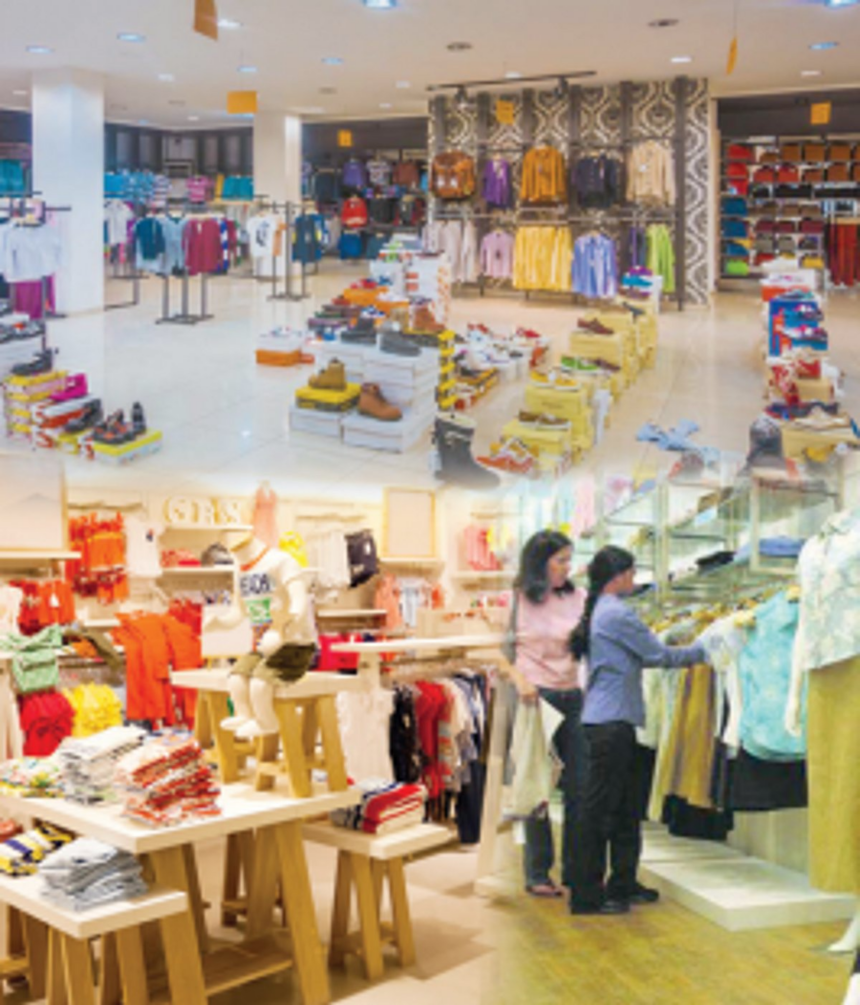
The speeches have been delivered and the guests are slowly moving out. The first big mall in the State has been inaugurated and the children seem excited at the prospect of owning brands that were usually available in Mumbai, Pune, Bengaluru and other metro cities.
The retail business in the state may be depressed thanks to the ban on mining and the not so good tourist season. This however is an anomaly in a country where retail is growing at a rapid rate. India’s current retail market is worth Rs 38,93,425 crore. The market has grown by an average of 16-18% to reach where it is today.
Retail is expected to grow with lesser rate of around 16% over next three years. It is estimated that by 2017, India’s retail market will be Rs 61,56,333 crore and may pick up even further. India’s retail market is expected to double to $1 trillion by 2020 driven by income growth, urbanization and attitudinal shifts, a new report said. While the overall retail market will grow at 12% per annum, modern trade will grow twice as fast at 20% per annum, and traditional trade at 10%, said the Boston Consulting Group and Retailers Association of India report titled Retail 2020: Retrospect, Reinvent, Rewrite.
In Goa however like always it is a little different. Gangaram Morajkar, chairman, Consumer Affairs Committee, GCCI felt the presence of malls in the State was a necessity given that the State had the money and people were going out to buy the brands that were not available here. He said “People have to go to specific areas of the city to buy clothes, or jewellery or toiletries. In a mall all this is available in one spot. One can access the various brands available in the same category and compare and make the right decision. Earlier they would go to Mumbai, Pune, Bengaluru or even abroad to buy stuff.”
There were he said two kinds of visitors to shopping complexes in Goa. One who came to walk around and the other who actually purchased something. He believed that usually 80% purchased something at the mall.
Prakash Pereira of Delfinos smiled when asked how business had been since the launch. He said he had made a simple calculation while working out the viability of his store. With a population of 15 lakh, everyone he said needed to spend Rs 200 a day to survive. He had calculated footfall per day and he was receiving 14% more than estimated. Every month he said he was growing at 10% and in December it was around 40 to 45%. Consumers he said were getting educated in shopping in clean decent stores where they were not short weighed.
In Porvorim he said 14% of his sales came from vegetable and fruits with alcohol providing him with 15% of the sales. In Calangute, he said 45% of his sales came from alcohol. He said the mall would not affect him in any way. In his opinion the mall would have to generate 30,000 bills a day to make it profitable for the retailers. The spot he said was very good and in five years if the second mall would also come up then Porvorim would become a shopping hub. The third bridge would certainly help matters.
Rohit Gera of Gera constructions said there was street side retail and shopping malls. Shopping malls had to be well managed and it was usually by retaining ownership that one was able to control the tenants. There had to be a mix in the kind of outlets in a mall. Another challenge to the conventional retail style of touch and feel he said was coming from online which offered great discounts.
Shashank Mahatme, VP Head, Mall and New Ventures at Caculo’s smiled when asked about the new mall and its effects on the Caculo mall. He said to inculcate loyalty it was not unusual to pass on large discounts to consumers. Some retail outlets invited you to join their loyalty programme and members we entitled to get 2% discount on each and every bill. The chains in the Caculo Mall he said gave super discounts on super Wednesday, Diwali, etc. Malls, he said had a future in the State given that Goa was second in the country after Delhi in terms of per capita expenditure. Delhi was first with Rs 9700 and Goa with Rs 7800. Mom and pop stores he said were unable to compete in a market where good prices were very important. Goan’s he said were having to spend in Mumbai, Bengaluru, Pune and even Delhi and now all brands are available in Goa.
Buvanesh Sheth the man behind Mal De Goa exuded confidence about the mall. He said the per sq ft cost for the retailers had worked out fine for everyone. It would take seven years for the promoters of the mall to start generating profits. The end of this month will witness the aligning of all the outlets in the mall. Big Bazar he said would commence operations by the 11th, others by the 15th. Shoppers Stop will commence operations by April first week.
He expected Goans to spend a minimum of Rs 2000-2500 on apparels and perhaps Rs 1000 on food and beverages. Online purchases in the State were taking place because there no options in the State where as in other States it was always about the discount available. In five years he said Calangute and Baga would develop into high street, as would Old Goa and Fatorda bypass. Vasco would witness the emergence of retail outlets targeting specific audiences.
The number of mom and pop stores in his estimate would reduce because the children would not be keen on staying in the business. Couple of more malls are expected to be set up in the State. Asked about the kind of sales that could be generated by small retailers, he replied that anything between Rs 10-12 lakh a month could be expected where as the bigger national chains could generate revenue to the tune of Rs 4 crore a month.
Another senior professional in the business who did not want to be named said “the problem in Goa is that when they see one mall being set up, others follow without checking if it makes business sense. They have to study the market in-depth but that does not happen.”
The problem with Goa he said was the size of the market. With 15 lakh population as a base, it could be safely said that 50% would not enter the mall. The people of the hinterland had a block when it came to visiting such outlets. He claimed that approximately 1.6 to 1.70 lakh people visited Caculo Mall every month, so the challenge for the mall could be only well imagined. According to retail reports for Goa, out of every Rs 100, Rs 39 comes from Margao, Rs 40 from Panjim, Rs 5.50 from Bicholim, Mapusa and Porvorim. 11% came from Vasco. The people of Margao he said liked to drive down with the family to Panjim to shop even though all the brands were available there. However they were not willing to go to Porvorim to shop because they felt it was 100 km away. The Vasco crowd had disposable income but it was a tiny sliver of the population in that town. A multi-storey departmental store would do well.
The rentals, this senior executive said were usually very high in such malls and the footfall would have to be extraordinarily high. More importantly there would have to be a higher percentage of sales of well over Rs 3000-4000. Parking would also be very important.
Despite all the worries perhaps the final word should go to Shashank Mahatme who said “Retail in Goa will go north in the next 5 years. The mining ban had an effect on the economy but eventually, retail will boom in Goa.”