Probably for
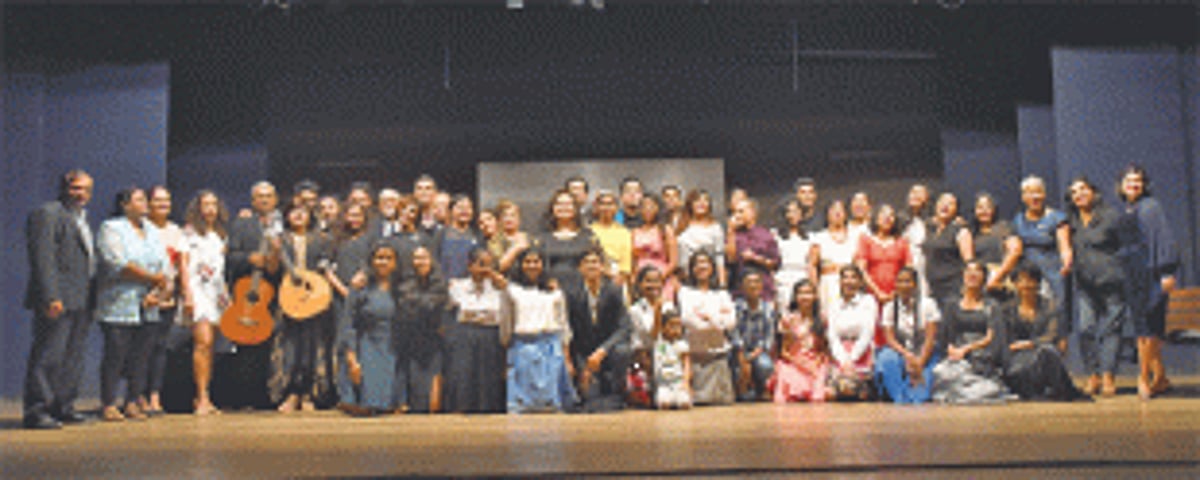
the first time in the history of Fado, a cast and crew of 65 (non Portuguese residents), have presented a
Fado Concert, outside of Portugal. Along with their able teacher, fadista Sonia
Shirsat under the banner of Fado de Goa, these concerts were presented as a
tribute to the Queen of Fado Amalia Rodrigues , as this year marks her 20th
Death Anniversary.
Fado de Goa, has been instrumental in promoting this Portuguese
folk music form of Fado in Goa and India. More than 200 students have undergone
classes and training of this folk music are now ready to showcase their talent.
The concerts have been put together by students of Fado de Goa
from the 4 batches that underwent training in Margao, Vasco and Panjim since
the year 2016.
There were 2
performances of the concert, the first one being held at Kala Academy, Panjim
and the second in association with Ravindra Bhavan Margao respectively. The
Musicians were Dr. Allan Abreu, Carlos Menezes and Orlando de Noronha.
The
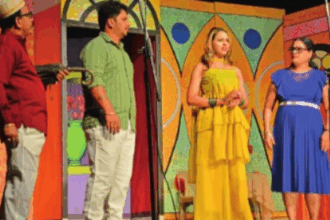
65 member cast and crew ranged from the age range of 10 yrs to 74yrs. The
concert included scenes and performances of Amalia as a young girl, as the Diva
as well as after her comeback. There were also Role Solos as Severa, Maria
Theresa de Noronha, Celeste Rodrigues, Alain Oulman which were sown together
with naration through a Greek Chorus (side act) and video clips. There was even
an entire Casa de Fado scene enacted on stage. The opening act was an all-
gentleman clad in traditional black capes performance by Linus Fernandes and
Chorus.
An ode to Fado
by Goa
Maureen Alvares
Atrevidos! In
other words Audacious, an apt
term for something that can simply be described as a superbly executed
experience in an area that actually and rightfully belongs to the tiny slice of
the Iberian Peninsula, Portugal, as a part of their official UNESCO heritage.
The experience, that many lovers of music had at the concert held at Ravindra
Bhavan, in Margao, was something that was best described as incredible,
overwhelming and a truly aesthetically tasteful presentation of a genre of
music that is at best described, foreign. The event had flair, it had style, it
had an awakening moment for all the audience who collectively realized, that if
‘The Fado’ had reached this point, we had come into our own!
From the choreography, that displayed an incredible finesse, in
execution, to the theatrical sideshow, the program, with the large screen
display and asides in explanations and the historical retelling of facts was
such a genius touch that for the duration, everyone sat spell bound. The
musical renditions were at a level that any true connoisseur of lyrics, harmony
and vocals would call par excellence. The enraptured audience was taken back
and forth in a journey that was a musical story book, unfolding page upon
gorgeous page of information and trivia.
So, what about the performers, themselves? Of the whole collage
of superb performers, I would like to enumerate or rather, speak about just a
few, simply because these singers are those I have had a tremendously close
working relationship with.
But before getting to the whole in detail, this promotion of
providing a forum for the performance of songs sung in Portuguese is credit to
the Pioneers, the FundaçãoOriente, Goa. Way back, when it had just established
itself in our tiny state, along with the ‘Heritage Cell’, a vociferous
enterprise, they started the “Portuguese singing competition”, at Rosary
College, Navelim, itself. Look where it has reached now!
The follow-up baton
was taken up by the Semana de Cultura and we had an event that showcased only
the Fado. Classy efforts, all these. And why not? Then Sonia Sirsat, with all
of her brilliance underscored by an awe-inspiring humbleness, stepped in to
promote an idea that not only took flight, but began to soar. In this I refer
to when she pushed on stage a host of youngsters to perform at the Monte Music
Festival. The entire promotional venture, entitled “Fado in the city” that
would ensure a continuity and promotion of the classic and more trendier
versions of this unusual and unique musical genre, was probably a collective
collaborative effort of many individuals, namely one of Goa’s own musical
genius’, Sonia Shirsat, Marlene de Noronha Menezes, a sparkly, vivacious and
truly enterprising lady, and co-chaired by the brilliant accompanying artistes,
Carlos Menezes, Dr. Allan Abreu, Orlando de Noronha and a host of others.
When Marlene first
spoke to me, around 3 years ago, she proposed a “Fado Workshop” that was
supposed to be hosted in Margao. They had students, they needed the premise.
She had a brilliant and confident smile and, a twinkle in her eyes. They
managed the premises, on their own and the learners, the future “fadistas”
trekked their way to wherever it was. From there on I watched an evolution
taking place.
There was a host of
participants and the endeavor never said ‘no’ to anyone. So the small stage
overflowed and the conference hall at the Taj Exotica resounded to a chorus of
young and new voices. So it is here that I begin by extolling the magic that I
have been witnessing all along these years in the evolution of the performers;
the Prabhudesai ladies, from the mother, Anupama to her two gorgeous and
brilliant daughters, Srushti and Swaraa; brilliant piano and guitar players,
academic toppers and sports achievers, the whole trio! Sherwin Correia, a young
wonder. What can I say about this young adult, who when he began just a few
years ago as a child artiste already had the makings of a star. His focus in
many areas specially social and academic promises to make of him a leader, one
we can all look forward to, in the future. Loraine Alberto, a truly lovely
person and whose love for languages, I believe is what takes the form of that
lovely voice echoing across the stage. There are so many others…. Effigenia de
Santana e Miranda, Renee Pinto, Caroline Quadros, Daniella Fernandes, ..but
these were not a part of the event at Ravindra Bhavan, Margao.
The
Fado, ‘Fatum’, a Latin derivative for “from destiny”, is a genre that carved
for itself a niche in the highest echelons of the enchantment of the world of
music. There are many versions of its rise from the ignominy of the “Bairro da
Lata”, the slum, to the aristocracy and finesse of the hallowed world of first,
National and later, International, fame. Factually or fictitiously, what became
more poetically appealing in the retelling was the historical version that
spoke of the Fado as being a collage of the sonorous African vocals, the
Arabian Desert call and the colloquial Latin of the continent. Today, in Goa,
we are slowly gaining for ourselves a new style, one of our own that spans the
Sahayadri Range and flows into the Arabian sea, swirling its way to connect
with its original counterparts on the other side of this glowing musical
panorama.