World Population Day was established on July 11, 1989 due to the world reaching the 5 billion mark on the same date two years prior. The United Nations Council had decided to continue celebrating the day to raise awareness of the various issues the rapid growth of population poses to our surroundings and lives. The UN has estimated that the world reached 1 billion in population back in 1804. That means that it took roughly 200,000 years for that to happen, then 200 years to reach 7 billion. However, the same feat which once took 200,000 years was achieved last November in the short time span of 11 years.
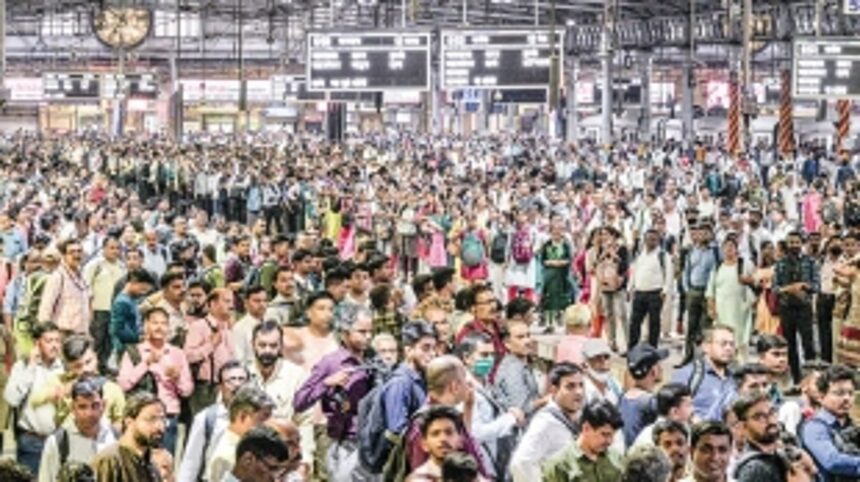
In the year 2000, India’s population reached one billion and currently, India is estimated to have around 1.4 billion people in the world having surpassed China’s population in April, despite China being the largest country by 192 percent. This means that India has long since passed overpopulation. Not only does this directly affect our environment but it also affects our livelihoods with regards to the basic necessities needed to function comfortably daily.
“The population growth is fascinating. Since the pandemic, it has increased even more, I think. Bringing awareness to this amount of growth is especially important because we need to have awareness to preserve our resources and supply which is already pretty scarce,” says Michelle Gracias, a 24-year-old from Bainguinim. When asked how this impacted employment rates for the youth, she adds, “With how things are developing, a lot of jobs which were there are not required because it has been replaced or not necessary.”
There are a multitude of factors that lead to these statistics including declining fertility rate in China since the 1970s. India’s population, on the other hand, has been judged to keep increasing for another three decades before we witness any decline in population or fertility rates. Currently, there are roughly 2.5 births per woman in India. This level of population growth in India particularly, poses a problem to the underprivileged. Housing shortages in India continue to plague an incredible percentage of people. In 2018, some studies stated that India’s housing shortage had increased by 54 percent compared to 2011.
“Having 8 billion people in the world means humans will increase their reliance on the Earth’s resources, inevitably adding pressure on already stressed and highly overexploited ecosystems. More people means more emissions, more pollution, and more waste. This dramatic growth has been driven largely by increasing numbers of people surviving to reproductive age, the gradual increase in human lifespan, increasing urbanization, and accelerating migration,”
says Blanche Fernandes, a
26- year-old.
She further adds, “As the difference between demand and supply continues to expand due to overpopulation, it raises the prices of various essential commodities, including food, shelter, and healthcare. This means that people have to pay more to survive and feed their families. The rapidly growing population transforms the economy into mass unemployment and low employment. As the population increases, the ratio of workers to the total population increases. The result is that with an increase in the labour force, unemployment and low employment increases.”
“The increasing population sounds pretty scary to me, to be honest. Thinking about how our limited resources will quickly be used up as the population grows. I think the population could be increasing because of poverty and lack of education,” says Iola Pinto, a 21-year-old from Porvorim.
There are many cities in India that are smaller than the state of Goa but have a higher population. Mumbai has approximately 21.2 lakhs people whereas Delhi has nearly 33 lakh people. The numbers are quite significant considering the area they take up in comparison to our entire state, small as it is, consisting of only 15.7 lakh people.
“I think it is mind-boggling. Since I was growing up, I have been watching the numbers of the world population take a huge hit every year. I mean, is it really a small world?,” says Dakshita Singh, a 20-year-old content writer and marketer from Mapusa. She adds, “One of the main reasons that population might be increasing so fast is because human beings have become too good at staying alive. At the rate at which technology is developing, I think we will have the cure for everything in our hands, and the death rate has decreased exponentially. It is definitely important to bring awareness to this massive growth in population. After all, there is no planet B (at least not yet), and we have limited resources which we are exploiting like it is never ending. In many parts of the world, there is already a shortage of the most vital resources, which will worsen, therefore, it is extremely crucial to bring awareness. Besides that, it is also the ignorance of many of us and not paying attention to the impact of it on the world.”
On career opportunities, she elucidates, “The fact that there are endless numbers of people applying for one job position is an issue. Still, coming back to the point of a decrease in the death rate, people often neglect the younger generation due to less experience.”
One of the most marked rises in populations was the mid-20th century baby boom which saw an increase in fertility rates all over the world between 1946-1964, having seen the births of around 76 million babies, increasing the population of the world by more than 50 percent. By the time this generation grew up, it was the 70s and inflation had begun and the economy had begun to slow. By the 80s more and more low paid jobs began to crop up. Growing population also meant that younger generations were pressured to be more and more capable than their predecessors as employers now had more options to choose from and could choose a more qualified person for a job that 40 years ago, did not require those same conditions.
In addition, costs of higher education had increased from the 1980s onwards and continue to do so, putting more and more students in debt. This poses the most problems for students from impoverished households looking for good jobs as, getting a good job required college and college required money. Taking all these factors into account, the theme the UN set for this year is an interesting one. If we all took a moment to imagine what it would be like to have a promising future for every single one of us in the world at this moment, what would that sort of world look like?
“This World Population Day is a reminder that we can achieve the prosperous, peaceful and sustainable future envisioned by the ICPD and the 2030 Agenda for Sustainable Development if we harness the power of every human being on the planet,” says Blanche, “When we unlock the full potential of women and girls encouraging and nurturing their desires for their lives, their families and their careers we galvanize half the leadership, ideas, innovation, and creativity to better society.”
“Just like life, the world has its sides of happiness and sadness. There are people who work for the betterment of the world and there are people who are set to destroy it. There are many beautiful things that the world holds and we must work together to protect and preserve them for the future generations,” Iola answers.
“Even if we begin to change small things in our daily lives today, we can bring a better change in the world,” says Dakshita, “Educating people about the pros and cons of the growing population, especially the ones who need the means to connect at a higher level, would definitely help us all.”