Music is such an integral part of Indian culture and there is a song
for every occasion. Over a period of time music in the cinema has changed with
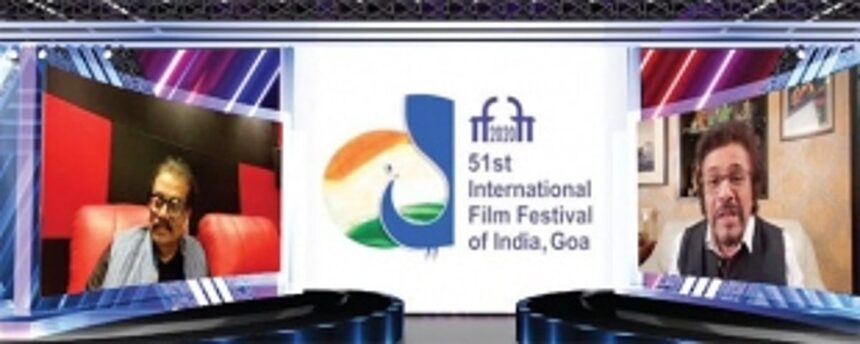
the times. Renowned singer Hariharan and Bickram Ghosh famous percussionist
participated in a session to talk about the influence of music in cinema.
Hariharan said “Music
in contemporary films has changed, so has society. Film songs and background
scores in the 50s were filled with Indian classical genres”. Commenting on the
evolution of music in Indian cinema, BickramGhosh said: “When we gained
independence, there was an accentuation on being Indian in the films of that
era. Hence, audience were given a trajectory of Indianness by means of Indian
classical music.” Speaking about the later periods, Hariharan added: “Then came
the 70s, when Hindi cinema was hit by a wave of ‘real cinema’ or ‘arthouse
cinema’, which had very few songs. Soundscape changed dramatically in the 90s.
In this period, every bit of sound became audible, giving a respite to singers.
Voice clarity was there in the 60s and 70s, 80s saw a lot of orchestration and
in the 90s, voice clarity totally disappeared.”
“In Naushad’s Ganga-
Jamuna, he used a lot of folk music. The whole background score and a symphony
of the film was based on Lalit and Marwa Ragas. It added depth to the scenes.
There was a harmony in that period.” In this context, Bickram Ghosh observed
that with the coming of A R Rahman, there was a big turn of events; a lot of
instruments started being used.
Legends like
Ilayaraja and R D Burman also came up in the virtual tete-a-tete. Hariharan
said, “In Ilayaraja’sAnnakali, there was an amazing harmony between Tamil folk
music and Carnatic music”.
BickramGhosh agrees,
“When Ilayaraja was ruling the South, Panchamda was the king of music in
Mumbai. He westernized a lot of tracks. R D Burman converged Afro- Cuban and
Latin music.”
The legendary
film-maker and outstanding music composer Satyajit Ray’s name also figured in
the conversation. “He imported a lot of South Indian sounds into Bengali
cinema. He used the whole glamour of South Indian music in his film Goopy Gain
Bagha Bain.” – said BickramGhosh.
“I find that use of
lip syncing in Indian cinema has come down. The modulatory note in film-songs
too is reducing. A lot of scores are produced by electronic music nowadays”,
Hariharan added. He also feels, “While certain songs sound beautiful while
singing live, the sound after dubbing is different”.
About present-day
films and music, BickramGhosh added on a positive note, a lot of Hindi films
are set in different regions of the country. As a result, the folk and local
music of various parts of our diverse country are gaining popularity. Hariharan
agreed. He said, “Our huge cultural canvas in India must be utilized”. A.R.
Rahman has done it brilliantly. The film Lagaan is a beautiful example of it,
stated the music maestro.
Hariharan however felt the subtleties of music were missing in
present times, which is essential for one’s psyche. He said “Shruti aspect of a
song goes missing nowadays”. Bickram Ghosh said “Mental gyration went away with
dance beats”.
On
a concluding note, both musicians said that all types of music should exist in
movies. “You need variety in songs and modulation.”