museum in Asia, showcasing the rich history and legacy of Indian Naval
Aviation. It has a prized collection of 14 vintage display aircraft along with
various artifacts and memorabilia. It also houses the rarest of the
Aviation-engines from the World War era.
As
International Museum Day will be celebrated in Goa,
museums in Goa are trying their best to
conserve and preserve their artefacts for the future generations. This
year, the theme for International Museum Day is ‘Museums, Sustainability
and Well-being’.
In Old Goa, Museum of Christian Art in
collaboration with The Travelling Dome will conduct a tour of the Museum
building and collection at 10 am, followed by an activity involving shell art
to reflect upon tradition, ecology and sustainability. This will include making
jewellery and decorative items from shells collected from Goan beaches.
Natasha Fernandes, Director of the Museum
of Christian Art loves the atmosphere at the museum when it’s filled with the
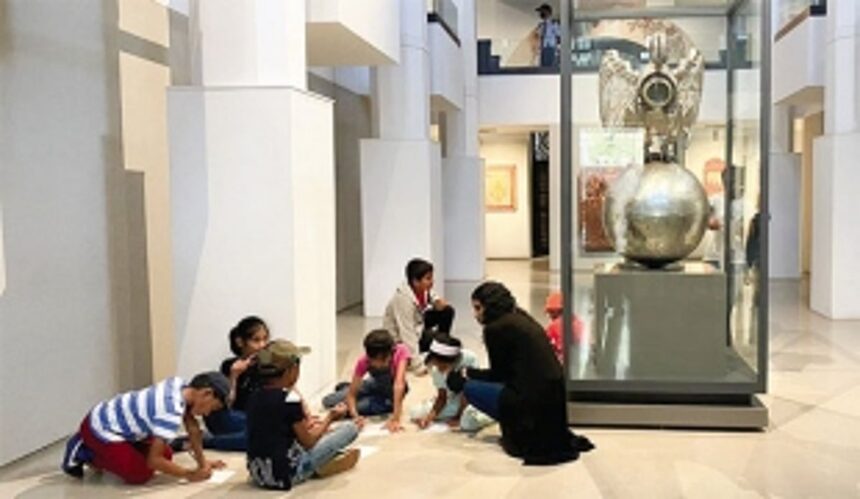
cheerful laughs of curious children. “We receive school students of different
age groups and we love to engage them with activity and knowledge. We give them
activity sheets that are based on objects from the collection. These include crossword puzzles, jigsaw puzzles,
search and find hunts and colouring. I believe that it can be even a single element that can interest the child
and which can bring them back to the museum for more,” says Natasha.
The museum also organises programmes
based on the number of participants in a group. While some are taken on a tour
of the museum, others are occupied with activity abs even screening of short
films related to the museum. “It can be simple idea of restoration and how the
building looked before and after restoration. The children also learn about the
different types of building materials that were used before the existence of
cement. We also organise awareness programmes like ‘An object of the Month’ on
social media or online talks by speakers like Tallulah D’Silva, Aarti Das and
Sawani Shetye on different objects in the museum,” adds Natasha, who looks
forward to events like Carols on the Hill and the Angels costume competition
for children every year.
Victor Hugo Gomes is the founding curator
of the Christian Art Museum and is the proprietor of the Goa Chitra
Ethnographic museum and the Goa Chakra Museum at Benaulim. “It is important to
understand why children and youngsters are interested in museums. Goa Chitra
receives nearly 30,000 students in a year and we have students from several
international universities visiting and studying at the museum. There are
students who complete semesters with us at the museum who are undertaking
classes in museology and preservation. There are also students from schools and
colleges who love to know about Goa’s history and we have guided tours by
guides who narrate the stories behind the artefacts. It is not a boring walk
around the museum, where people are only reading the labels on each item that
mentions the name, era, material and size of the object on display. These are
objects that have wonderful stories that tell about the life in those days,”
says Victor.
Goa Chitra is very active on social media
but more recently the posting has slowed down as Victor is focusing on the new
and the first-of-its-kind Culinary Museum in Goa. “It will be a sensory museum
where one will be able to see how food is grown. There will be a tasting session
and even a smell chamber where participants will be able to smell different
spices,” informs Victor.
Houses of Goa is a museum that is
dedicated to a different kind of history, Goan architecture at Torda, Salvador
do Mundo. With its ship-shaped building built in 1997 with the quintessential
Goan red stone between two roads, it is quite amazing to find so much of
information in a small structure, contrary to the vast area required for
museums. “Houses of Goa is in a pretty building and we get a lot of visitors of
different age groups who want to see the museum. In a year, we receive nearly
40-50 groups of students of architecture from all over India. We also conduct
workshops for them by noted architects,” says Gerard da Cunha, a renowned
architect.
The museum
also houses the works of Mario Miranda. But when it comes to social media,
Gerard trusts the visitors to do the work. “People are so fascinated when they
visit the museums that they will click photographs in every possible space in
the museum and post it online. I don’t have to do anything as everybody else is
posting about the museum,” adds Gerard.
Big Foot in Loutolim is a centre of four
museums and one art gallery. Opened in 1995, it has been a part of the
childhood of many youngsters. Founded by Maendra Alvares, he has kept the
museum going strong by connecting children and youngsters to their roots.
Recently, 50 students from Himachal Pradesh and Ladakh who are in Goa as part
of the Centre’s Yuva Sangam programme also visited Big Foot.
“We have several schools and colleges
visiting the museum throughout the year and accordingly we schedule different
learning activities like coconut leaves weaving, roasting and extracting cashew
nuts from the shell. During Carnival, we organise a traditional Carnival mask
making workshop and costumes from old clothes. Children are also taught
painting using coconut and bamboo shoots,” says Maendra. Big Foot also
encourages children to participate in Goan traditional games like seven times,
marbles and cashew seeds games.
Working
closely with children, Maendra has observed that it is difficult to judge their
reactions. He says, “Children are usually shy but they gradually open up to the
game and activities once the competition builds up and then enjoy themselves. It is difficult to understand whether they will participate. It is
all a learning experience.”
As children are the future of society, it is important to
take them closer to the Goan way of living and for a brighter tomorrow, one
needs stronger roots. What better way to understand our culture than to visit a
museum on this International Museum Day.