Have you heard the melody of the ghumott in sync with the violin and the
beautiful voices of women, expressing their longing for love? That’s what a Mando
is. The musical legacy of Mando lives on in the voices of singers
and musicians of Goa who have taken this form of traditional art across the
world.
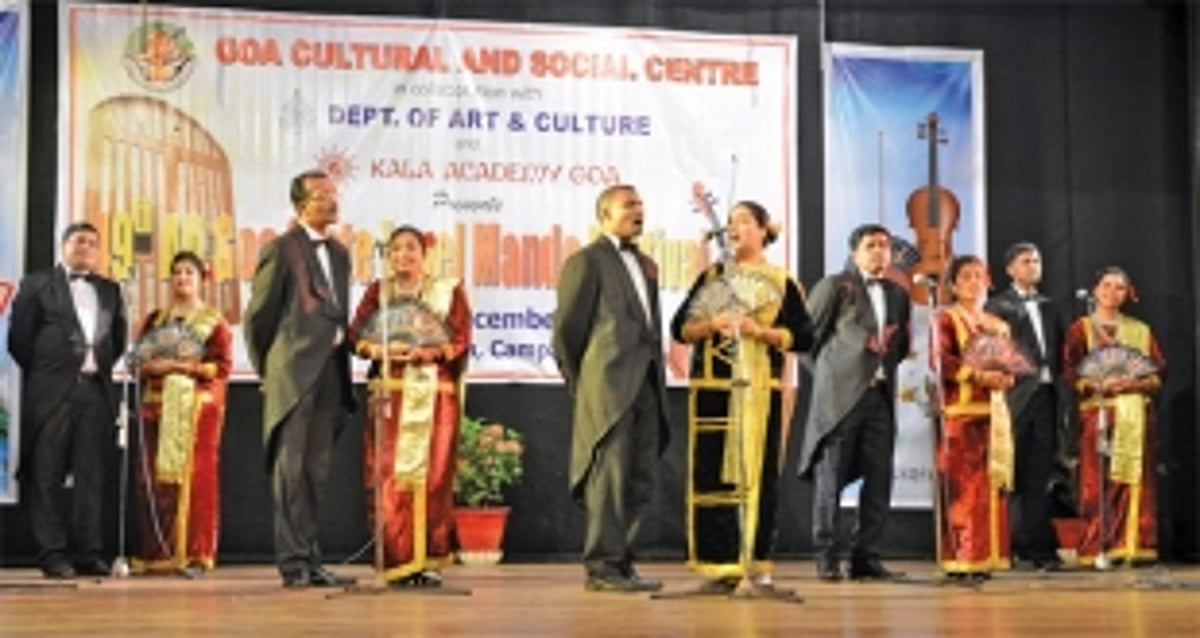
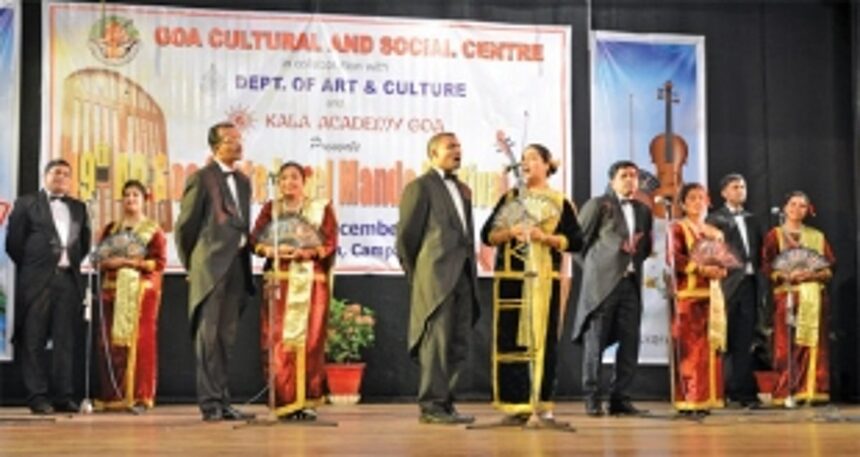
Goa Cultural and Social Centre has been encouraging youngsters
to carry the baton of keeping this tradition intact. The General Secretary of
the Goa Cultural and Social Centre, Milagres Fernandes, shares his view: “The Mando
festival by Goa Cultural and Social Centre celebrated its 50th anniversary
last year and we are still going strong, keeping the tradition of Mando and
Dulpod alive in Goa. There have been organisations that have had Mando
festivals in different parts of Goa but those stop within a few years.
Through our festival, we have seen many children age into teenagers and
teenagers growing into seniors. There has been an increase in the number of
participating groups over the years and it shows the love for Mando and Dulpod
among the people.”
The Mando festival has various categories like children,
teenager, original, traditional and dance. “It is very tedious to form a group
and practise regularly for the competition and I would like to appreciate the
efforts taken by various priests who give their heart and soul for this
traditional form of art. There are priests who form groups in the parishes
where they are placed, bringing together musicians and children too. When they
are transferred, they show the same enthusiasm to form a new group in a new
parish. The previous groups then take the initiative to get their songs ready
and participate in the festival on their own,” says Milagres, as he feels that
these priests plant the seeds of the love of mando and dulpod as
they move along. This festival has been so popular that the organisers don’t
have to announce it for participating groups. Those interested, enquire about
them in advance and book their spot.
Mandos are the songs with a western influence while Dulpods are
songs of the masses. They both showcase the beautiful poetry, lyrics and music,
expressing the splendour of the Konkani language. Goenchim Kirnnam has
been winning the overall Best Mando group award for three consecutive
All Goa Mando Festivals; they made their comeback to win it again at the
49th All Goa Mando Festival. Prof Cosma Fernandes formed Goenchim
Kirnnam and prior to that, he headed a college group for the State Youth
Festival where they performed the mando for five consecutive years and
they won in the folk song category.
“Mandos and Dulpods are a legacy of Goa.
The Mando is a slow love song followed by a Dulpod, which is a satirical
take on society. Mando, though influenced by Portuguese, originated in
Konkani and uses only Konkani words. Starting with slow beats for Mando,
it progresses to a faster tempo with Dulpods. As we say in Konkani, ‘Hasoit
hasoit chimpto kaddta’,” says Prof Cosmo, an Associate Professor and head
of the Konkani Department at MES College, Vasco.
He further adds, “I appreciate the hard work that the Goa
Cultural and Social Centre has been putting in to organise the festival for the
past 50 years and I have been part of the festival since its 42nd edition. My
suggestion is that the Mando should be included in the curriculum so
that more children would learn about it. We learn about it at the college and
university level, but this love for mando should start early. This is a
traditional cultural art form which should be given importance.”
To
conclude he says, “It is also important for the state government, like the
Directorate of Art and Culture, to take an initiative in keeping this
traditional art form alive by organising festivals in different parts of the
state.”