When one thinks of
Goa, besides its scenic beauty, it is the social life influenced by art and
culture that comes to mind. The melodic music, arts, architecture, every
feature is influenced by the Portuguese in Goa. With the long-standing history
of 450 years, it is inevitable that the life of Goans still has its mark.
Food
What would Goa do without its beloved pao?
Goan cuisine was influence by the Portuguese and they introduced several food
items to the Goan die, which have now become staple foods. The Portuguese
introduced cashew nuts, pineapples, guavas, potatoes, and tomatoes to Goa while
the Jesuit missionaries introduced grafting on mango trees in Portuguese Goa,
to produce varieties like Alphonso and introduced the methodology of distilling
cashew feni.
From Queijadinhas, Fofos de Bacalhau,
Feijoada, Sorpotel to lipsmacking desserts like Bolo sans Rival, Pasteis De
Nata, Serradura and Batk, the dishes that were introduced by the Portuguese is
certainly long.
Dr Maria de Lourdes Bravo da Costa
Rodrigues, a retired senior librarian at the Goa State Central Library in
Panjim was recently awarded a PhD by the Goa University for her thesis on ‘Food
History of Goa: its multifaceted aspects from 1900-1961.’ She is also the
author of books like ‘Tasty Morsels: Goan Food Ingredients & Preparation’
and ‘Feasts, Festivals and Observances of Goa.’
“Among the many ingredients in Goan
cuisine, the chillies were introduced by the Portuguese and it was one of the
ingredients that travelled with great speed to the rest of the country. The
Portuguese also introduced papayas and tambi bhaji,” says Dr Maria.
Literature
Goa has a rich heritage of Portuguese
books which are still read, researched and translated into English for a wider
readership. Oscar de Noronha, an author and blogger, recently published two
books in Portuguese. Por Deus e pelo País (For God and Country) is a
biography of his granduncle Mgr Castilho de Noronha, who was a professor,
editor, author, and made a significant contribution to public life. He was
invited to be a member of the Legislative Council, a move welcomed by the then
Archbishop Dom Teotónio. Later, as an MP, he strongly advocated the cause of
administrative and financial autonomy for Goa, Daman and Diu, in the National
Assembly.
Oscar also edited his late father Fernando de Noronha’s second
book, Goa tal como a conheci (Goa as I saw it) around the same time. It
is not a book of research but a memoir covering Goa’s political, administrative,
social, cultural and religious history from 1930 to the end of the century. It
covers lesser-known facts and personalities of contemporary life and can well
be read as a microhistory book.
Speaking about books being written in Portuguese by Goan authors,
Oscar says, “Speakers and readers of Portuguese are few, and of course, authors
much fewer, but life goes on. The world is a village, and even if there are no
readers locally there is always interest transnationally, so writing must go
on.”
What is the trend that he has noticed among Portuguese readers?
“Way back in the 1970s and 80s, Goa lost a whole new generation of potential
speakers and readers. However, interest in the language did not die out. I
would say it is a culturally enriching experience to know Portuguese in Goa,
and for that matter any language in any part of the country or the world,” says
Oscar.
Fado
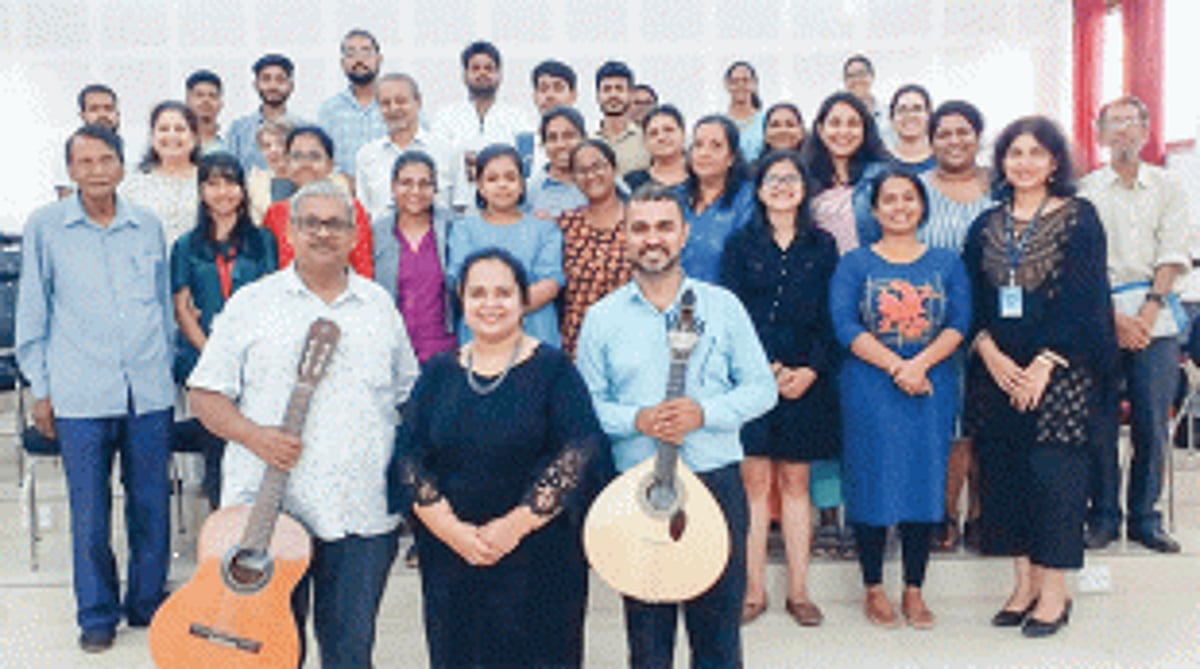
Fado is a genre of music, with origins in Portugal and sings
about love, passion, lost and saudade. Goa’s own fadista, Sonia Shirsat, has
been called the Ambassador of Goan music. She was recently invited by the
Directorate of Visiting Research Professor Programme and will conduct a credit
course on ‘An Introduction to the Fado’ under the Anthony Gonsalves Chair in
Western Music and Portuguese, which received an overwhelming response.
“Fado, the semi classical Portuguese music form, has lived in
Goa for over a century. In tiny pockets and limited circles, this genre has
been present in our State of Goa, among all other art and music forms. The
present times, last 20 years or so, are probably the best times ever for Fado
in Goa. There are events where this music is requested, venues where regular
professional Fado performances are held, Fado classes, singing contest where
Fado is sung by participants, foreign Fado artists coming to perform in Goa,
etc. It is very satisfying to see that Fado figures as an art form loved in
Goa. Fado has also become a popular tourist attraction, and many people come to
Goa specifically to experience this unique music. Just like Mando, Dulpod,
Dhalo, etc are shades of Goan Culture, today Fado has also earned its place in
this beautiful colourful fabric of our Goan heritage,” says Sonia, who was
conferred the Ustad Bismillah Khan Yuva Puraskar 2016 by Sangeet Natak Akademi,
New Delhi.
Arts
Introduced by the Portuguese, the bright blue-hued azulejos of
Goa are a beautiful form of painting on tiles that lasts for a lifetime. Goa is
the only state in India that does azulejos tiles. The tradition was brought
back to life by Orlando de Noronha, the first Goan to learn the art in Portugal
itself and reintroduce it to Goans in 1998 through Galeria Azulejos de Goa.
The curator of Centre for Indo-Portuguese Arts (CIPA), Orlando
promotes some of the arts that developed as a result of the Portuguese presence
in Goa. It is a family venture providing space for four Goan art forms, namely,
ceramics, book publishing, music and cuisine. “Azulejos de Goa is our ceramic
unit; Third Millennium publishes on Goan themes and authors in Konkani,
Portuguese and English; at Madragoa, our concert room for fado and mandó, we
have Goan artistes performing regularly; and finally, Cháfé Braz pays tribute
to famed Goan jazz musicians through performances, and doubles as a café
specialising in Indo-Portuguese delicacies,” says Orlando, who is always a
noted musician who plays the violin, mandolin and Portuguese guitar.
He further adds, “CIPA was founded in 2018 and has since been
getting a good response from Indian and foreign tourists and connoisseurs. They
are always happy to get the feel of a many-sided Goan culture and spirit under
one roof.”
Dance
Goans love to sing and dance and every form of dance is
performed wholeheartedly. The same goes with the Corridinho, a popular form of
the Portuguese dance and the Corredinho Marcha de Fontainhas. As cultural
ambassador of Goa to the world, many Goan folklore and musical troupes have
taken Goa’s music and dances to many countries.
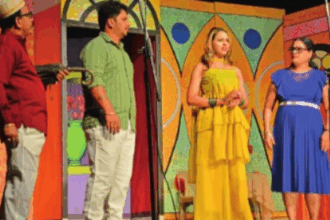
Formed in 1997, Mando Mogi Margao, a socio cultural organisation
led by Pervis Gomes, recently performed a musical programme showcasing Goan
music and dance in Indonesia and Timor Leste or East Timor. The group performed
Goan folkdances like Dhalo, Cotti fugdi, Corridinho, Mando dance and Dekhni,
with musicians and singers playing and singing the Goan folk songs live during
the performances. “For culture, there should not be any barriers. It is
universal and understood by everyone. It’s a great feeling to showcase the
Western and Indian culture which blends very well for the lovers of dance and
music. There are many youngsters and professional people in my group, who feel
that this is the real traditional culture rather than the imported rock and
fusion culture. They are very happy to promote the rich cultural heritage of
our tiny state,” says Pervis Gomes, who previously released a DVD featuring
traditional Goan folk songs and dances like Mando, Dekhni, Fugdi and Dhalo.
Film and television
When it comes to taking Goa to the world through international
television series, Nalini Elvino de Sousa is doing a fabulous job. She has been
directing television episodes for RTPi, a Portuguese channel for eight years
and each episode highlights an aspect of the Goan life that is linked to
Portugal.
Co-founder of the NGO – Communicare, Nalini shoots one program
every week for the series, ‘Hora dos Portugueses,’ which features different
personalities as well as Goan festivities. “The show is aired in Portuguese
with English subtitles and can be viewed anywhere in the world on television as
well as online. I try to bring Goan stories with a link to Portugal to the fore
and the show has featured 90 percent of Goans in these episodes. There are
different producers for the show in different parts of the world where the
focus is on the Portuguese influence in the country,” says Nalini, who also
directed two documentary films, ‘Special Envoy’ and ‘The Club’, for which she
was awarded the second prize in the documentary category at the 16th Jaipur
International Film Festival (JIFF).
Language
Portuguese is an official language in ten countries and it is
still spoken by Goans. Educational institutes offer Portuguese as a third
language from class 8 to 12 in Goa. There are many institutes that conduct
Portuguese language courses in the state and Goa University is the only
institute in the entire Indian subcontinent to offer a master’s programme in
Portuguese. It introduced the masters in Portuguese programme in 1987 and in
2019, it began the bachelors in Portuguese programme.
Dhruv Usgaonkar, assistant professor of Portuguese &
Lusophone Studies at Goa University says, “In the Bachelors programme, we had
19 students, who were from different parts of India including Madhya Pradesh,
Uttar Pradesh, Delhi and Bihar and unfortunately, no Goans. In the MA
Programme, there are 11 students of which 7 are North Indians and only four are
Goans. The students realise that there are huge career opportunities at
multi-national companies, as professional translators as well as teachers. Goans
students require the right guidance and a change of mind set, especially of the
parents to encourage their children to take Portuguese as a language. They need
to come out of their comfort and learn a new language to explore these career
opportunities.”
History and research
When it comes to documenting history and researching, Goa
Archives is one of the oldest archives in the entire country and its earliest
record book is of the year 1498. In 2017, Portugal has handed over a collection
of documents known as ‘Moncoes do Reino’ (Monsoon correspondence) to India. The
digital copies of 62 volumes were originally part of 456 volumes that cover the
period from 1568 to 1914 and form the largest of all record collections in the
Goa State Archives.
Dr
Celsa Pinto has been the longest serving Director of Education, Government of
Goa and the Director of SCERT and the author of several books that document the
history of Goa including the recently released ‘Concise History of Goa’. “Most
of the documents are not digitalised and should have been done nearly 5-6 years
ago. It would be very helpful not just to Goans but to people especially
researchers all over the world. A lot has to be done for the records to
preserve them well as the papers are crumbling. Goa Archives has a rich
collection but Goans are not utilising it well,” says Dr Celsa.