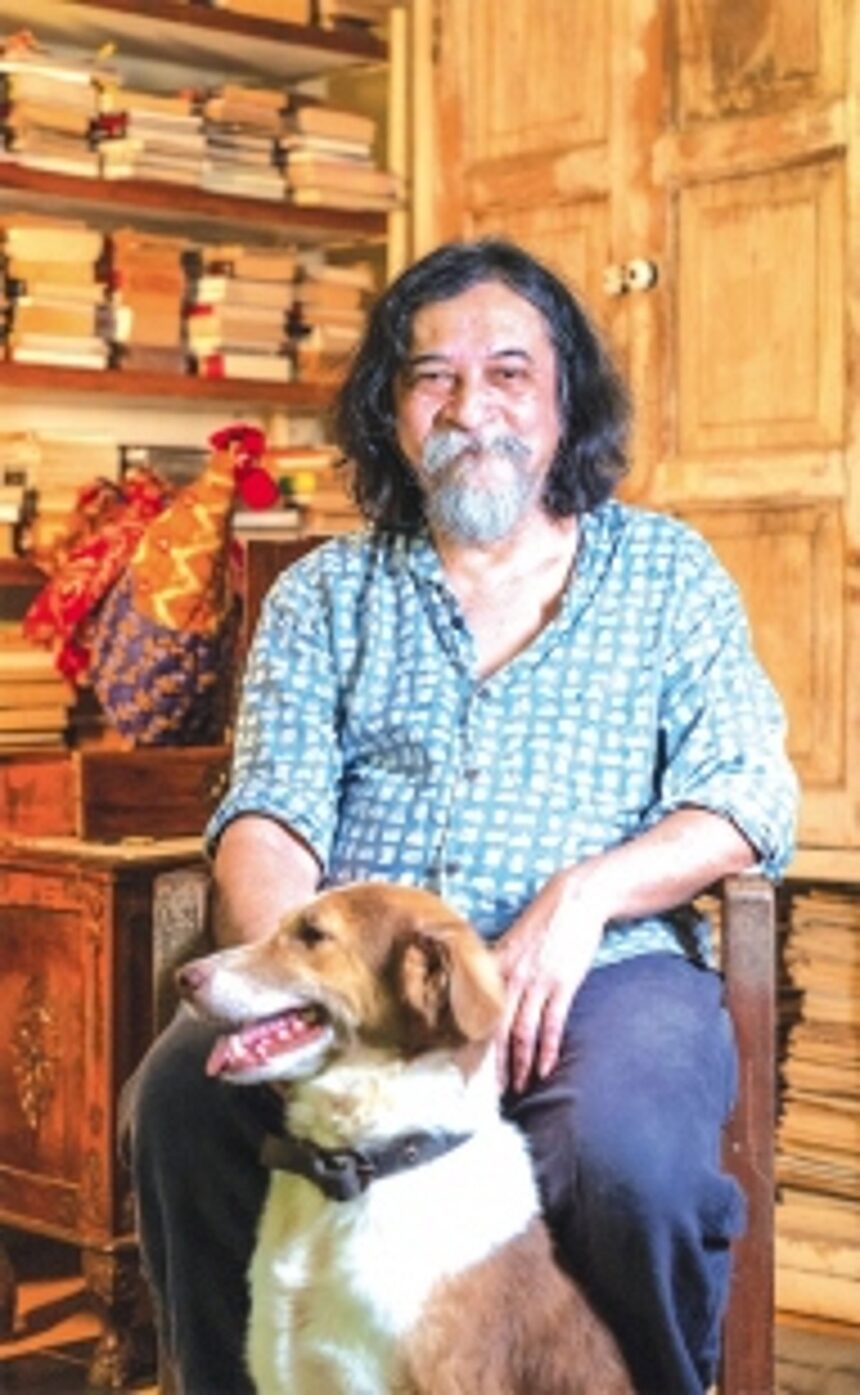
28 years ago, young Orijit Sen, a professional designer and
cartoonist, participated in the Narmada Andolan protests and documented the
dilemma of the communities living displaced due to the dam. Being an artist,
his work had to be thought provoking yet something that stands out for the
readers. In the process, he wrote India’s first graphic novel, ‘River of
Stories’ in 1994. On November 18, the book will breathe a new life as it will
be released at the Goa Heritage Festival in Panjim at 3 pm and the South Goa
launch will be held at The Dogears Bookshop, Margao on November 19 at 6 pm.
Orijit first came to Goa in 1985 while
still a student on a brief solo adventure. “It was a case of love at first
sight I suppose. I made up my mind straightaway that one day I would come and
live in Goa. Eventually, I moved here in 1997 from Delhi, with my wife Gurpreet
and our young daughter, Pakhi,” says Orijit, who besides creating intriguing
documentaries, also runs People Tree in Assagao.
“I studied at the National Institute of
Design (NID) in Ahmedabad, and while there I came to know about the lives and
struggles of Adivasi communities while working as an assistant on a film
project in Panchmahals district in Gujarat. My colleagues and I were welcomed
into homes, offered the best of food and drink, and taken care of by people who
had very little themselves. While the day-to-day lives of the Adivasis somehow
felt purer, simpler and richer than our urban lifestyles, I saw that there was
lot of exploitation from outsiders and encroachers, and an omnipresent deep
struggle for survival. After NID, I began my professional career in Delhi. I
also got involved with the Narmada Bachao Andolan, volunteering my design and
art skills to create campaign materials for them. At some point, the idea of
creating a comic book about their struggles came to me,” says Orijit, about the
origins of his first book, ‘River of Stories’.
The book received a cult following gradually after the first
edition. Unlike this edition, which is one of the most anticipated graphic
novels in the country. “When my book first came out in 1994, there was very
little interest in the medium of comics as a form of art making and
storytelling. People in India were unaware of its potential, and most,
including many publishers, thought of it merely as a kind of cheap throw-away
entertainment for children. I had a difficult time getting support to publish
it till my friends, associated with an environmental NGO called Kalpavriksh in
Delhi, grew interested in the idea, and were able to secure a small grant to
print the book. We were able to print about 800 odd copies with the funds.
Still, no bookshops were interested in stocking it, and neither did any
newspaper or TV channel or magazine care to talk about it. The only review that
appeared in the press was written by Khushwant Singh who, though he was ailing
by then, used to still write a column in the Hindustan Times. That limited
edition of 800 was eventually sold, mostly through a small bookstore called
People Tree that my wife Gurpreet and I used to run ourselves. After a year or
two, we were able to sell off all our copies, and the book went out of print –
and has remained out of print till now,” he explains.
He further adds, “It is indeed very gratifying that now, as I
prepare to launch the 25th anniversary edition of ‘River of Stories’, I can
feel the anticipation and the buzz among a whole different generation of
readers who have heard much about this book and are eagerly awaiting its
release. In 1994, I felt disheartened by the reception I got for the three
years of hard work and dedication I had put in. But today I feel vindicated. I
realise the book was ahead of its time then, but has now found its place and
its audience.” At that point of time, the idea that he was creating India’s
first graphic novel never crossed his mind.
The new edition has forewords by Arundhati Roy, who herself has
been a vocal supporter of the Narmada Bachao Andolan, and British comics
historian Paul Gravett. Orijit has also written an Introduction to the book
with the idea of locating it in the contemporary context. In addition, the new
edition features a section of sketches and notes from his travel diaries from
the Narmada valley, offering a glimpse into the process of making ‘River of
Stories’.
The new edition has been published by Blaft Publications, an
independent publishing house based in Chennai. They have worked together to
ensure the best production, design, and editorial quality. “It has been a
surprisingly intense process, but I’m happy with the results. It’s coming out
in a hardback collector’s edition, in a different format from the original.
Type designer Shiva Nallaperumal created a new font based on my handwriting,
and that is what has been used for all the comics pages. It has a new cover
too, and to me — used to thinking of the book in its original form — this
edition looks and feels like a completely new book,” says Orijit.
What made this artist revisit this classic? “The question of
reprinting the book started to get asked more frequently and with greater
insistence. My daughter Pakhi (who, coincidentally, was born the same year as
‘River of Stories’) asked me the same question. She was very pragmatic, and
said this book was a part of history, and I should not hang on to it or try to
modify it. I should just bring it out as it was. I finally decided to go ahead
with the new edition. But then Covid intervened, and now it’s almost 28 years!”
The world of comic too have advanced over the years and Orijit
is proud about his involvement in India. He optimistically says, “Between 1994
and now, there has been a huge change in the world of comics in India. There
are a number of talented artists working in the field, and more coming up.
There are publishers, there are online platforms and there are festivals
dedicated to comics like the Indi Comix Fests, Comic Con and others coming up
in almost every major city in India. We also have larger readerships for Indian
comics and a lot of media attention. ‘River of Stories’ itself is being taught
and studied in several University level courses, including at the Chowgule College
in Margao. There is still a long way to go before more artists and writers feel
confident that they can build full time careers in the medium, but the scenario
today is hopeful I feel. At a personal level, I feel proud that I was one of
those who somehow set the ball rolling for all this to happen.”
Orijit is working on a number of projects, including some short
and long comics including a full-length comic called Gokulnagar, a
fictionalised account of the collective struggle of a group of sex workers and
their quest for dignity, security and rights, based in a town in Maharashtra.
However, Goa too had its influence on Orijit’s creative mind. “Having lived
here for more than two decades, I have several ideas on what kind of stories I
would like to tell about my adoptive home. Between 2013 and 2016, as a visiting
professor at Goa University, I did a lot of documentary work on subjects like
Mapusa market, iron ore mining, and the lives of young first generation college
students in Canacona. Now I want to tell a fictional story that captures both
the history and contemporary life of Goa while projecting an imagined future
for it. But it’s still at a very preliminary stage,” says Orijit.
The
book will be available at all major bookstores like Broadway in Panjim,
Literati in Calangute and Dogears Bookshop in Margao. It will also be available
online from Blaft Publishing’s website initially and on Amazon and Flipkart.