There are those who litter, there are those who complain about the garbage strewn upon our
beaches and then there are those who do something about it. We often see
isolated beach cleaning ‘day’ campaigns but many-a-time, these are exercises in
futility as the same area is seen full of garbage a few weeks later. It is
clear that more needs to be done beyond regular beach clean ups and an attempt
to address this, that goes by the name #TeraMeraBeach, can be seen these days if
you pass by Miramar beach.
#TeraMeraBeach is a unique 150 days beach
awareness campaign to a cleaner Goa by Drishti Marine in association with Taal
Inc, aimed at visitors to Goa, especially domestic visitors.
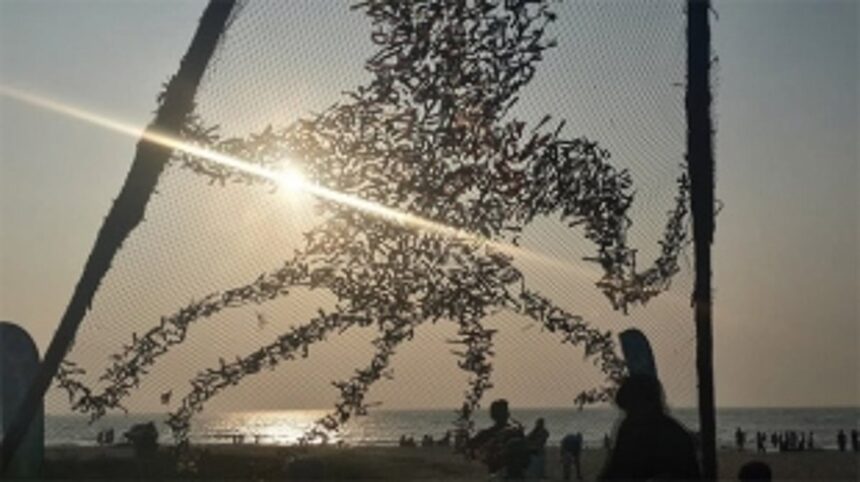
What has impressed many about this initiative and what catches
your eye instantly are the art installations – wealth out of waste creations
and community activities on the beach that include the use of the drum, which
symbolises the energy that is driving this project. It is through drum circles,
art and awareness that the team behind this campaign is building a community
for better waste management. The team is a collaboration of organisations
running a campaign to build awareness and knowledge around cleanliness and
waste management on the beaches of Goa.
“The public awareness campaign #TeraMerabeach will educate
people on waste generation and waste management through music and art to raise
awareness on keeping Goa’s beaches clean,” state Drishti Marine officials.
Started in November, daily drum circles and a community art
installation at Baga beach is organised every evening for one and a half hours
in order to create an awareness on beach clean-up and teach people about the
importance of waste segregation. The innovative campaign has also spread across
Baga, Calangute, Candolim, Miramar and Colva beaches.
The drumming activity is followed by each participant of
#TeraMeraBeach adding one piece from the collected waste to the community art
installation. The community art installation will consist of bottles, cans,
paper, cloth, etc collected by the participants during the clean-up drive.
“We use drumming and art to ask people to contribute to a Clean
Goa. Drumming spreads positive energy and while drumming, people are receptive
to the message. People can make their mark by adding a piece of waste to the
art installation, click a selfie and upload on social media with the hashtag
#teremerabeach”, says Noreen Van Holstein, one of the organisers leading the
activity.
“Goa is beautiful and special, that is why I moved with my
family to Goa over two years ago. But like everywhere, even in paradise,there
are issues and dumping of garbage and littering is a clear nuisance here. As
Goa sees a large number of tourists, it is logical to start the dialogue with
them,” she adds.
This campaign is supported by Goa Tourism to raise awareness on
keeping Goa’s beaches clean.
The involvement of tourists in the campaign has given them a
different experience to the regular Goa holiday beach visit. Locals are
participating in these activities as well.
“#TeraMeraBeach will make visitors responsible and aware of the
necessity to use bins, segregate waste and participate in beach clean-ups,”
adds Drishti Marine Officials.
In
a bid to improve the cleanliness on Goa’s beaches, the state government had
reached out to Drishti Marine in December 2016 to step in and assist with
garbage collection along the beaches on a temporary basis, to support the
effort of the government. Accordingly, Drishti Marine offered its assistance and
mobilised manpower and equipment for clearing garbage from the beaches of Goa
starting December 17, 2016 and the same was transported to the Saligao Waste
Management plant. A year into this campaign, as on December 17, 2017, the
agency collected and transported over 10,72,230 kgs of garbage from the state’s
coast.