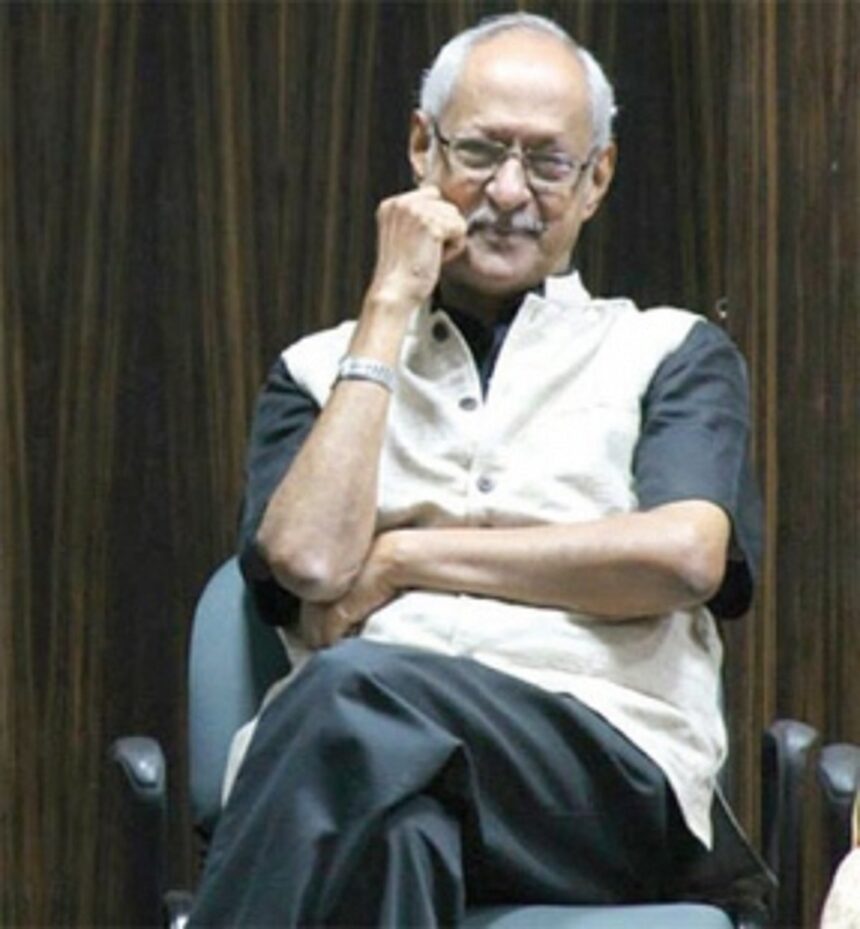
Born and raised
in the coastal village of Majorda in Salcete on August1, 1944, Damodar was the son of a prospering
shopkeeper. While his early schooling was in Portuguese and Marathi, he
matriculated in English and rounded off his formal education with a degree in
Commerce from Bombay University. The immediate Post-Liberation years were heady
days of optimism, which even reached Goan students in Bombay.
Mauzo took the first
steps into the creative world by writing short stories in Konkani and reading
them over All India Radio, Bombay, which then had a slot for Konkani. He was
also drawn to the stage, acting in his college Marathi dramas, where
incidentally he found his heartthrob, soul-mate and ultimate life partner in
his fellow collegian Shaila Apte who played the female lead while he was the
hero! His leadership qualities may be gauged by the fact that the young village
lad from Goa, commanded the All-Bombay College NCC contingent at the Republic
Day parade in Bombay. He also played a leading role in the Bombay Colleges
Konkani Cultural Association. When he landed in Goa in the early sixties, he
plunged into the Konkani literature movement and the fight to keep Goa from
being merged into Maharashtra, culminating in the victory at the historic
Opinion Poll in 1967 but at the cost of him suffering several lathi blows. All
this while, he was learning the ropes of running a village grocery shop which
was more like a department store, stocking virtually everything from cement,
tiles, fertiliser, needles, threads, zippers, kerosene, gifts, stationery and a
bar selling local feni along with whiskeys & brandies, bottling his own
marble bottle sodas in addition of course, to groceries.
And of course, he was
writing his Konkani short stories which he strung into his first collection
(published in 1971) aptly named Ganthan or a string of fish! 1971 was also
momentous for him and Shaila as their first-child Rupali was born in that year.
His next Collection had a very apt self-explanatory title Zagrannam as the
stories were spun out over a series of late nights when he was at his creative
best, after shucking off his possorkar hat. Meanwhile, he was also a leading
member of Margao Junior Chamber, travelling for a National Conference in Delhi
and even an International Conference in Rome with Shaila at a time when foreign
travel was a lifetime dream for most Indians.
Through all this, his
creative buds were working, as were his efforts to secure recognition for his
beloved Konkani. This came in 1975 in the teeth of opposition from the Marathi
lobby, when the Sahitya Akademi recognised Konkani as an Independent Literary
Language. It took another 12 years and a major violent agitation for Konkani to
become the Official Language of Goa. Bhai Mauzo of course was in the vanguard
of the fight. And in August 1992, Konkani proudly took its place in the 8th
Schedule of India’s Constitution. He wrote a book for children Kanni Eka
Khomsachi and his Sahitya Akademi Award-winning novel Karmelin came in 1983.
This went on to be translated into English and several other Indian languages.
He published some more collections of short stories, some of whch found their
way in translation into magazines and anthologies. Mauzo has written the
scripts for some Konkani films and has worked with a Brazilian director for an
Indo- Brazilian production. In between, he was writing regular columns in
newspapers mainly in Konkani but also in English. These Are My Children a
Collection of Short stories translated into English was published by Katha
Publications, Delhi and Teresa’s Man and other Stories another English
translation of his stories was published by Rupa Publications. After the
devastating Tsunami of 2004, Mauzo visited the Coromandel coast to see the devastation
first-hand. The experience gave birth to Tsunami Simon. The novella garnered
the Vishwa Konkani Sahitya Puraskar 2011 in Mangalore and the English
translation was published by Ponytale Books. A compilation of his non-fictional
writing in English titled Ink of Dissent published by Goa 1556 was released
this March by noted historian RamchandraGuha.
Mauzo with an
ever-smiling mien, wears his years so lightly, that one would be stunned to
learn of the array of medical problems he has had to cope with. Beginning with
the cardiac bypass surgery soon after bagging the Sahitya Akademi Award in the
70s, to a relatively unknown ‘Macular Hole’ affliction. Though the disease then
had a rather poor cure prognosis of around 30%, his eyesight was saved thanks to
the genius of the surgeons of Shankar Nethralaya, Chennai. Then came
angioplasties and finally the Big C discovered in late stage 2. But though he’s
a self-confessed agnostic, SOMEONE up there must be looking out for him, as he
came out of that test too with flying colours to emerge as one of Goa’s few
cancer survivors!
Round about this time
last year, Goa woke up to the news that Mauzo was on the hit list of the Right
Wing who had succeeded in gunning down rationalist writers Kalburgi, Pansare,
Dabholkar, Gauri Lankesh and others. He had earned the ire of the
fundamentalists for taking a stand and being one of the leaders of several
protests against atrocities taking place in the country. Beginning with the
Writers’ March at Dandi, Gujarat, the Brahmaputra Literary Festival and the
Sahitya Akademi, Mauzo minced no words about the scary shrinking of space for
liberal writers, Dalits and marginalised people. Higher-ups in the government
were certainly not amused by his outspoken words and he was denounced. Though
reluctant, he was advised to accept Government protection which continues 24/7
even today, by machine-gun toting commandos. Majorda villagers are amused to
see a radio beacon police motorcycle tailing Mauzo as he goes for his morning
walk!
Today, Damodar Mauzo
or Bhai Mauzo as he’s better known, celebrates 75 glorious years, in the
company of his beloved Shaila, his three lovely girls Rupali, Meghana &
Sobita with their husbands and grandchildren already in their teens. Wishing
him along with other family members, are countless admirers, fellow writers,
activists, well-wishers and friends (many of them like me who count their
friendship over even half a century). What can we say, except – Ad Multos Annos
Bhai – let the Ink of Creativity & Dissent flow on!
–
Xavier Cota