International
Dance Day was introduced in 1982 by the International Dance Council
(Conseil International de la Danse
– CID), a
UNESCO partner NGO, and is celebrated annually on April 29. While
every dance form is an
expression of freedom, ballroom
dancing has its own grace and elegance. Dances
like the Red and Black dance and Christmas dances were social
occasions
where youngsters would meet. Now, the dance floor is left unoccupied
with only
a few couples
still dancing elegantly.
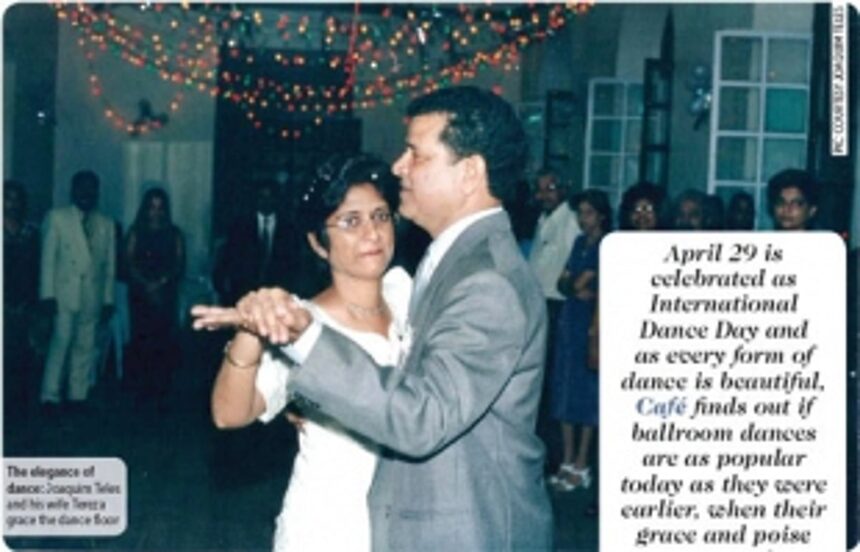
Joaquim
Teles, President
of the Panjim
Traditional Festival Committee, was
one of the first members to initiate the Red and Black dances in
Panjim. “There are very few youngsters
who come forward
to dance
ballroom dances for any formal occasions,
including weddings. The love for ballroom dances should be inculcated
by
their parents.
My parents
– late
Joaquim Santan Teles and Pedrina Diniz
– were great
ballroom dancers. I was in awe of them on the dance floor and learnt
from them. Watching my wife and I take to the dance floor, now our
children also have the love for ballroom dancing,” says Joaquim.
Jason
and Sylvia conduct specialised
private dance classes at their studio for individuals, groups and
wedding couples. “There are a lot of youngsters who are coming in
for classes,
especially those whose parents push them to learn. Ballroom is part
of our lifestyle and any formal occasions like Christmas dances where
one has to be formally dressed,
will have
ballroom dancing. One feels out of place if we don’t know ballroom
dances like Jive or Cha Cha. During the
wedding
season, many couples come to learn ballroom along with their entire
entourage,” says Sylvia,
giving a gleam of hope.
Mario
and Anette from Caranzalem took up ballroom dancing especially for
the silver jubilee anniversary of their wedding. They were keen on
learning and now take up every opportunity to dance their hearts out.
“I dance for all weddings
and occasions and was recently called for an advertisement to dance
with my wife. It is a superb experience and I enjoyed learning,
even at this age,” says Mario,
while Anette adds, “We have great dancers in our family and now we
also enjoy each other’s
company on the dance floor. Even if great music is playing in the
house, we get up and start dancing.”
Dr
Martin D’Costa of Dance Illusions conducts dance classes for
ballroom
dances and heads the Dancesport Goa Academy in Goa. His students have
been representing the state for ballroom
dance competitions. “Many youngsters are influenced by TV and they
pick up a dance form that is easy to learn and has no discipline in
that dance form. For ballroom dances, one has to attend classes to
know how to follow the music and beats. I had a special course for
children in ballroom
dancing which was well attended but it is the parents who have to
encourage them to learn in the first place. Ballroom dancing is not a
holiday activity where children can be taught for a month and have a
show on stage. It is taught for life so they can dance with grace for
any occasion. Parents play a big role in this and that is the reason,
many times,
the dance floor even for weddings have less dancers as boys don’t
know the etiquette of dancing,” says Dr Martin.
Oslar
Furtado has been teaching ballroom dancing and feels that dances like
the Penguin dance and Dollar song which are usually played for
weddings are not meant for grown ups. “Ballroom dancing is counted
as education and has been taught to
children in
Europe. It starts from the grassroots
level with children from
the age of 7
or 9. In Goa,
a lot of people don’t know to dance and are often seen dancing in
the wrong manner which is
actually
disrespectful
to the lady.
You have to be a qualified instructor to teach ballroom as the dance
form is not just something you can pick up in two hours. You have to
concentrate and practice regularly. In the 1970-80s
ballroom dancing was big and for dances in Clube National we used to
have break
dancing Jive. Now, youngsters don’t dance ballroom dances like Waltz,
Foxtrot and Cha Cha.”