As we walk along the pavements, we
are invariably accosted by stacks of garishly coloured printed
calendars for sale. Yet,
research has indicated that these have sold more than any other art,
to the extent that it begs an explanation and study.“Calendar
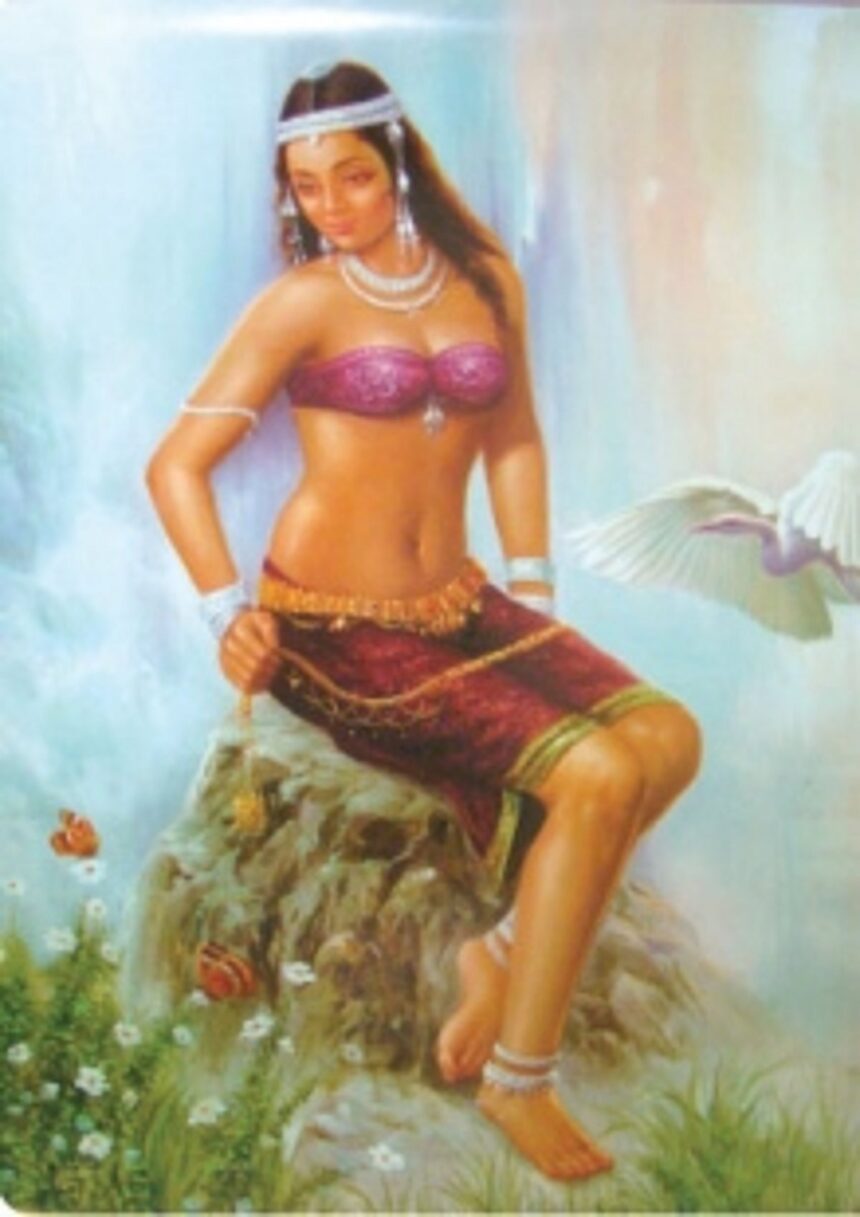
art is a ubiquitous genre of popular art in India. We find these
brightly coloured and inexpensive posters sold by street hawkers,
plastered on the walls of tea shops, barber shops, beauty parlours,
autorickshaws, waiting rooms of paediatric clinics, carefully framed
and mounted in government offices, in schools, worshipped as
religious icons in homes,”
explains art historian Sarada Natarajan during
her recently
concluded art lecture series at the Museum of Goa. The order of
preference,
it has been noticed,
is for religious, scenery, baby pictures, film stars and the like.
“With
precedents in 19th painted engravings from colonial Calcutta and Ravi
Varma’s oleographs, calendar art fulfils several important
aesthetic/symbolic functions in the popular realm in India. Published
and printed by a few offset printing monopolies located in Sivakasi,
Chennai, Bombay and Delhi, they rely on a large pool of painted and
photographic images often mixed and matched in a single poster,”
she elaborates further on the huge popularity of this visual art
form.
Studying calendar art in the
present context where artists are trying to reach a larger audience
thus gains even more relevance and importance. “About
twenty years ago, studying
calendar art
would have been considered a frivolous and unscholarly activity in
art history departments in India. With the rising interest in popular
culture in Indian academia and because of the exciting work of
scholars like Professor Jyotindra Jain, Dr Kajri Jain and Professor
Patricia Uberoi, we approach calendar art differently today. In my
opinion, practising artists should pay particular attention to this
visual art form, if only because its popularity and mass acceptance
will always exceed, by an order of magnitude, the accessibility that
any art school graduate’s work will have. And numerous young Indian
artists are legitimately concerned about reaching out to a wider
audience,”
avers this PhD in art history who has been teaching fine arts and
theatre art at the University of Hyderabad
for over a decade and is
now a visiting
professor at Shiv Nadar University, UP.
Her lecture series at MOG,
at the invitation
of Dr Subodh Kerkar, sought
to introduce students to analysing calendar art in terms of its
constituent formal elements, and reading it within the larger context
of the very complex phenomenon of India’s cultures. “Rather
than dismissing this art form as lowly kitsch, the participants were
encouraged to pull it out of its ‘pedestrian’ location to examine the
tropes, clichés and contradictions embodied in individual examples.
While such an analytic exercise has its serious side, we also had fun
caricaturing the stereotypes and dissecting the impossibly ideal
worlds encapsulated in a selection of popular posters,”
explains Sarada who has indeed opened up a new area of art dialogue
in de-pedestrianising
calendar
art.