Goa may have some
very beautiful beaches
that attract crowds from the various states of the country as well as from
various countries around the world. It however is also a site for scenes of
much sadness. It is not uncommon to see marine life lying either dead or
injured on the beach. This is a problem that is causing much concern amongst
the people of the state. Recently a webinar on marine life was held to discuss
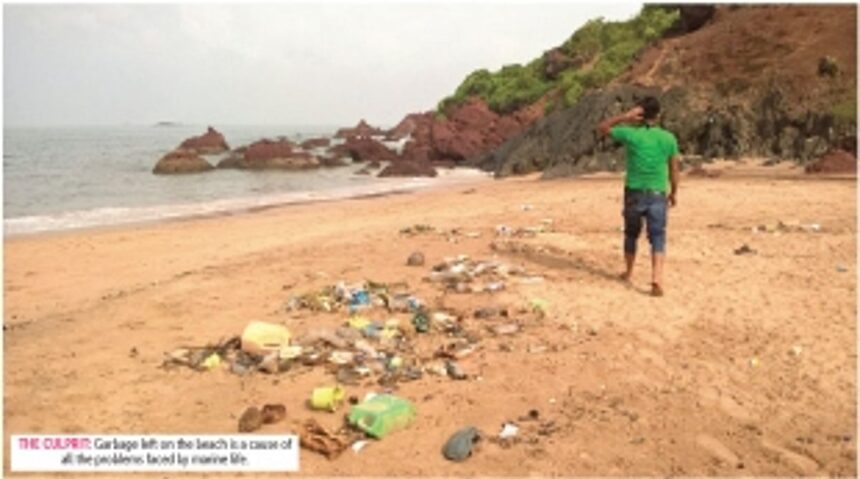
the problems on the beaches. The issue of garbage which was left behind on the
beaches, the issue of garbage being thrown into the sea and its effects were
discussed.
Alok Hisarwalla an independent lawyer, activist and researcher working
on animal rights who chaired the session said that the problem of marine life
being stranded on the coastline was a problem that had been taking place for a
very long time. It was not unique to Goa, it happened all over the country. Goa
has a fantastic system, where a network has been created which includes the
government and private sector. A stranded animal’s network involving wildlife
guards, first responders, veterinarians all ensure help reaches them quickly.
Divya Sharma from Dhrishti said their job was to purely record
the data. She said now postmortems were being conducted on carcasses which were
now being recorded. Most died, she said from fighting nets. She said “Ghost
nets which get left behind in the waters are a big problem. They are floating
across oceans and animals are caught in them. It could ingest it. Now we don’t
know how it is getting into them but it is a serious problem. We have mentioned
this to the forest department. We need to find a way to clean up the mess.
Usually in a lot of other coastal countries fishermen are given some
compensation when they come back with ghost nets. It has not yet been
implemented in Goa. It must be done; it is a huge pollutant in coastal areas.
We of course also find the odd animal with plastic and garbage.” She went on to
say that the animals that were found on the beaches of Goa had come in from the
deep ocean. She said the big dolphins were not found in the intertidal waters
of Goa. These nets were a serious issue. Ocean watch, the program unique to Goa
which was on for four years, was doing very good work, she said.
In a statement Reef
Watch Conservation said the marine megafauna face a multitude of threats, both
natural and anthropogenic. Through their work over the last few months with
treating animals and conducting post mortems, they have identified a few
factors that are detrimental to the animal’s well being. It is important to
note that a conclusive cause of death is difficult to ascertain, since there
could be other contributing factors. One recurrent finding was the empty
digestive tracts, which could indicate dwindling fish stocks, and a lack of
food in the ocean. As a result, some animals may look to fishing nets or ghost
nets which have fish entangled in them as an easy source of food, which
explains why 3 dolphins we have examined were found with net in the stomach.
With respect to turtles, many are found entangled in nets. These nets can come
from anywhere, and are not necessarily reflective of local fishing practices in
the region. Additionally, a number of turtles come in with parasites that
severely impact their health, making them weak and unlikely to survive,
depending on the extent of infection. The learning curve has been steep, and
they were changing our protocols to account for these findings.
Clinton Vaz, who has
done much to fight the problem of waste management in the state, admitted that
the problem of ghost nets was worldwide. The cheap nets that people in Goa use
is a problem. During the monsoons the sea is rough and these nylon nets, he
said, would wash up on the beaches causing problems. He said in the last two
months various turtles had washed up. He said “In Salcette a turtle washed up
with a limb missing. The local volunteers helped rehabilitate it. The net
undoubtedly caused the loss of the limb.”
Clinton said
especially during the monsoons the garbage that was landing on the beaches were
all locally generated. They came across Goa Dairy Milk packets which were three
days old. A lot of picnickers left behind beer bottles or cans which was an
even bigger problem. The cans would sink and no one knew how many were around.
Check of the garbage revealed they were 90 percent Indian brands and were
generated in Goa or neighboring states. They had put up a proposal with the government
to clean up the small beaches which were full of garbage. Nothing had come of
it as yet. He said “We are finding more plastic and micro plastic, these are
bits so small that are easily ingested in marine life. Big fishes which are
popular in Goa have plastic or micro plastic in their stomach. So we are all
eating fish with plastic. The long term effects can only be imagined.”
Clinton
urged that a change in the way we lived was essential to ensure other beings on
this planet survived too.