What do you do, when you are running out of time to ensure that your digital
stamp is not wiped out? What do you do, when this digital footprint is not
always accurate and more often than not, propagates stereotypes Goans are tired
of hearing of?
Wikipedia, the free online encyclopaedia, created and edited by
volunteers around the world and the seventh most visited site currently, has
content in Konkani. But Konkani Wikipedia needs more energy to survive, in the
form of articles on this site and if there aren’t enough articles on the
platform, then there is a possibility that Wikipedia may derecognise it.
However, there is a strong group of like-minded individuals that
are working hard to ensure this is a distant possibility and are instead
looking at creating a movement to ensure that the Konkani Wikipedia becomes far
bigger than what it is now and stays relevant in cyber discourse.
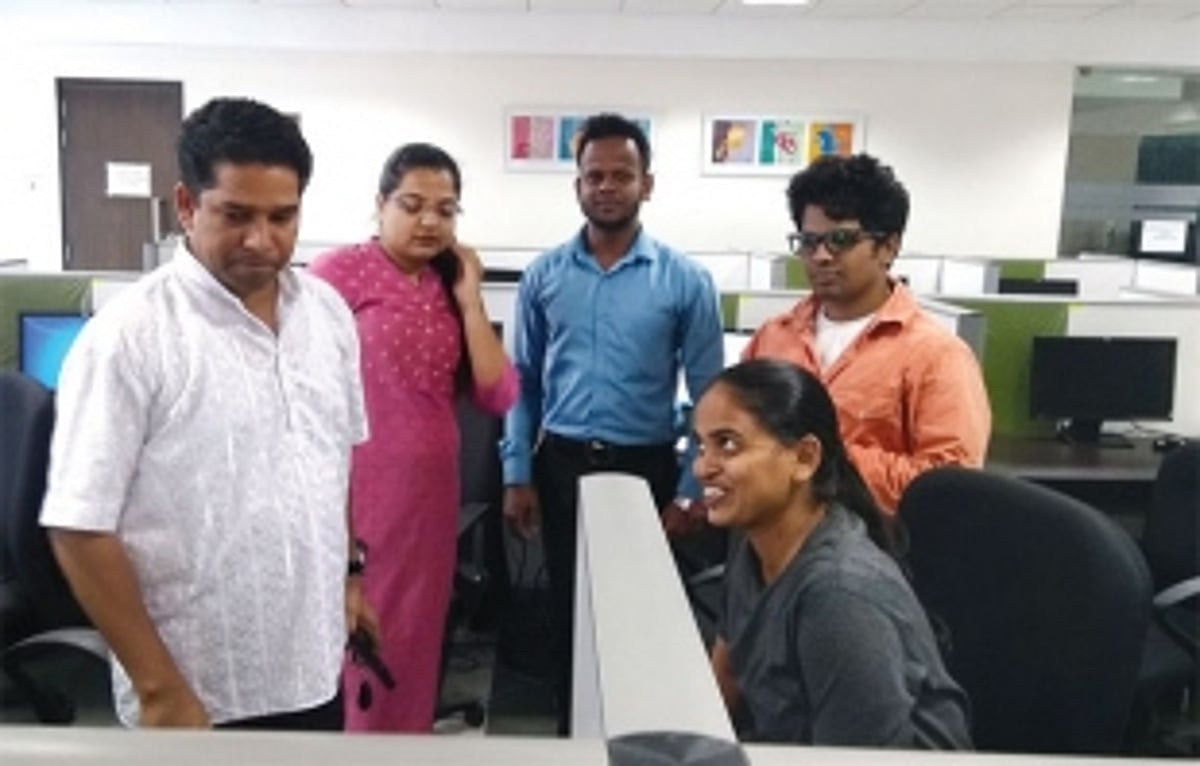
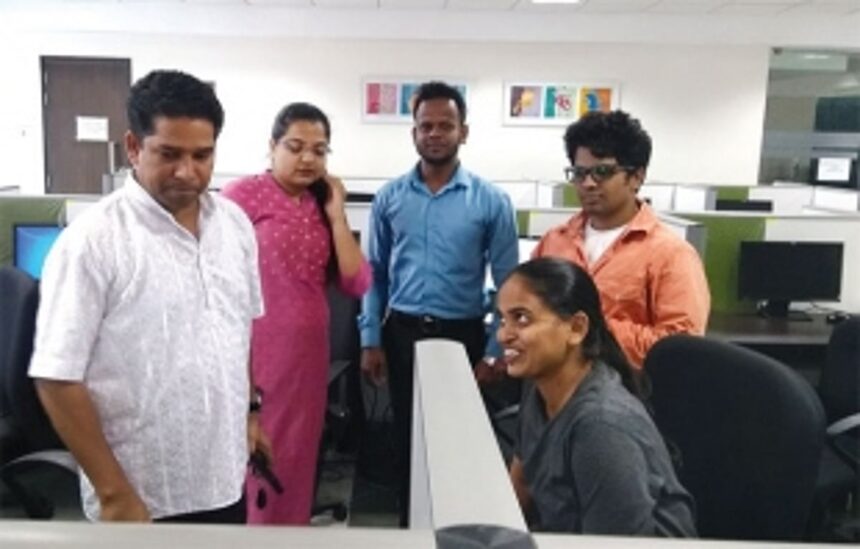
The group that met at the edit-a-thon held at Central Library,
Patto-Panjim has been working towards this idea, and have translated English
articles on Wikipedia to Konani, added fresh articles on a regular basis and
kept the movement alive.
Sometime around 2006, the Konkani Wikipedia proposed, went into
‘incubator’ stage. In 2015, Konkani Wikipedia went live with some translations
and a few entries. Since then, quite a few training camps have been held,
mostly at the Goa University and Nirmala Institute.
Taking into account the difficulties in getting sufficient
volunteers and sustaining the momentum, the Goa Wikipedia Group (GWG), an
information network over WhatsApp, was launched in June 2018. The group has
over 200 members online and they recently had their first edit-a-thon meeting.
The volunteer based GWG has also reached out to The Goa Konkani
Akademi, Dalgado Konknni Akademi, Konkani Basha Mandal and other such writers
groups/ individuals for contribution.
And among the group, there have been many who have put in solid
work to promote and keep Konkani Wikipedia active, such as Fr Luis Gomes, Head
of the Konkani Department at St Xavier’s College, Darshan Kandolkar, professor
of Konkani at Vidya Prabodhini College, Denzil Simoes, Isidore Dantas,
Frederick Noronha, etc.
Herald Café: What are the difficulties in building the
Konkani Wikipedia?
Goa Wikipedia Group: There’s definitely a need for more
Goa-related locally-generated content in cyberspace (instead of just tourist
related stuff). This is especially important if Goa is to be adequately
understood in a cyber-dominated world, instead of just through stereotypes.The
group aims to fulfil such a purpose. Though just a start, it is a very good
opportunity for Goa to represent itself.
However, there are certain problems. Firstly, in the world of
Konkani, those who are language experts are usually seniors and not much into
using computers. Techies might not have sufficient confidence in writing the
language. Secondly, volunteering is not happening sufficiently, and Goa perhaps
really needs to rebuild its ability to work together and create jointly. In
another generation, so many ‘kudds’ (village clubs) were set up in places like
Bombay, some of which are still existing. Who will build the cyber-kudds of
another century? Thirdly, we are divided by language and script, so this group
aims at building Goa-related content in general, not restricted to any one
language. Finally, perhaps, translations hold the key. There is so much good
content waiting to be translated, and Wikipedia allows us to freely translate
content from one Wikipedia to another. Why should French content not end up in
English, or Konkani content find its way to the Portuguese Wikipedia? Hindi and
Marathi too are languages where there are a lot of interest-overlap with Goa.
In today’s multilingual environment, we need to leverage this to the full.
HC: How does one keep the pages updated, making it more relevant to
the public?
GWG: Unfortunately, for a number of reasons, we haven’t been able to
build enough cyber-volunteers in Goa. We need people who will appreciate the
importance of having useful Goa content out there, and keep it updated, adding
images (photos) and other media available. This can change the way Goa is seen
by the outside world; it could also change the way Goa is understood by its own
young people and students.
HC: How does this help the Goan Community?
GWG:We can’t wait for someone from Mars to come along and create
content on Goa. We, as a state, often complain about being dismissed as a
stereotype, but what are we doing to correct it? Our students have insufficient
material to know about their own history, culture, past and the role that this
tiny region has played even in world history. It is not practical to expect
everything to be made available in text books. But this is one very useful way
of creating and sharing information. It builds a volunteer culture, promotes
people’s languages skills, and teaches the basic skills of collating and
generating well-researched articles. While teachers sometimes see Wikipedia as
the source of plagiarism, other educationists have already been experimenting
with using it as a tool on which to get their students to undertake real, live,
meaningful assignments that can be then shared with the world and be useful to
everyone.
HC: How can this put Goa on par with other states, cities and
countries where information like this is available instantly?
GWG: Everything depends on how many volunteers are there, how
seriously they take it, and how much they contribute. Languages like Bengali
(both West Bengal and Bangladesh), Telugu and some others have gone fast ahead.
While Goa may not be on par with others (given its size and obvious
limitations), we must start in building it, using our language skills, and our
age-old connections with the rest of the world.
HC: What are the immediate challenges this group faces?
GWG: To build momentum in terms of Goa’s presence on the Wikipedias,
all languages, to get more people to volunteer on the Konkani Wikipedia
http://gom.wikipedia.org, to bridge the gap between young and old, techies and
language specialists, to use shareable knowledge in shareable ways such as more
translations across multiple languages and more transliterations across
Konkani’s three scripts used there, to build the credibility of the Wikipedia
as a source for reliable information, and show that crowd-sourcing of knowledge
actually works and to get Goan littérateurs, musicians and villages out there
in cyberspace, expanding to more topics later on.
HC: How do you plan on tackling the various language challenges?
GWG:The Wikipedia Translate tool is a great way of doing
translations even from a language one might not be very comfortable in. Some
Portuguese Wikipedians have already reached out to share energies and
knowledge. We need to convince teachers that Wikipedia can be a useful ally to
build language and translation skills among students. For those who find the
Wikipedia tech skills a bit befuddling, we’re trying to get them to pair up
with techies who can do that side of the job while they focus on the
translations.
HC: People are already noticing the recent efforts wherein pages of
popular Goan figures have been updated. Will the group be looking at getting
popular figures to update their information or engage with them so that the
same can be updated by your group too?
GWG: Yes, of course. We should be proud of all those who have done
our state proud. While doing so, we need to be cautious to adhere to the rules
and principles that Wikipedia follows. This is not a space for advertising; is
an encyclopaedia. We also need to justify the presence of a person on Wikipedia
by pointing to suitable citations online or in print.
HC: What about the presence of false and misleading information on
Wikipedia? How does the group plan on tackling this, especially if the false
information is deliberate?
GWC: Admitted, there have been some notorious cases. The Bicholim
Conflict is one of the notable Wikipedia hoaxes, and pertains to Goa!
http://nowiknow.com/ the-bicholim-conflict/But, as someone said, given enough
eyeballs, all bugs are shallow. If we have enough volunteers, we can definitely
avoid such issues far better.
Contrary to public perception, Wikipedia is not unreliable just
because “anybody can edit it”. There is actually a sophisticated
mechanism to keep track of who’s editing what, and what the likely motives are.
It is only after long months or years, that one earns respect for one’s work.
To correct the work of a ‘vandal’ is a two-minute job. But the
more alert eyeballs, the better the chance of avoiding this.
HC: How do you guys plan to involve more groups?
GWG:
There’s an all-India
Training The Trainers group that is already part of this. Wikipedians from
Bangalore, Maharashtra and Kerala are lending their support. As mentioned,
Portugal would like to share resources.