The last couple of months have got Goans acquainted with all things related to strikes and
protests rather well. First it was the taxi owners and operators who called for
a strike, thereby causing grave inconvenience to locals and tourists alike. The
state-wide strike was held opposing the Supreme Court order that mandates the
installation of speed governors on taxis among other commercial vehicles. Then
it was the mining protest – one of the most notable protests in recent times –
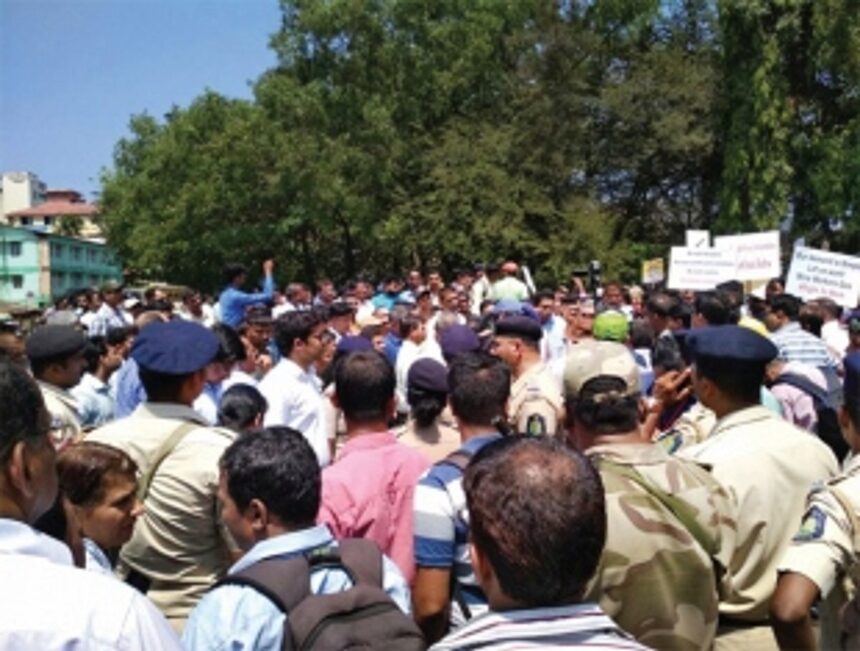
where hundreds of protesters began their agitation in Panjim, against the
closure of mining activities in Goa following a Supreme Court order. Several
roads were blocked in the capital and the protest took a violent turn. In both
the cases, the strike was called off following an assurance that the government
will file an intervening/review petition in the Supreme Court to get relief for
the ‘affected’. And now with the new car rental counter at the Dabolim airport
being inaugurated, the simmering unpleasantness of the taxi operators over the
development might result in an impromptu ‘protest’ anytime.
What is striking about the above incidents
is that both the protests, for all practical purposes, were opposing Supreme
Court judgements. Also, the protests were not only anti-common man in nature
but were in support of unfair business practices, which the Supreme Court tried
to curb with its judgement. Gone are the days when inappropriate government
decisions affecting the common man in an unfair manner used to trigger lawful
protests conducted in a civilised way, thereby forcing the authorities to take
note, and in some cases, even reverse their decision. Now, the protests are
mostly about inconveniencing the general public, holding them to ransom and, in
a way, threatening the government authorities to bow down to the demands –
regardless of whether or not the demands may be fair.
Democracy
certainly allows one the right to demonstrate and protest peacefully. But this
shouldn’t come at the cost of disrupting lives of common people.
Parties/organisations enforcing bandhs should know that they have no
right to come in the way of people who are pursuing their livelihood. If people
feel strongly about an issue, they will participate willingly enough in
protests. No coercion is required for this. Bandhs do little except
trample upon fundamental rights of citizens..
Following the protests in Goa over the last few
weeks, a few netizens registered their opinions on social media:
Protesting is fine but why do
protesters have to take the law in their hands and inconvenience the public?
Ironically, most protests are to highlight inconvenience caused to the victims
but what about the inconvenience that unfair protests cause the general public?
The mining protest in Panjim disturbed the students appearing for their exams
and even blocked ambulances plying on the roads.
RAJ AGARWADEKAR, Moira
In Mumbai, the Maharashtrian farmers
see to it that students were not hassled so they were walking in the night
time. Learn from them and do your agitation, you would have got sympathy from
others. Now you are hated by public. No sympathy.
NINIL
D’SOUZA,
Baga
I think the government authorities
should maintain a no-nonsense attitude when it comes to unfair protests.
Instead, what we see is MLAs bowing down to the ridiculous demands of those
holding these agitations by causing inconvenience to the general public. It is
no longer about opposing ideologies. Most people think that violence is the solution
to every problem and that is just sad.
CHARLOTTE
D’SILVA, Benaulim